We did a full canal transit in the old/historic locks. From the Pacific Ocean, we starting with 2 steps up on the Miraflores Locks, Miraflores Lake, and 1 more step up at the Pedro Miguel Locks. Then from the Gatun Lake, down the 3 Gatun Locks to the Atlantic Ocean. Princess gave us a tentative schedule, but we seemed to be running behind and then caught up some later. Since we visited Panama City the day before, we floated outside the canal overnight and were only allowed to enter when the Canal Authority said that we could. In the enrichment talk, the speaker covered the cost to the cruise line to transit the canal based on the ship's tonnage and number of berths/rooms. Best we remember about $600K-700K + $100-200K to reserve a specific time. On the other hand, cargo ship may wait outside and be allowed to go through when there is an opening (and pay less) and maybe at night.
Panama Canal Transit highlights Video:
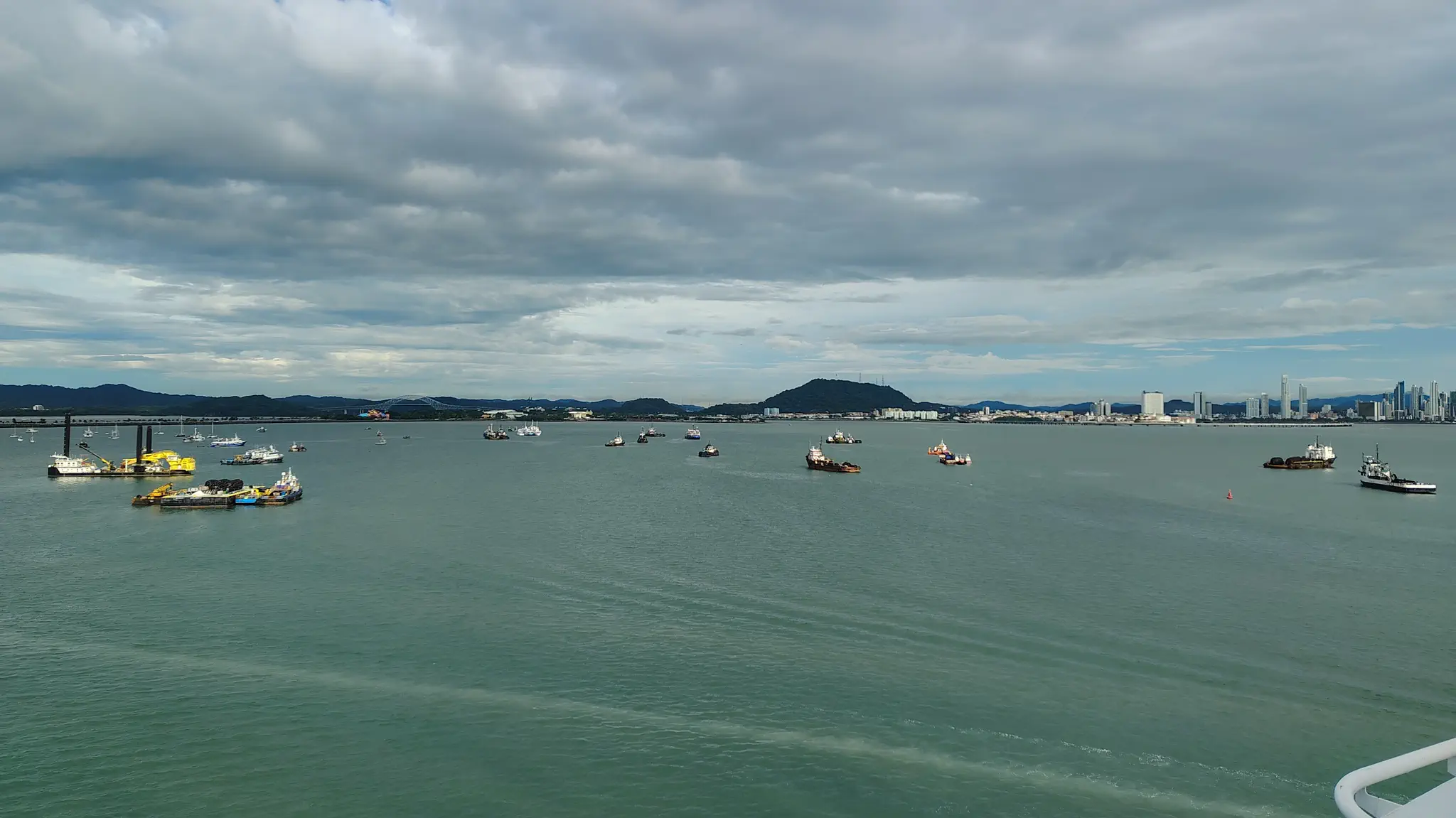
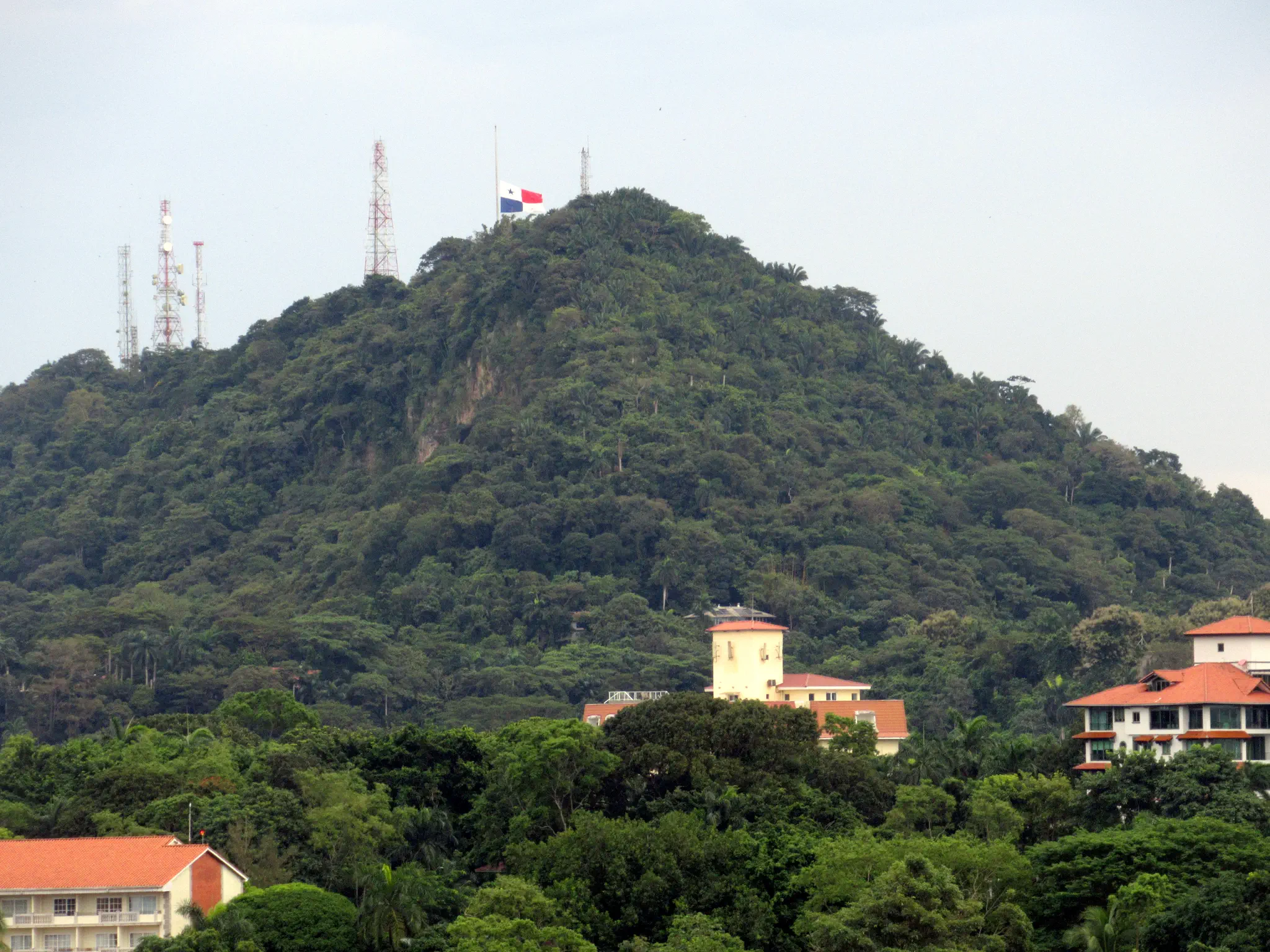
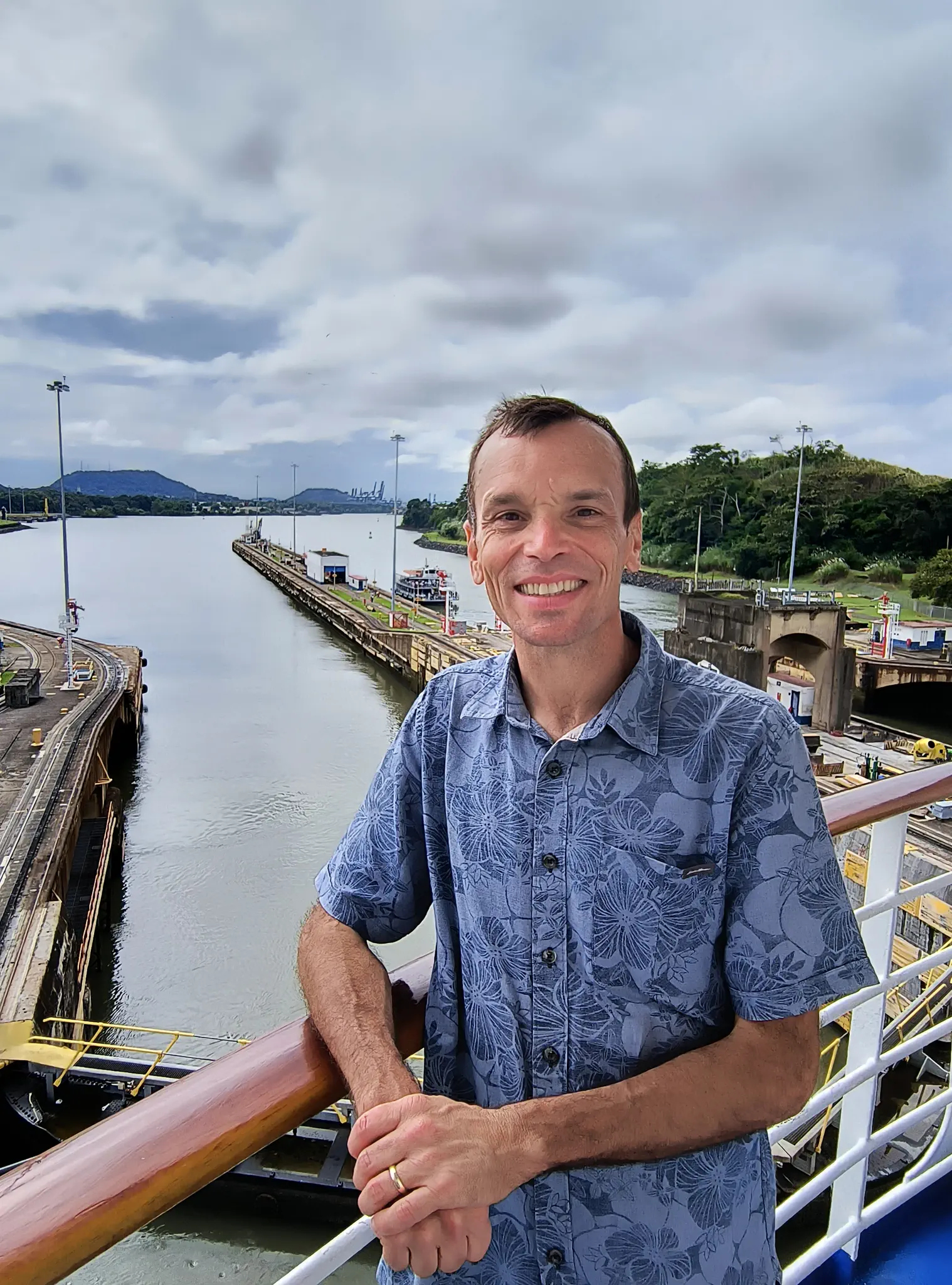
We got up early with expected entry at about 6:45 am. Waiting to enter outside of Panama City. The big flag on top of Ancon Hill that we wanted to climb the day before.
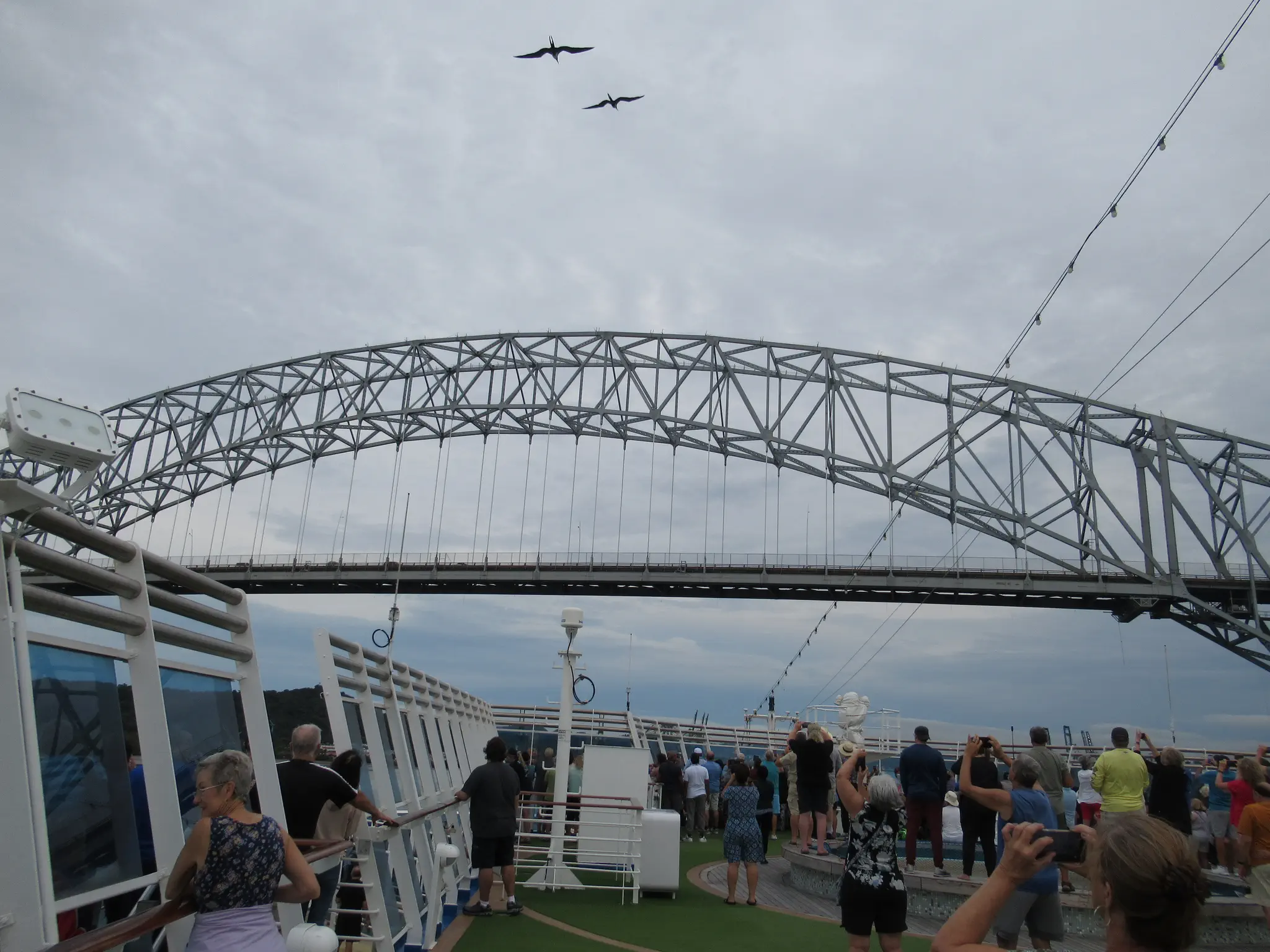
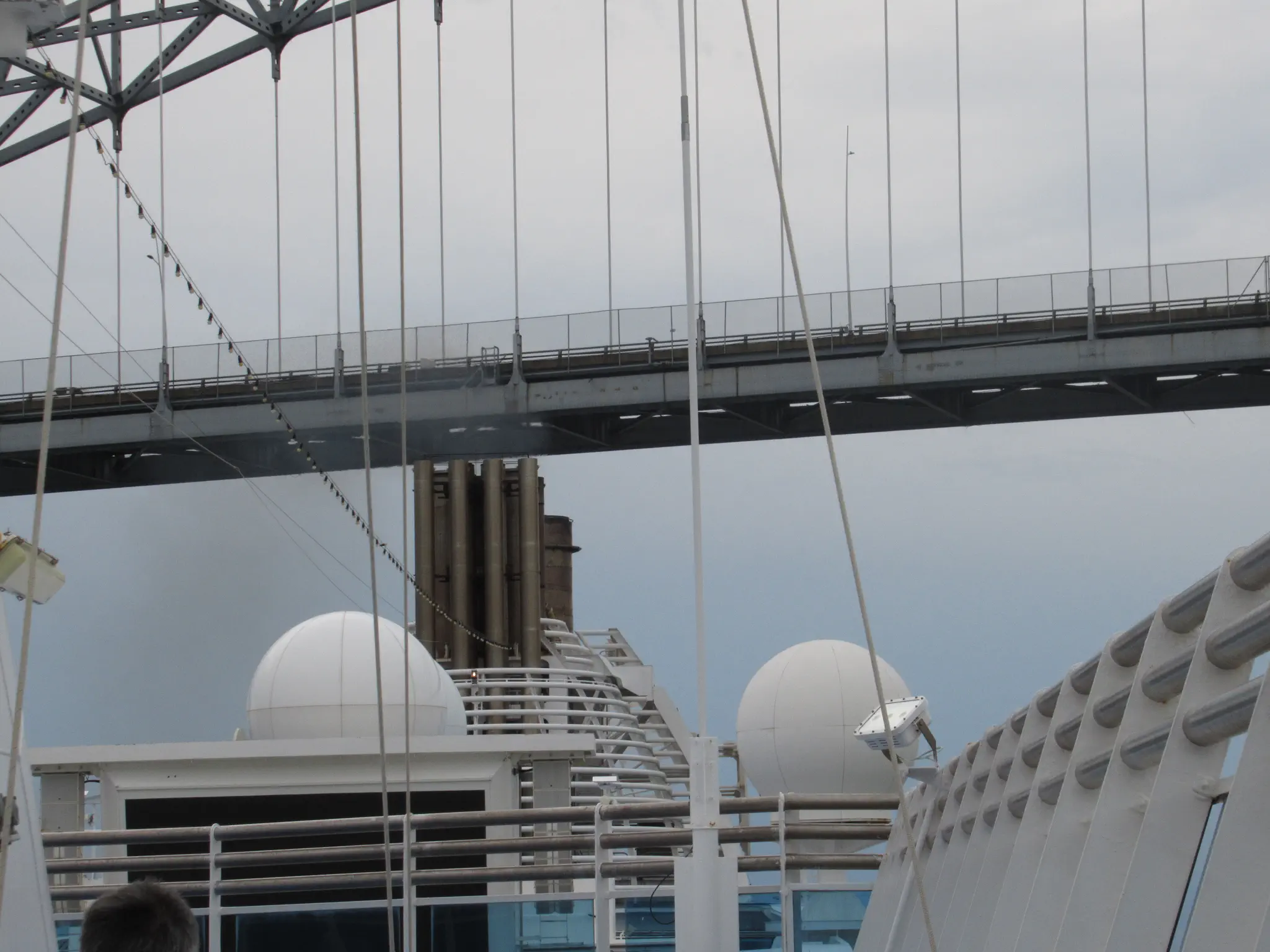
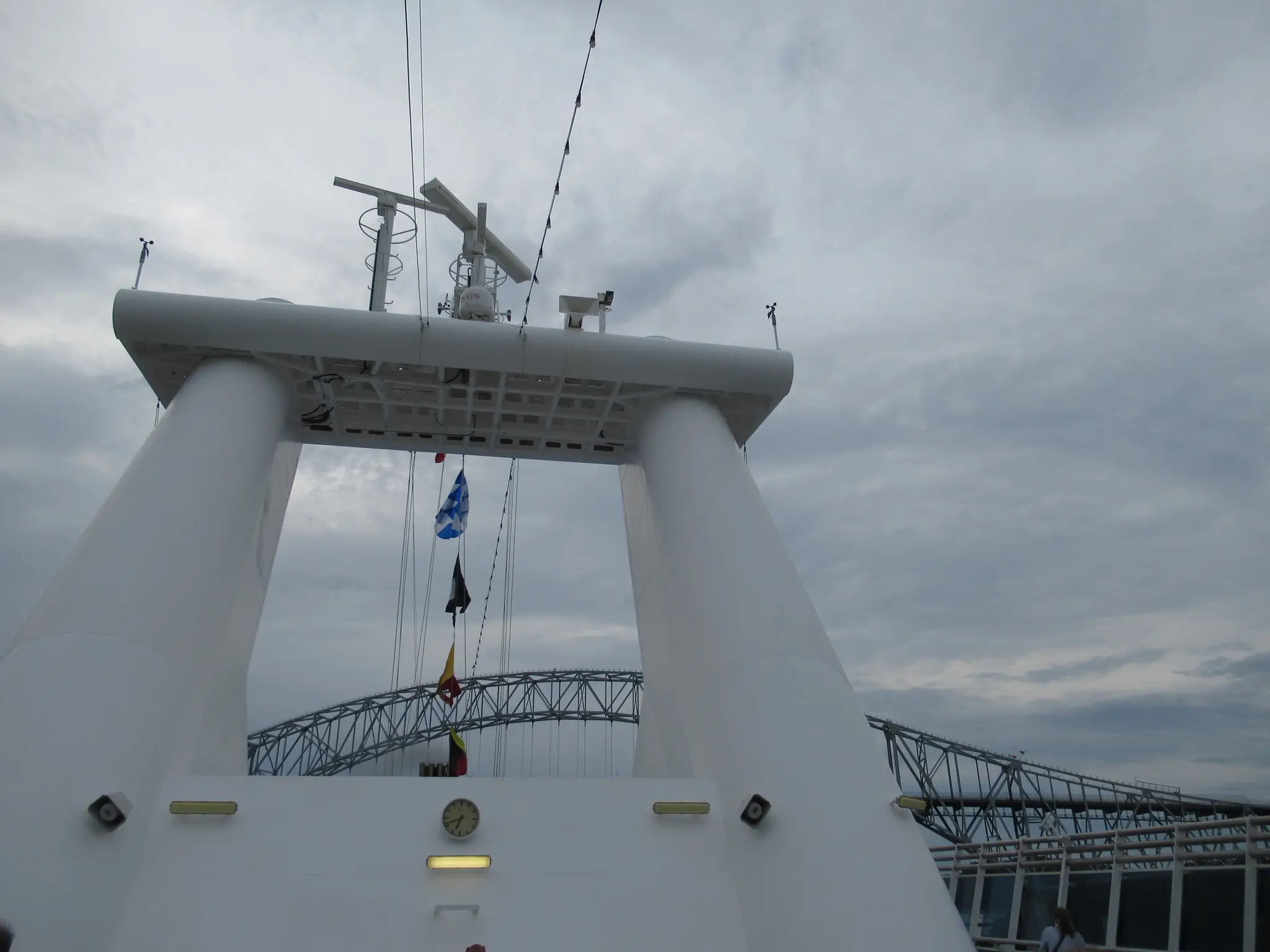
Our first key event -- the tight squeeze under the Bridge of the Americas.
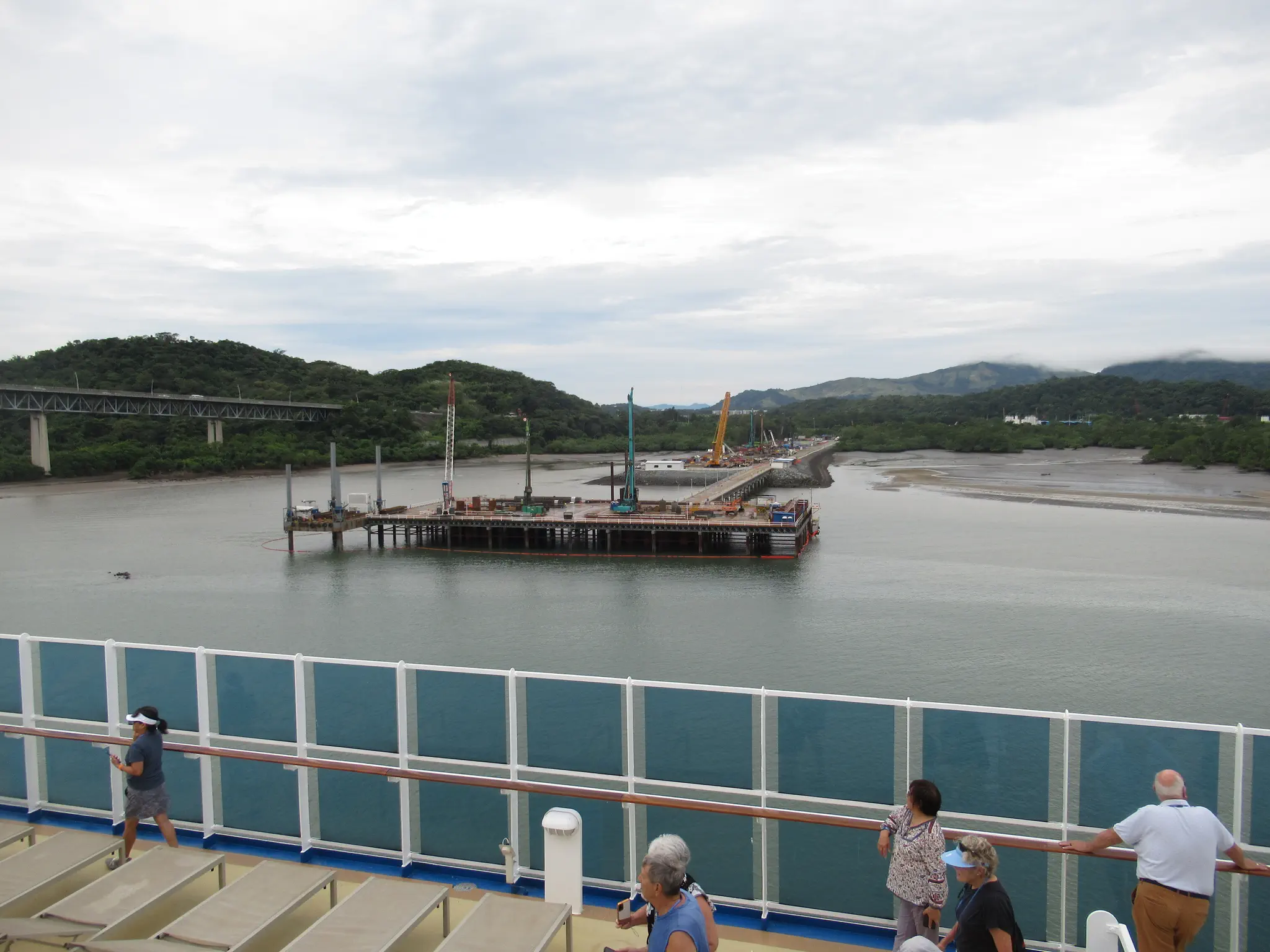
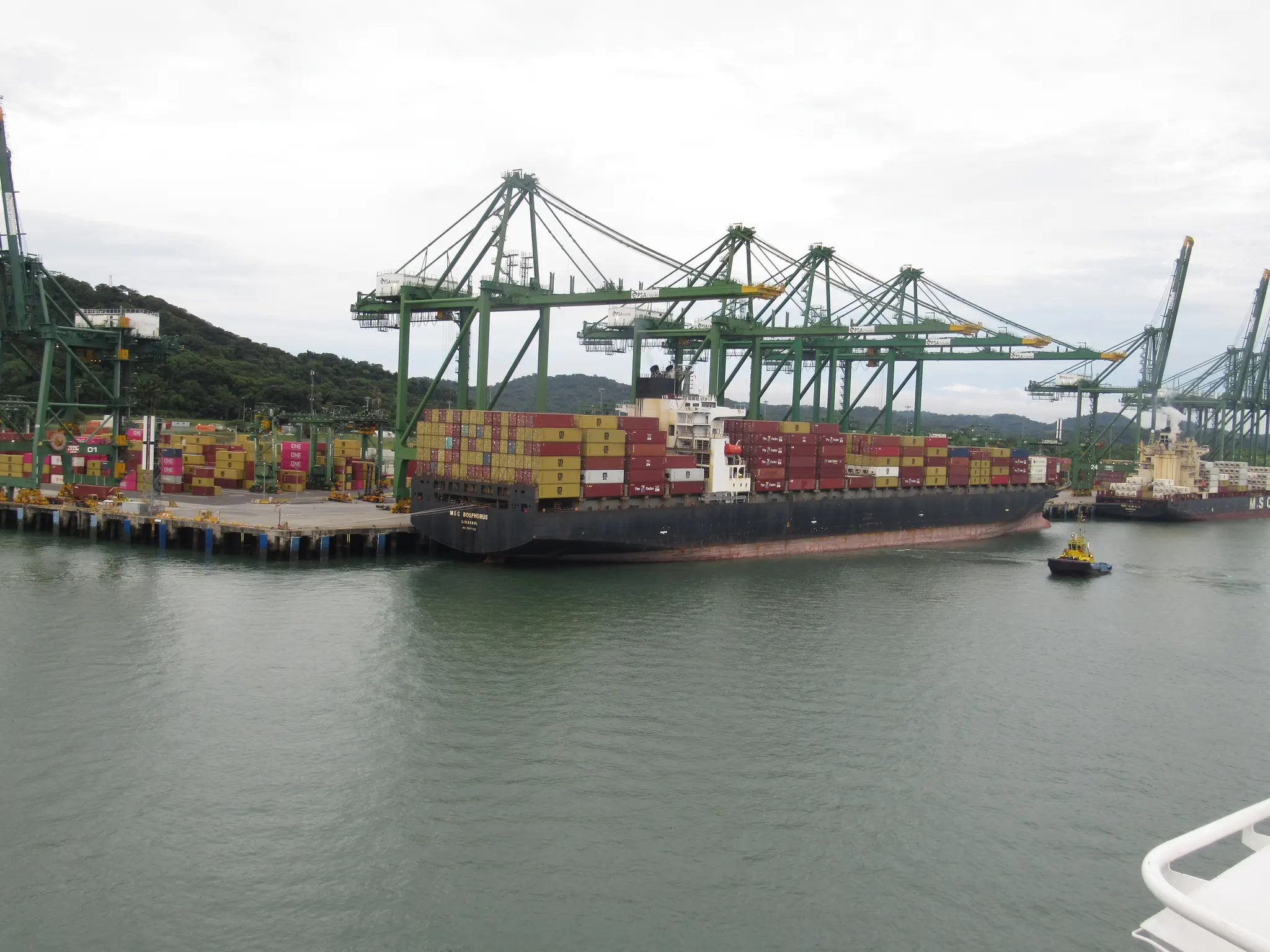
Crane operations for cargo ships that find it more economical to offload the containers to the train. This was run by a Hong Kong company that was doing a good job. However, Panama does not want to seen as being taking over or cooperating with China, so they are taking over this operation.
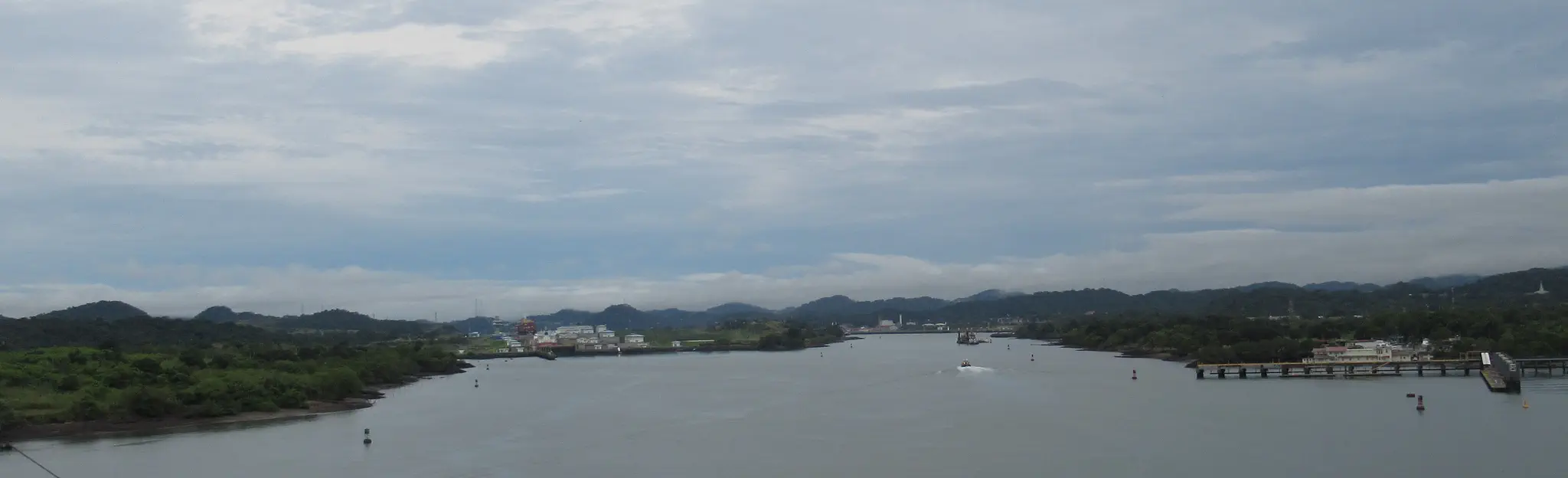
One path to the old locks, and one path to the new locks. The old locks can fit Panamax ships, and the new locks can fit Neo-Panamax ships. Island Princess is almost 93K gross tons, and is Panamax size. The new locks accommodate the larger ships and are more expensive for the ships to go through.
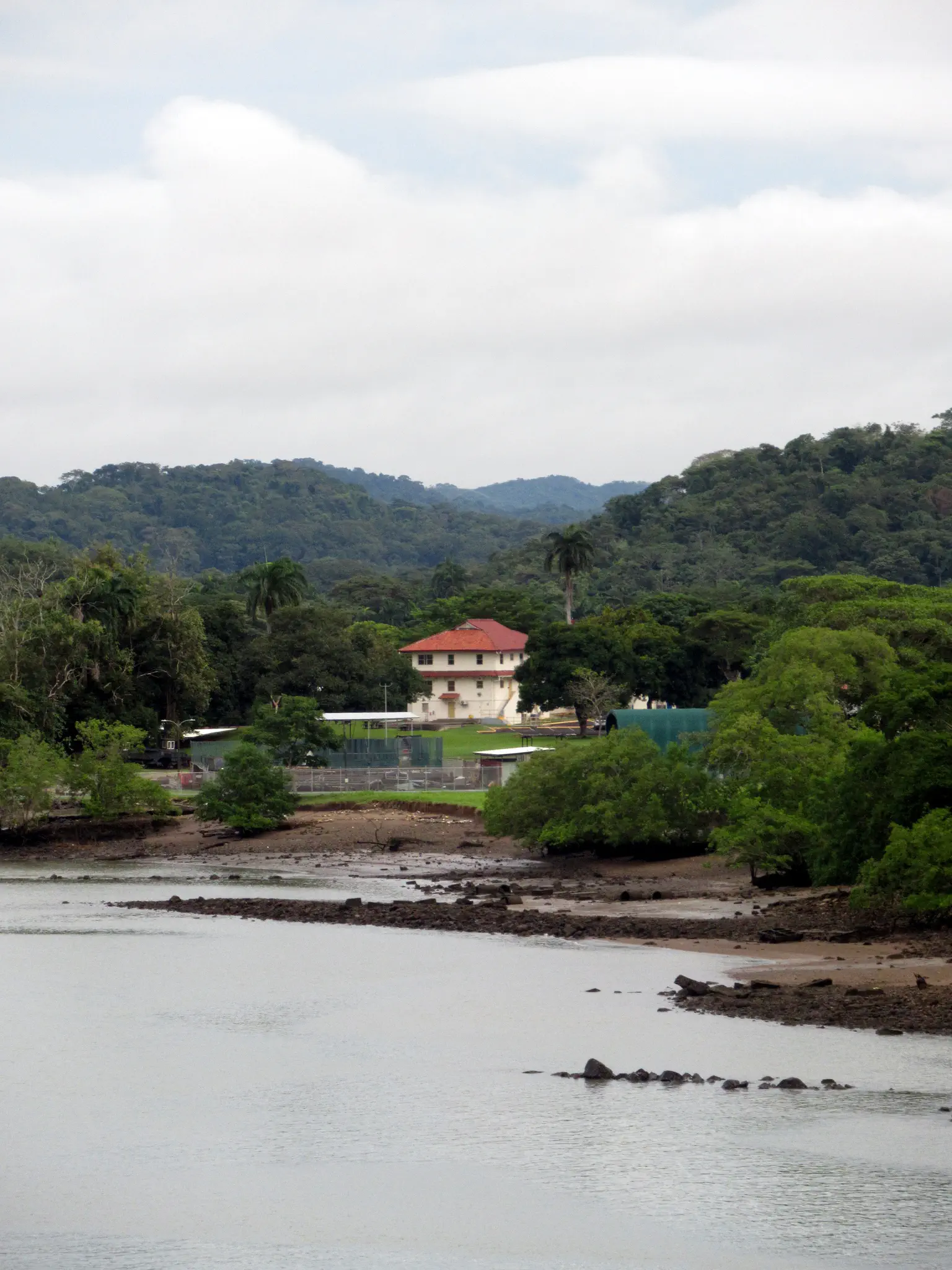
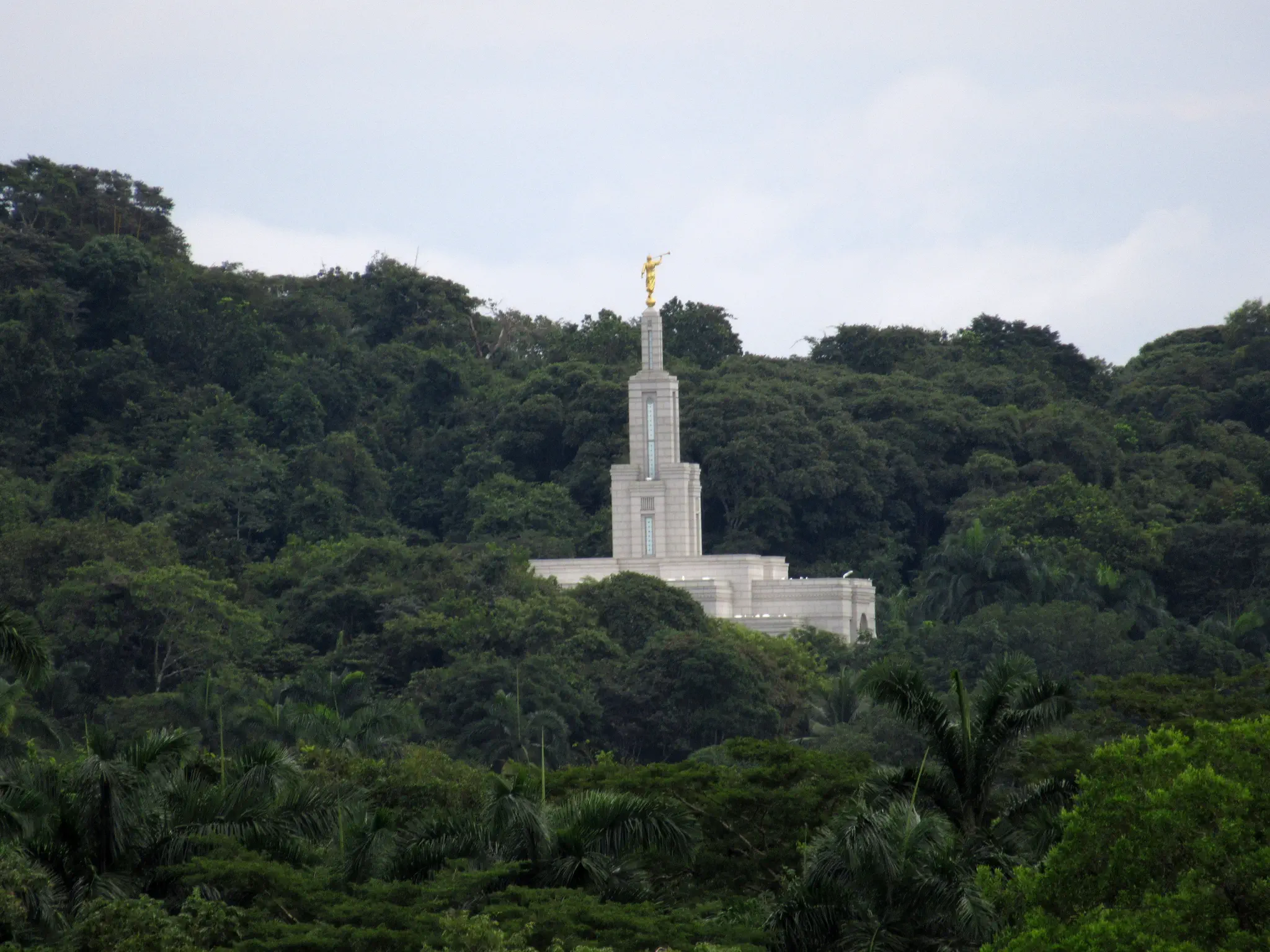
Fort Clayton and Panama Temple of the Church of Jesus Christ of Latter-day Saints.
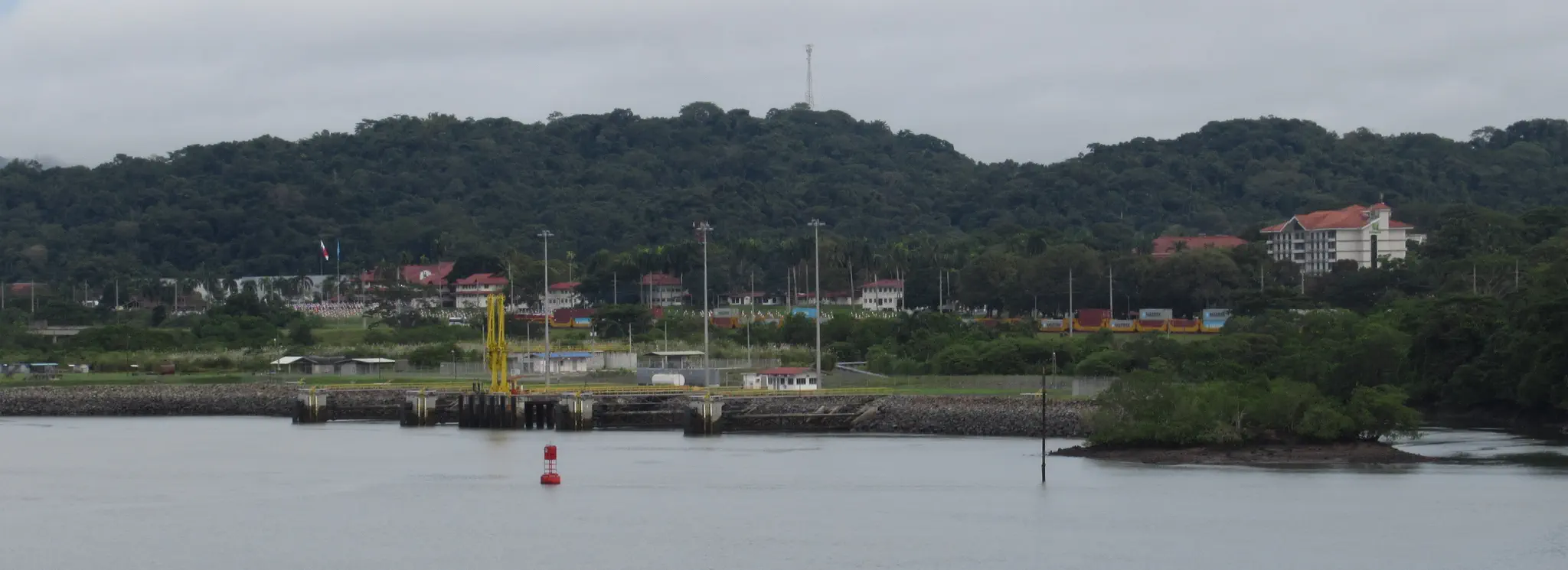
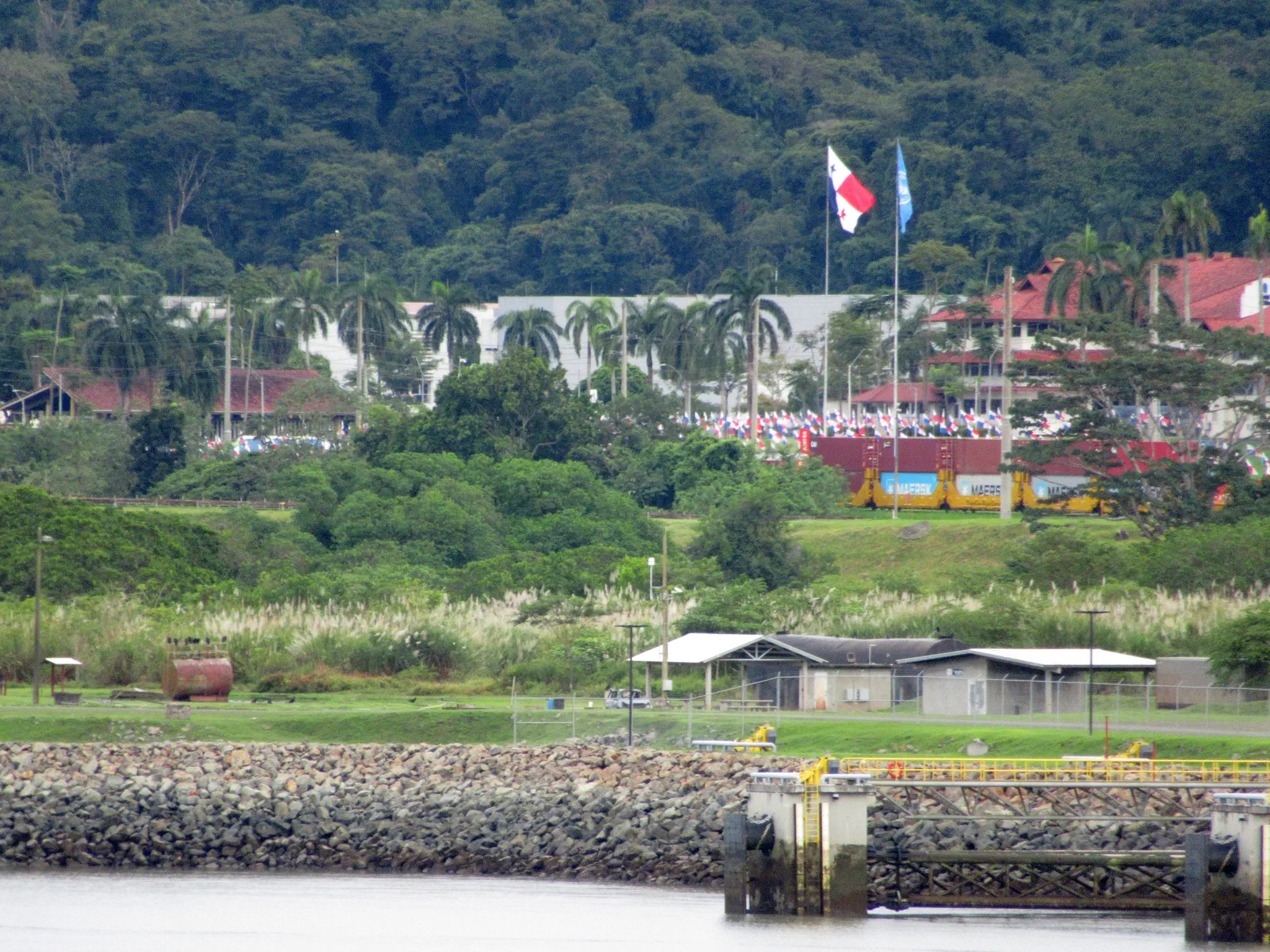
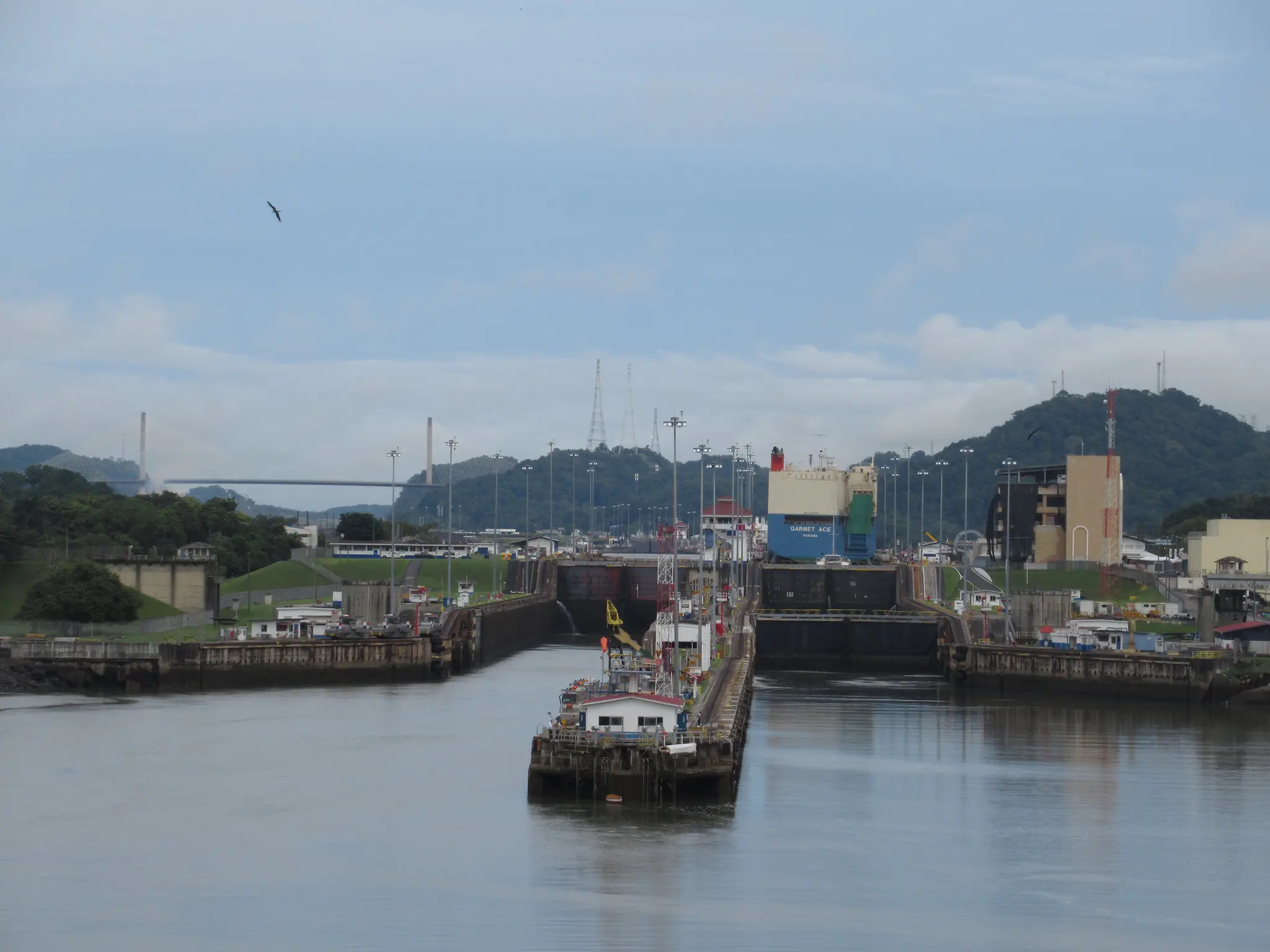
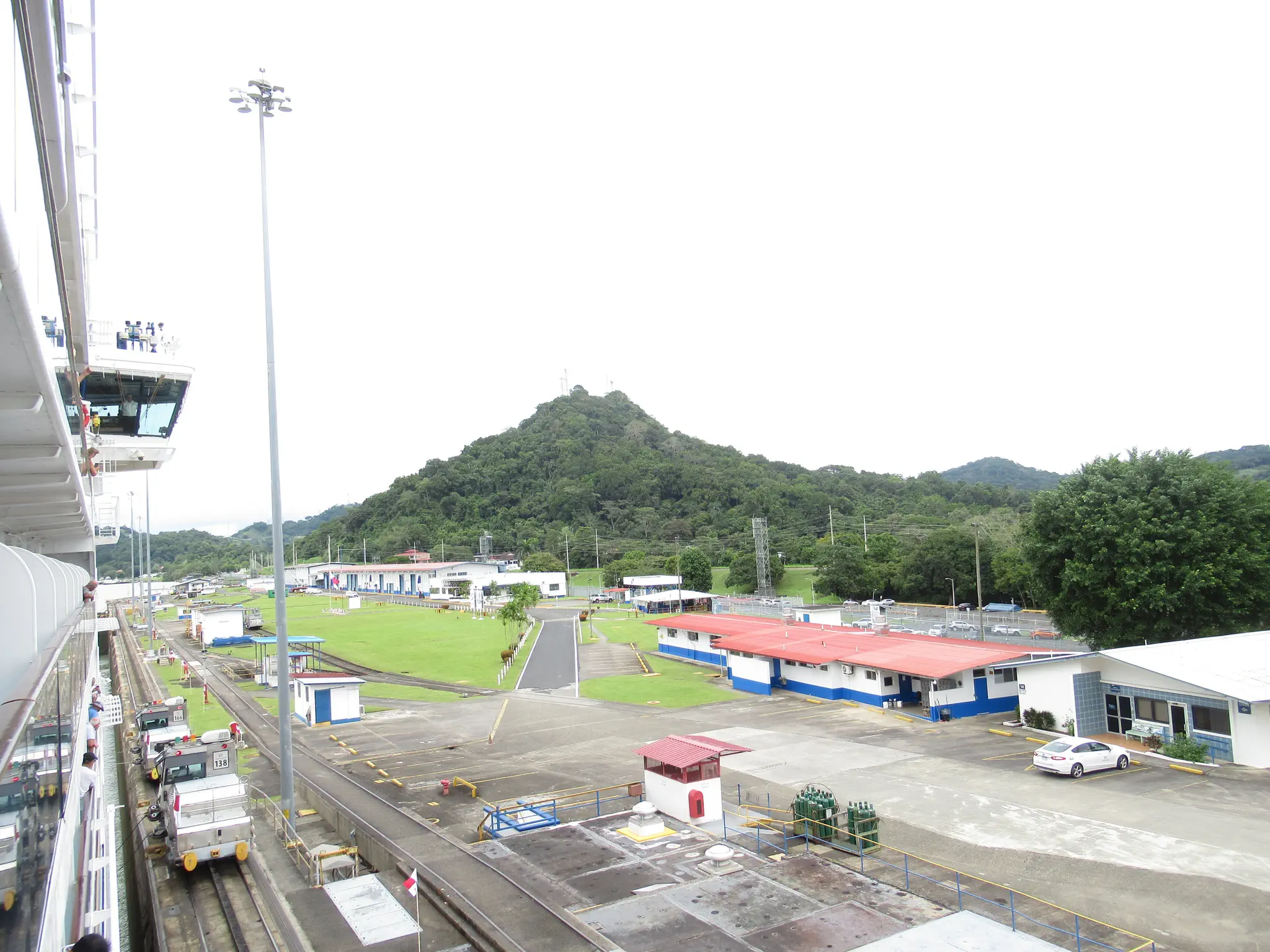
The railroad and approaching the first lock.
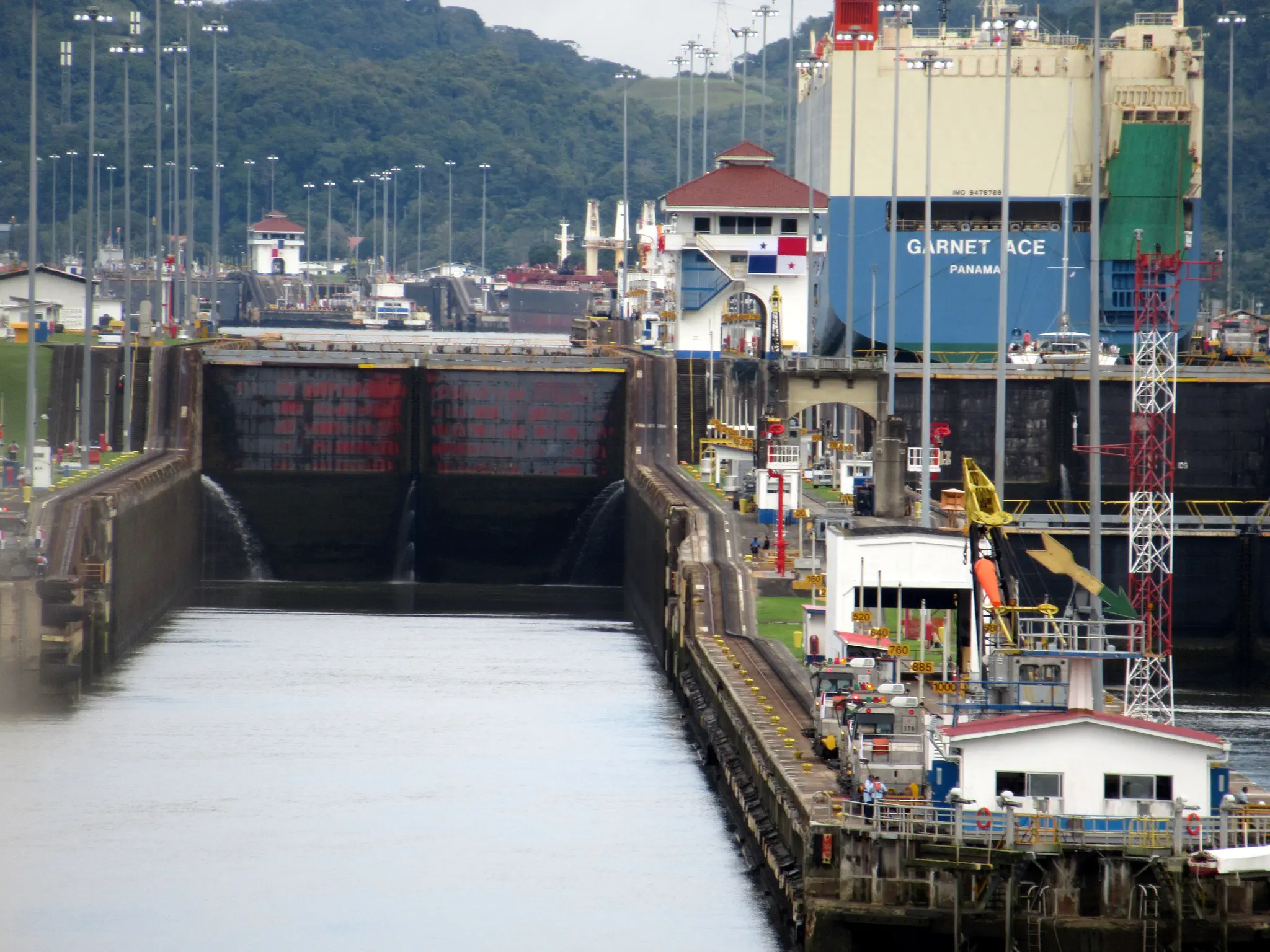
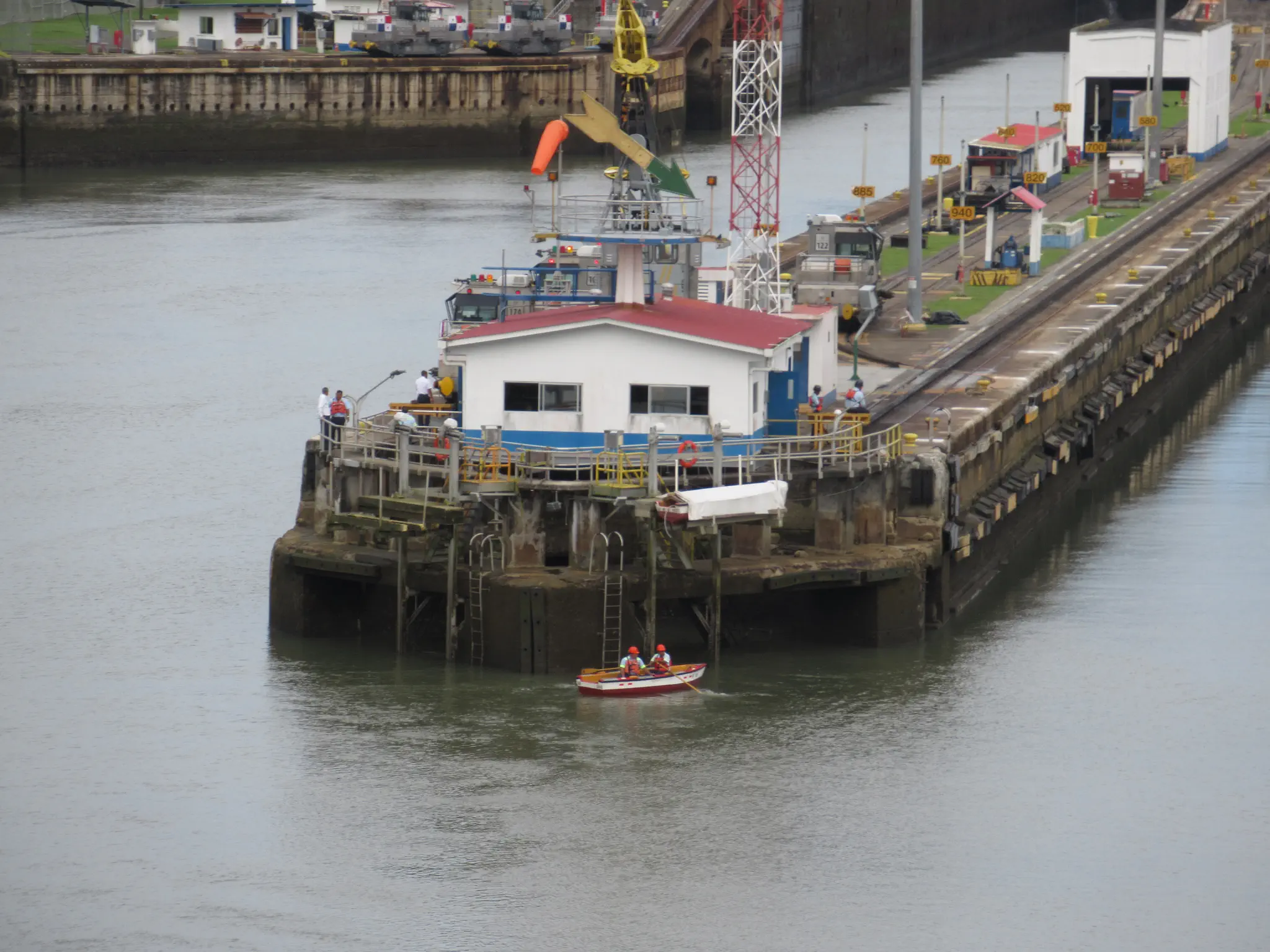
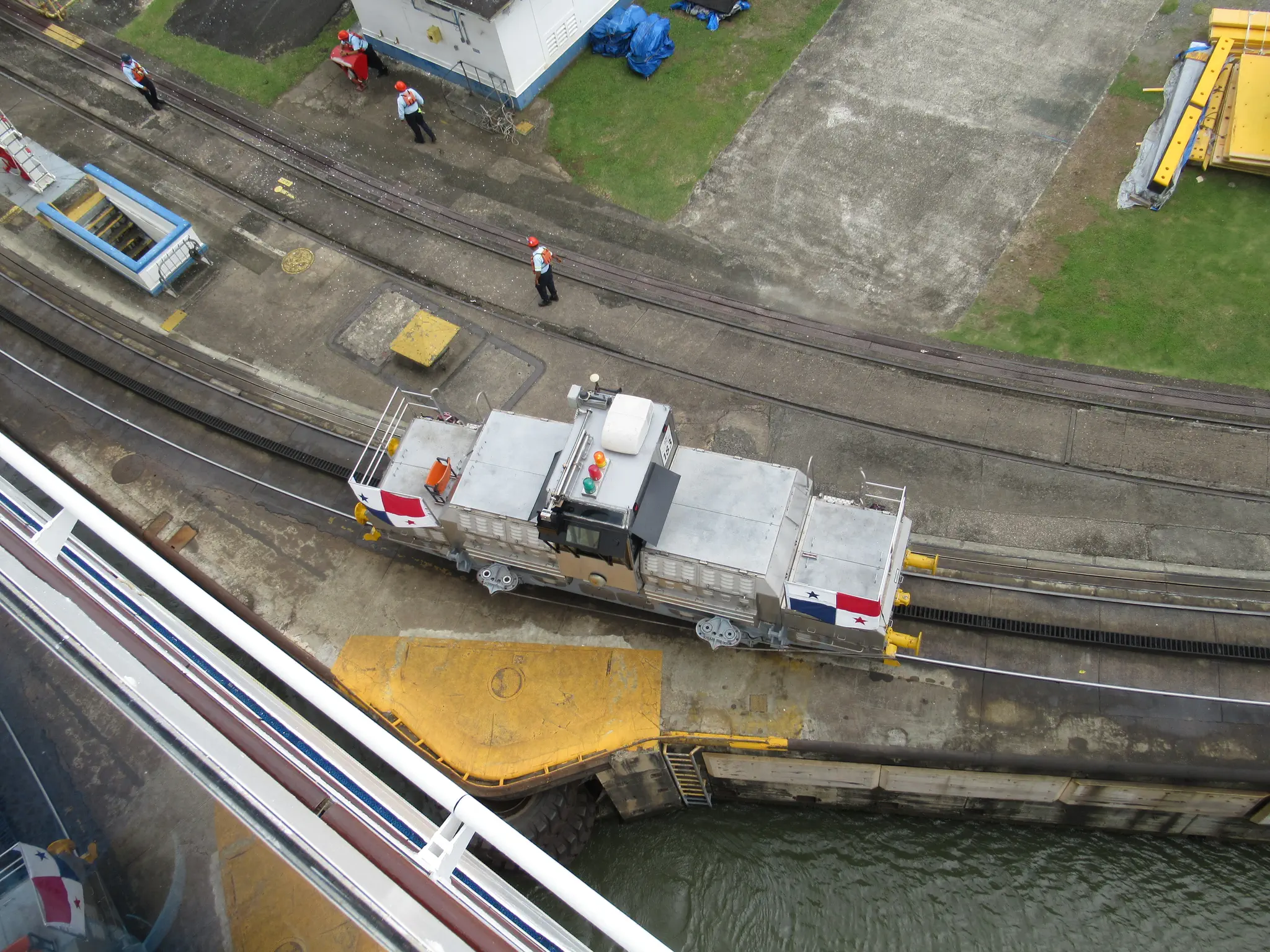
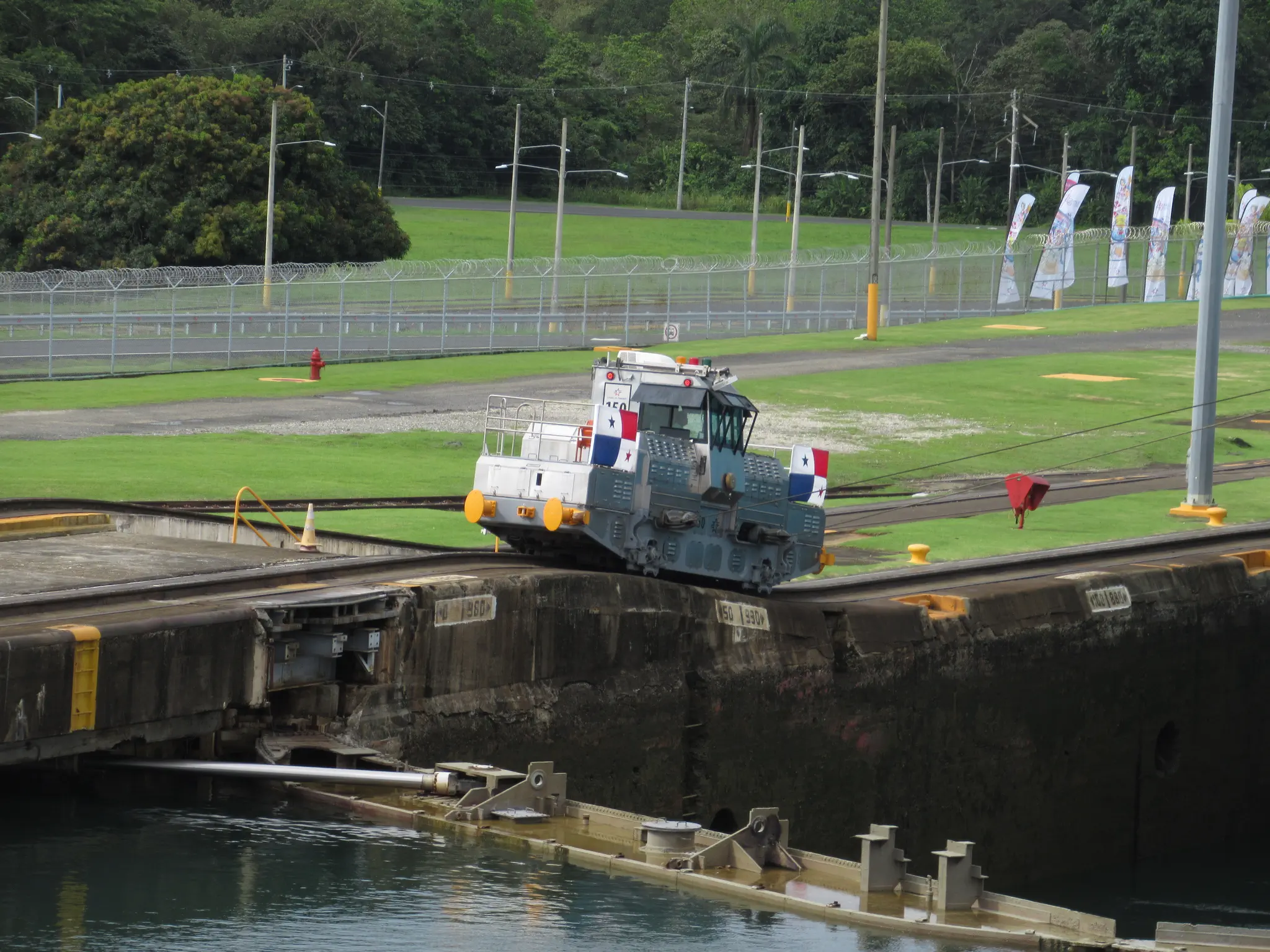
We had to wait 10-15 minutes for our mules (silver cars to arrive). The mules do not pull the ship through the canal, the ship runs on its own power, but keeps ship centered and hopefully away from the walls.
They bring the mule lines to the ship with this small boat.
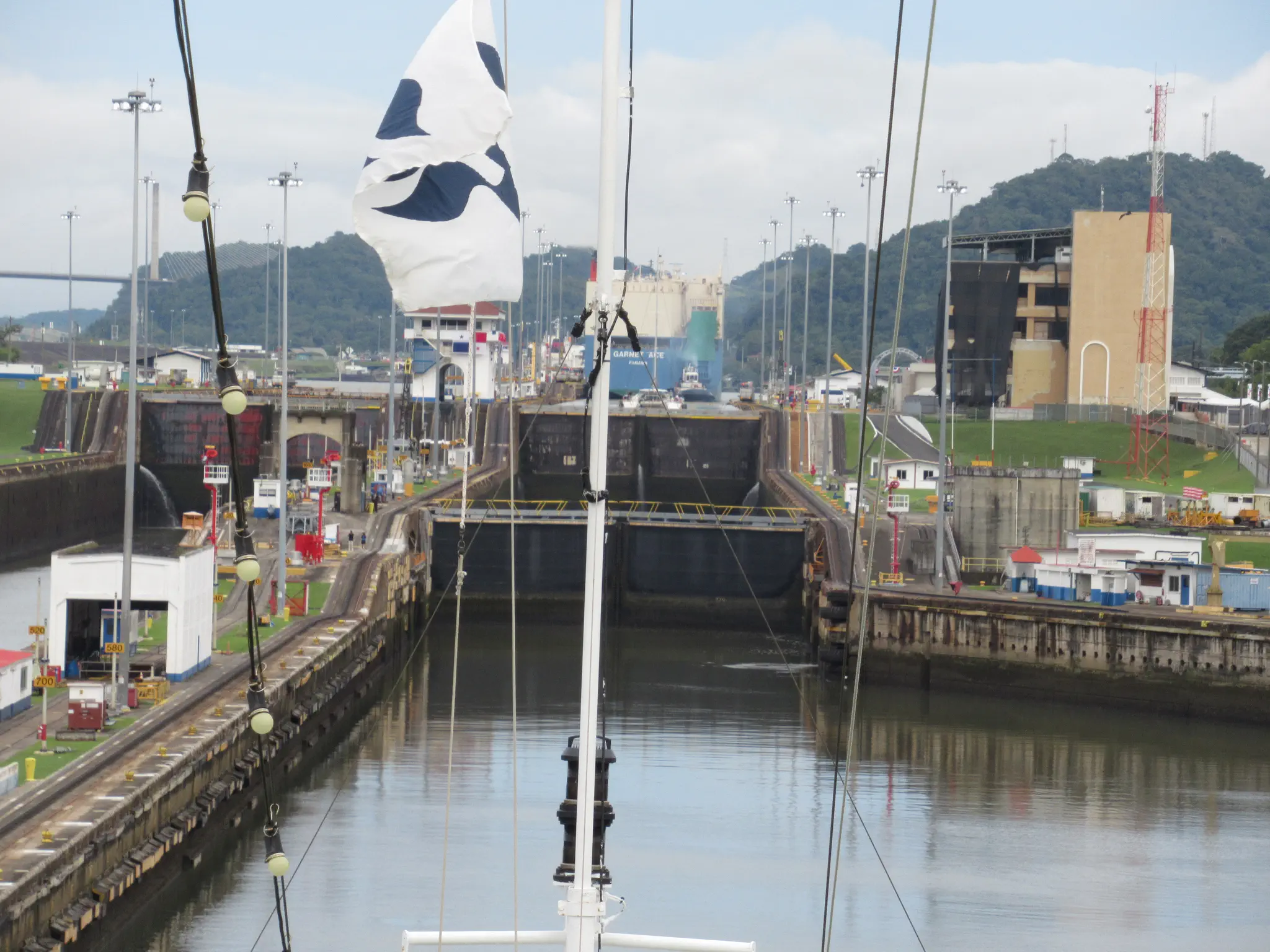
They are almost all here. We had eight total, 2 each on each front and back corner.
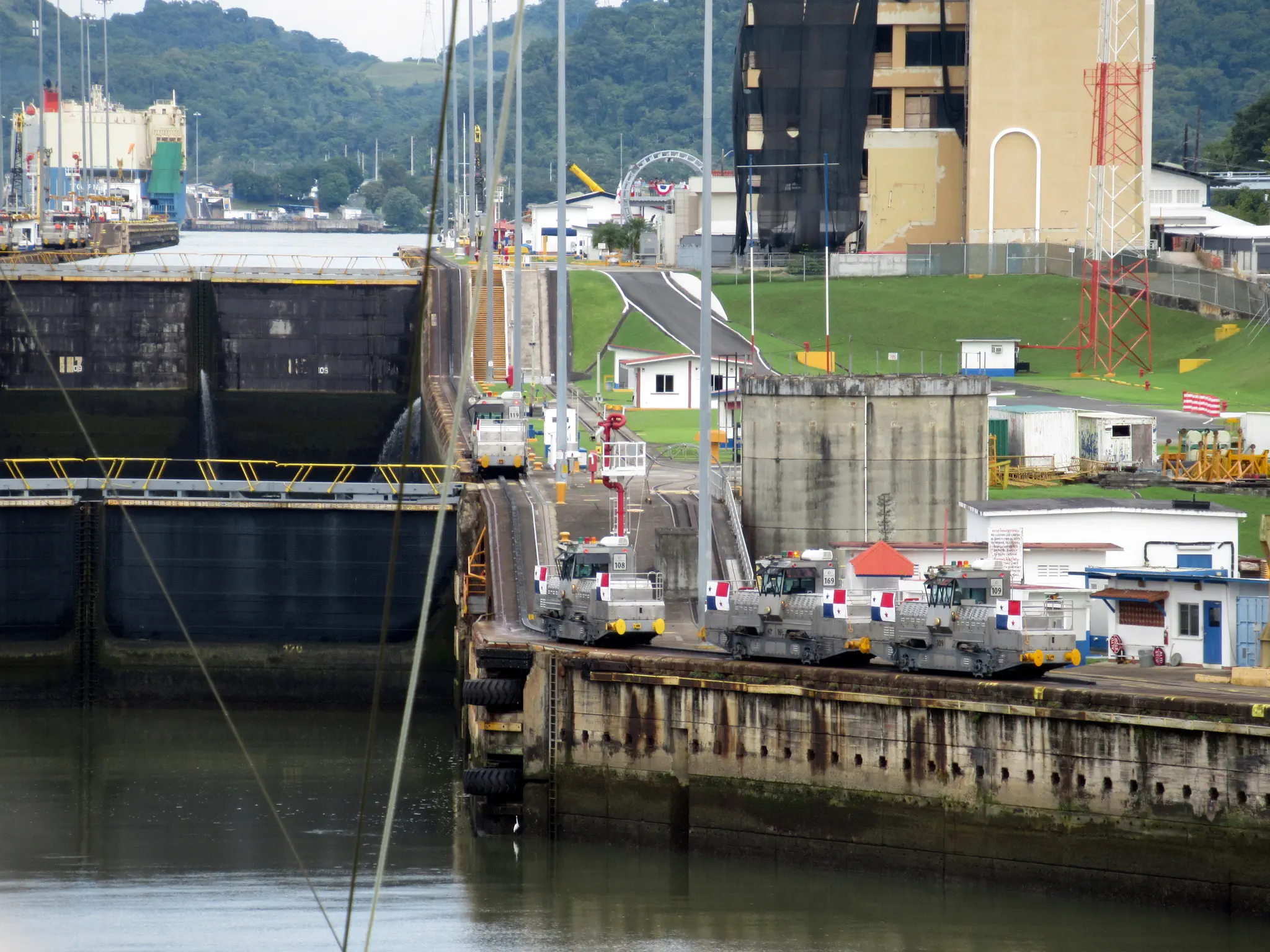
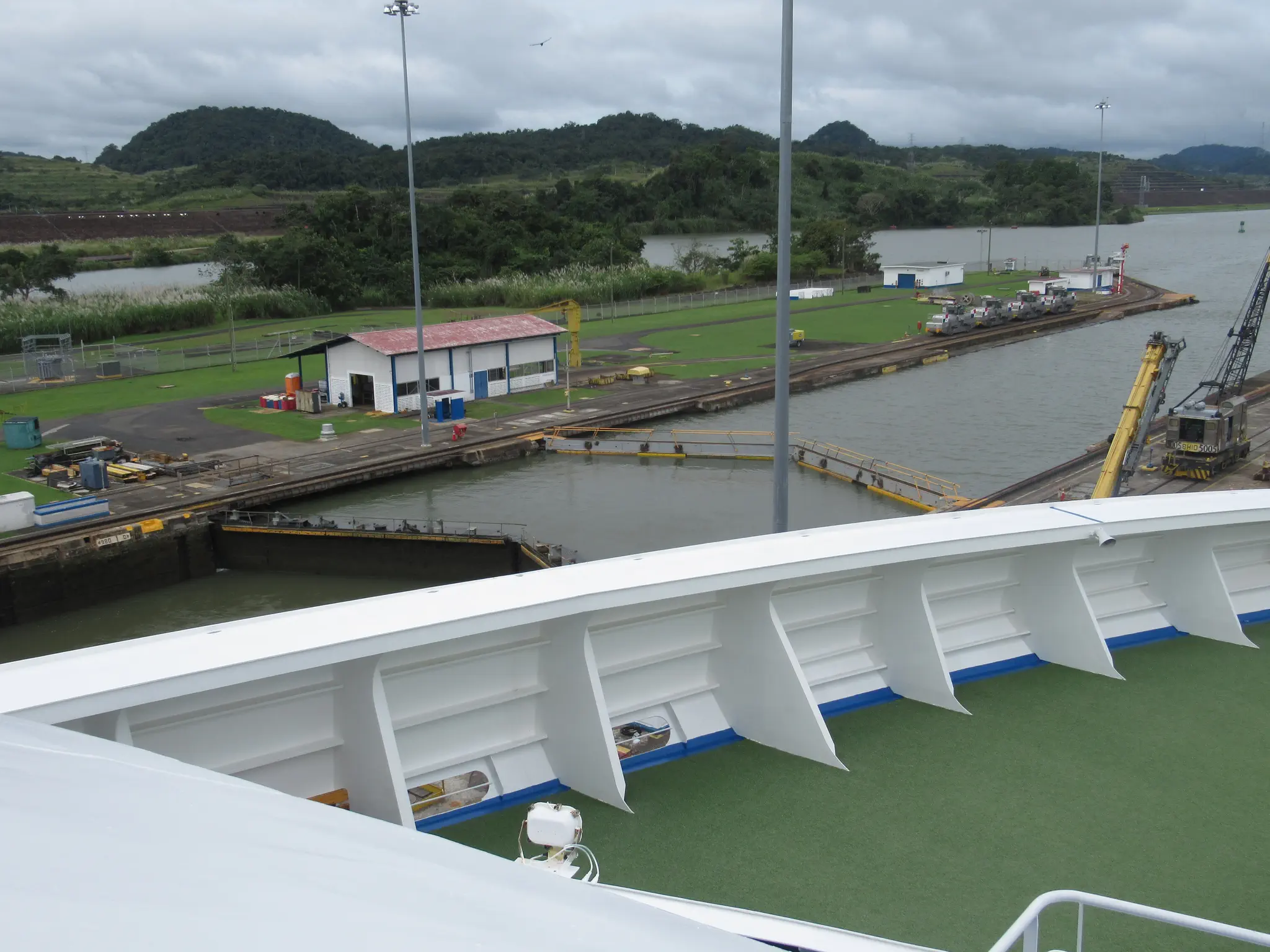
Gates opening and ready to enter. Going up.
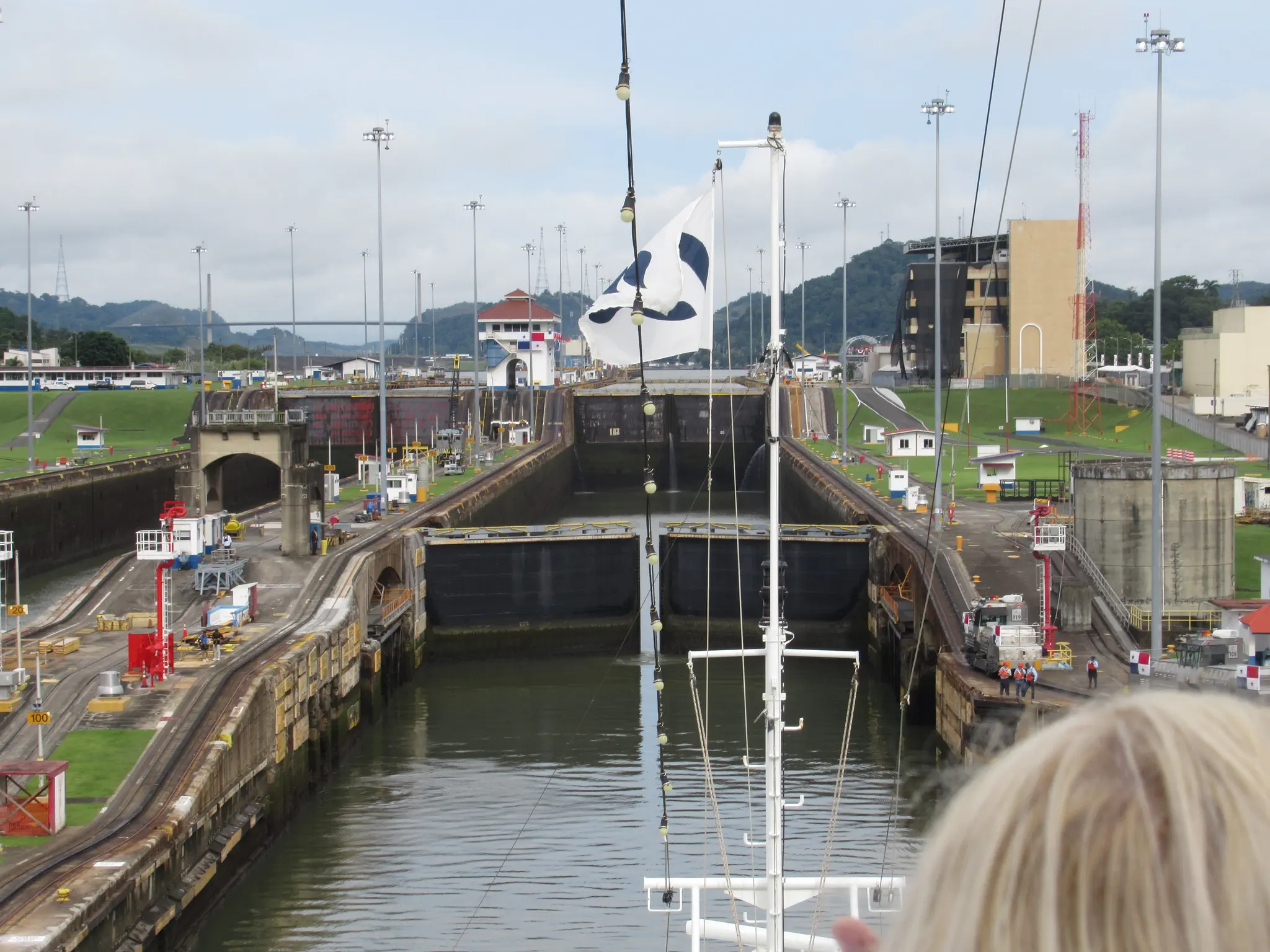
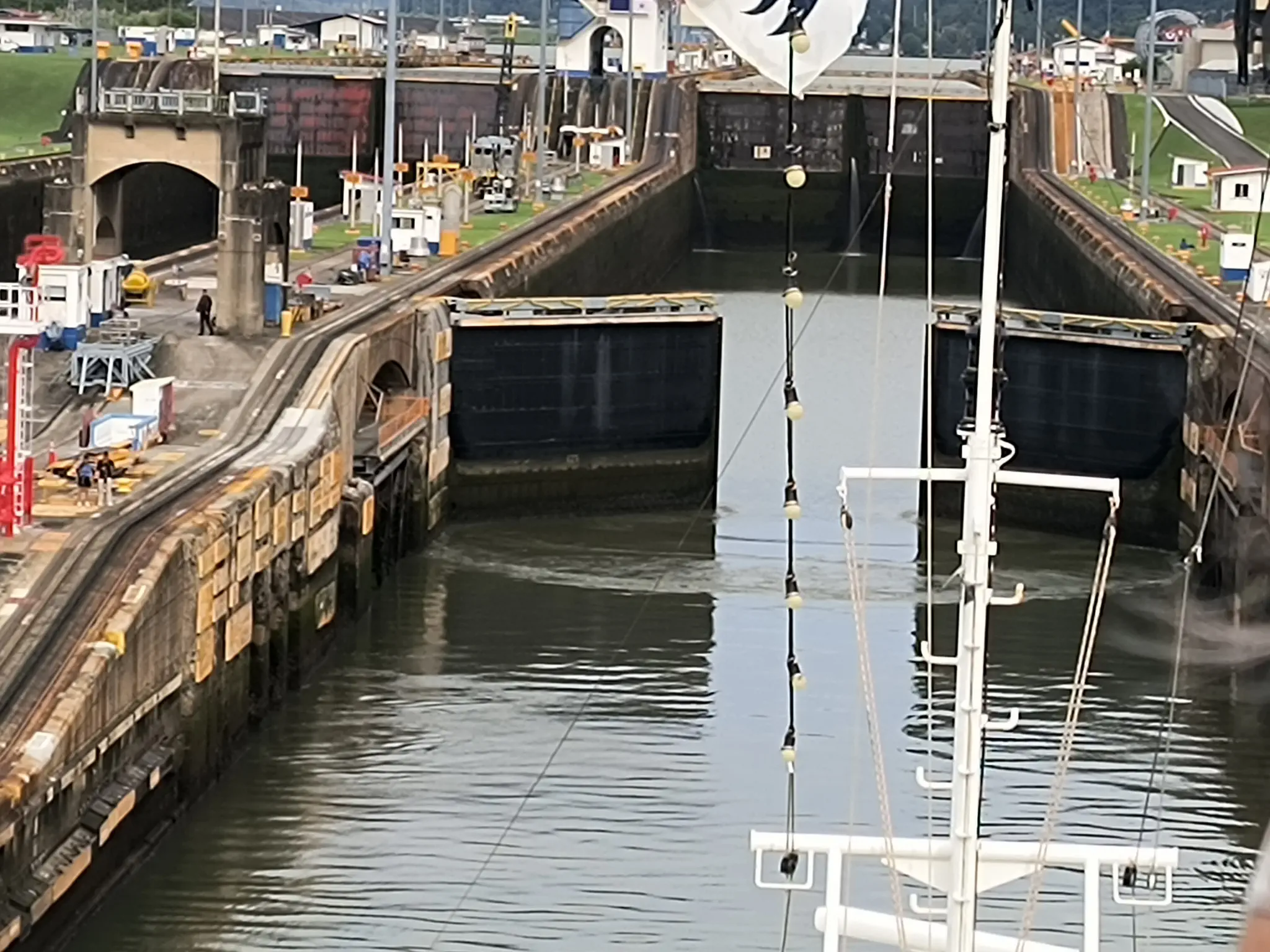
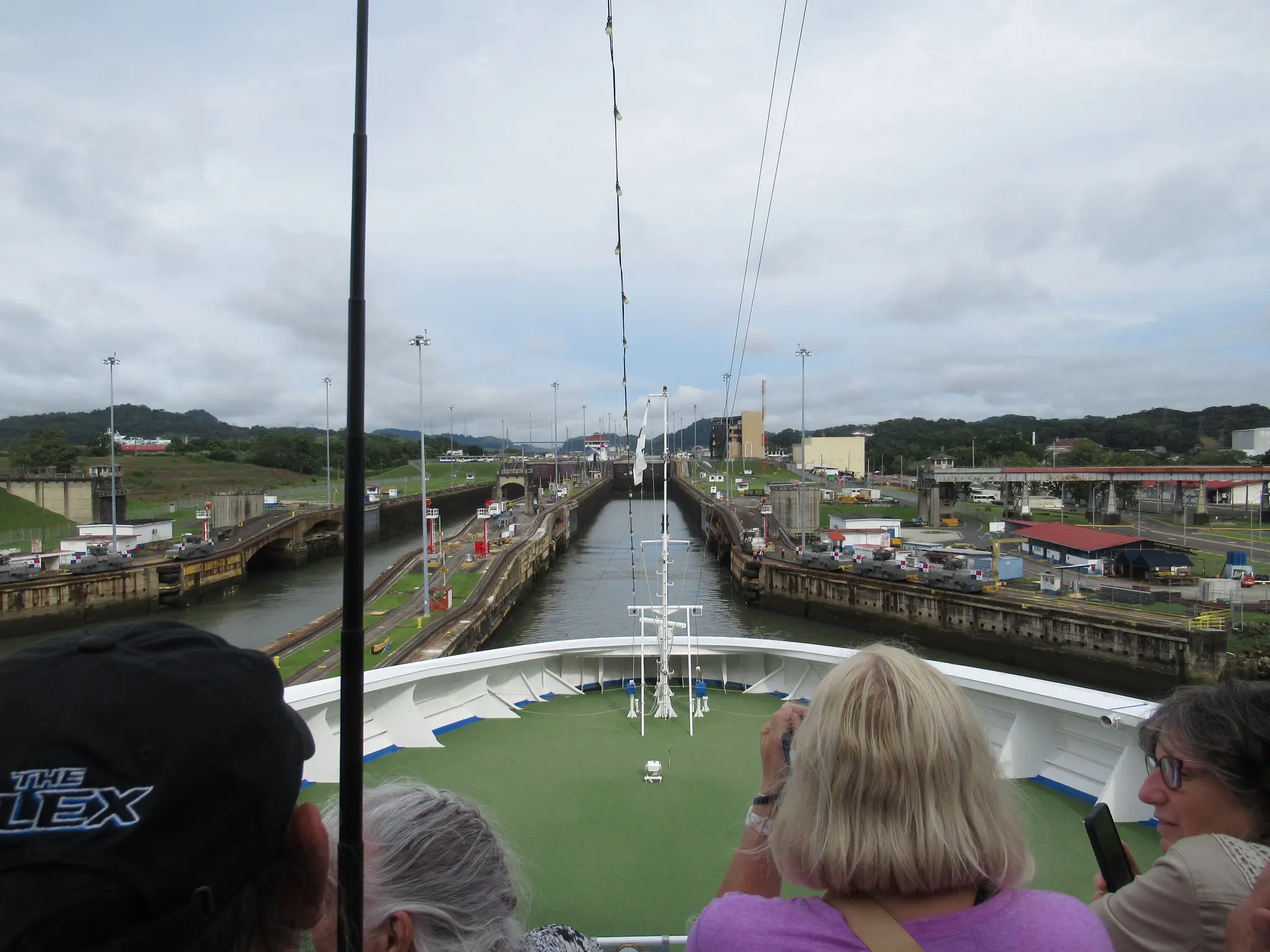
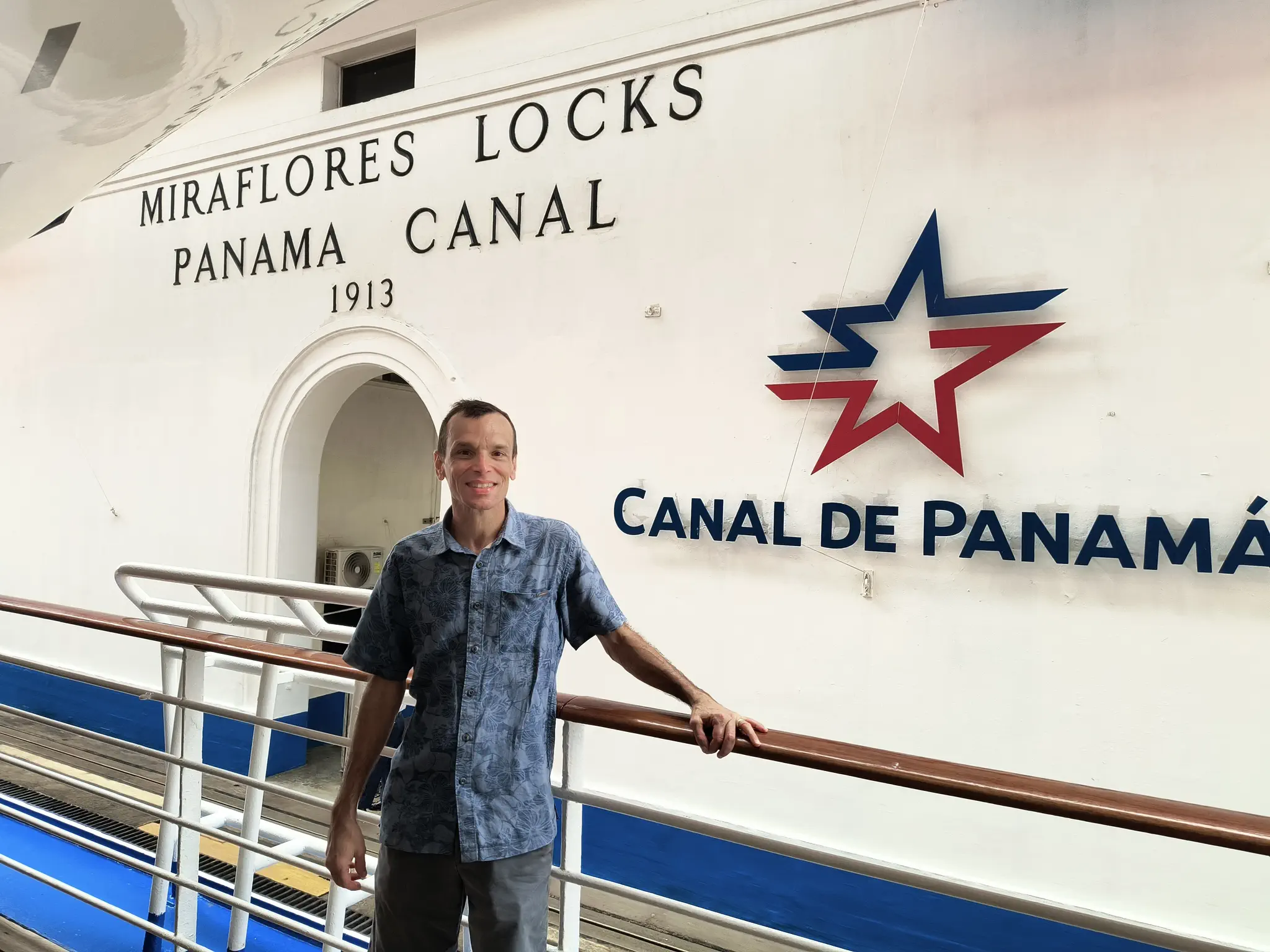
Ship next to us in the Miraflores Locks.
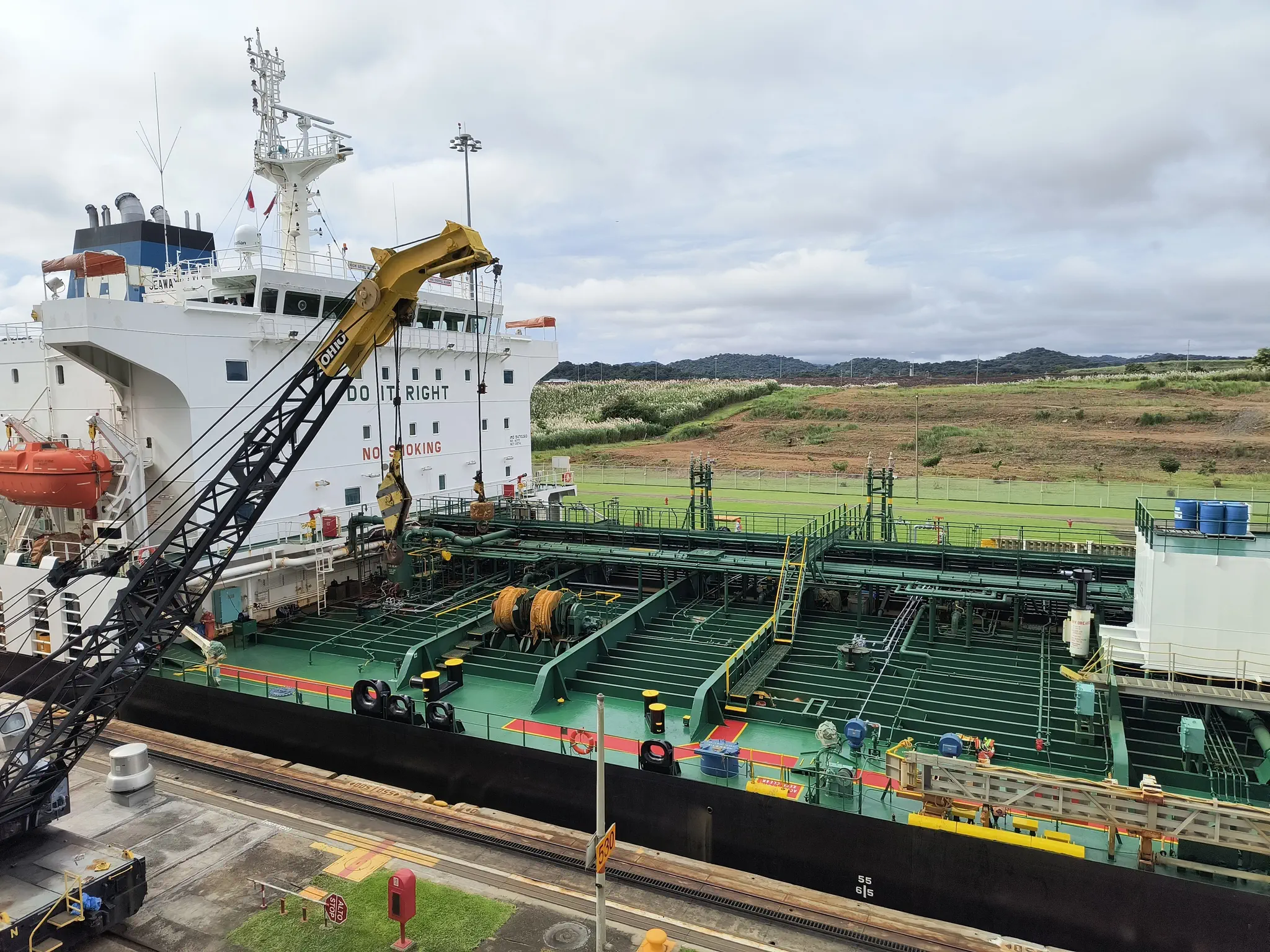
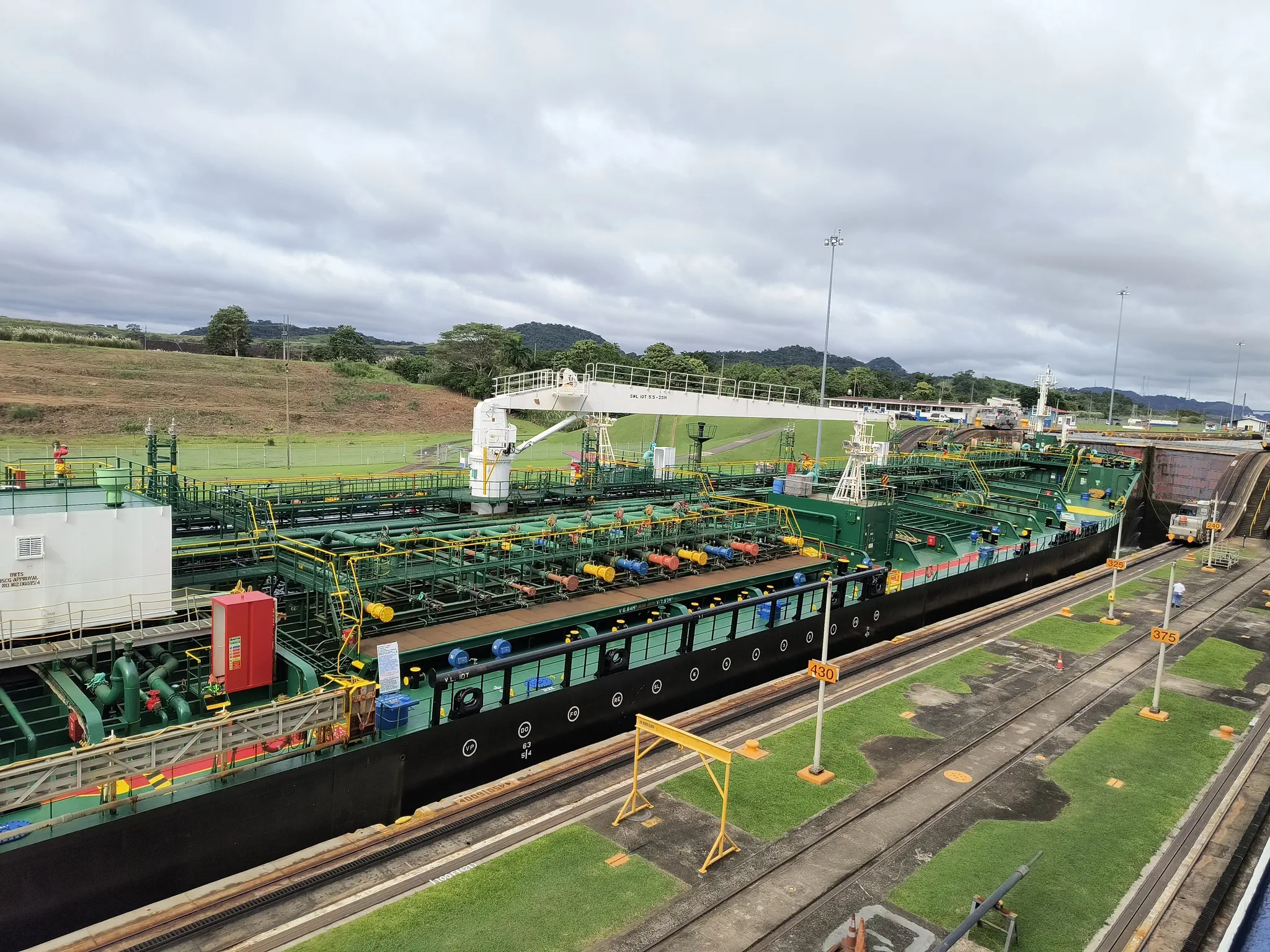
Tight squeeze
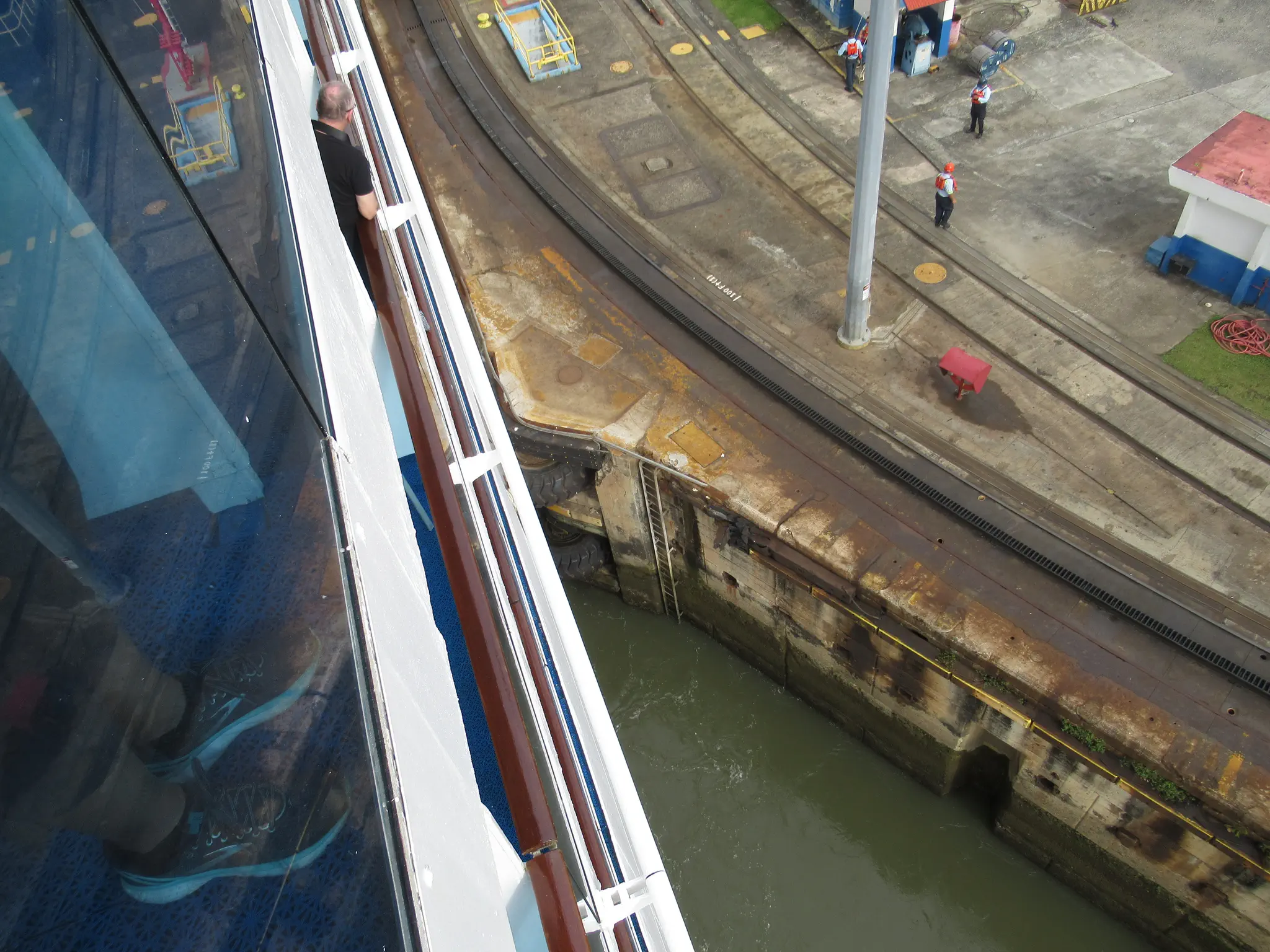
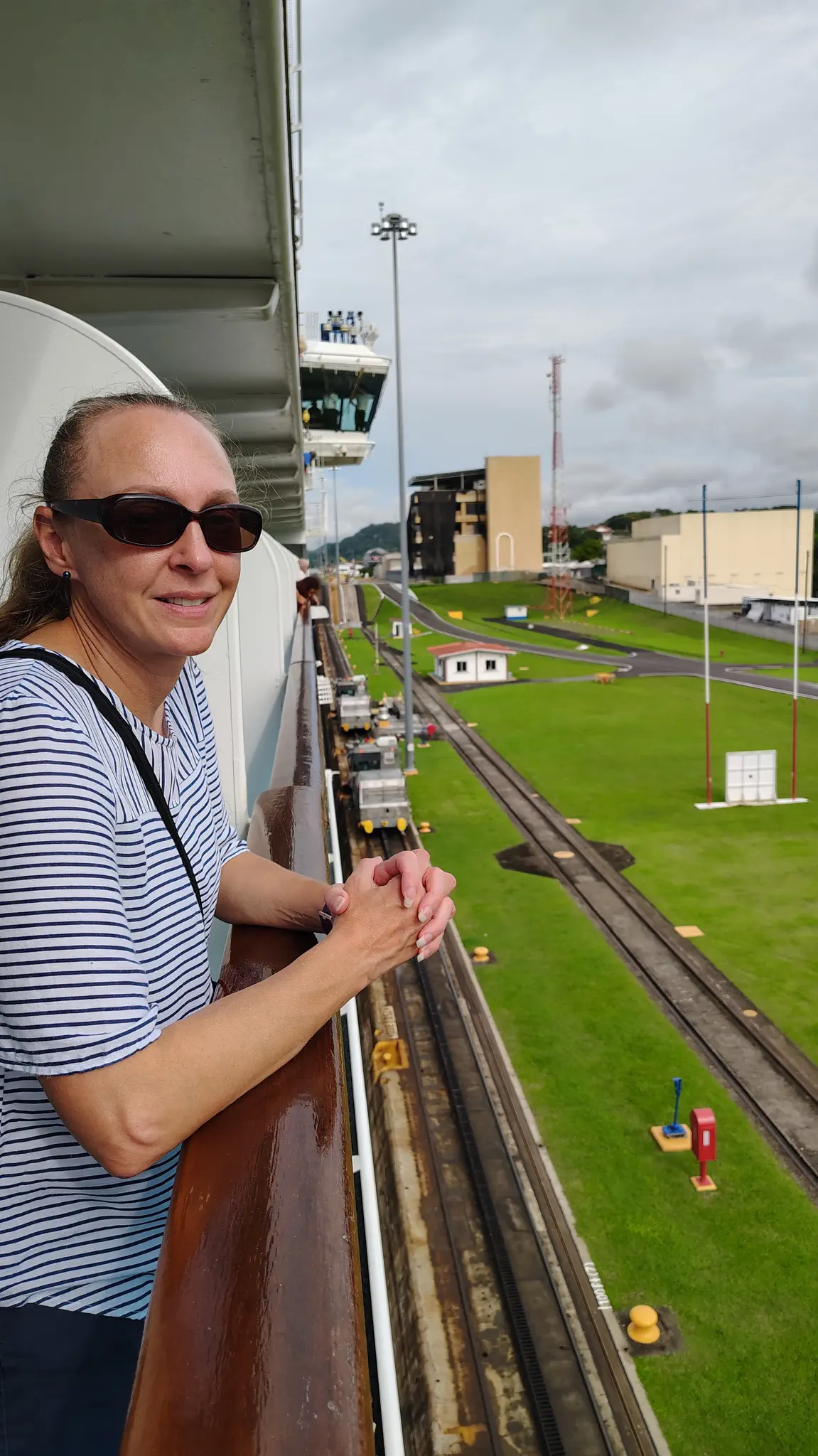
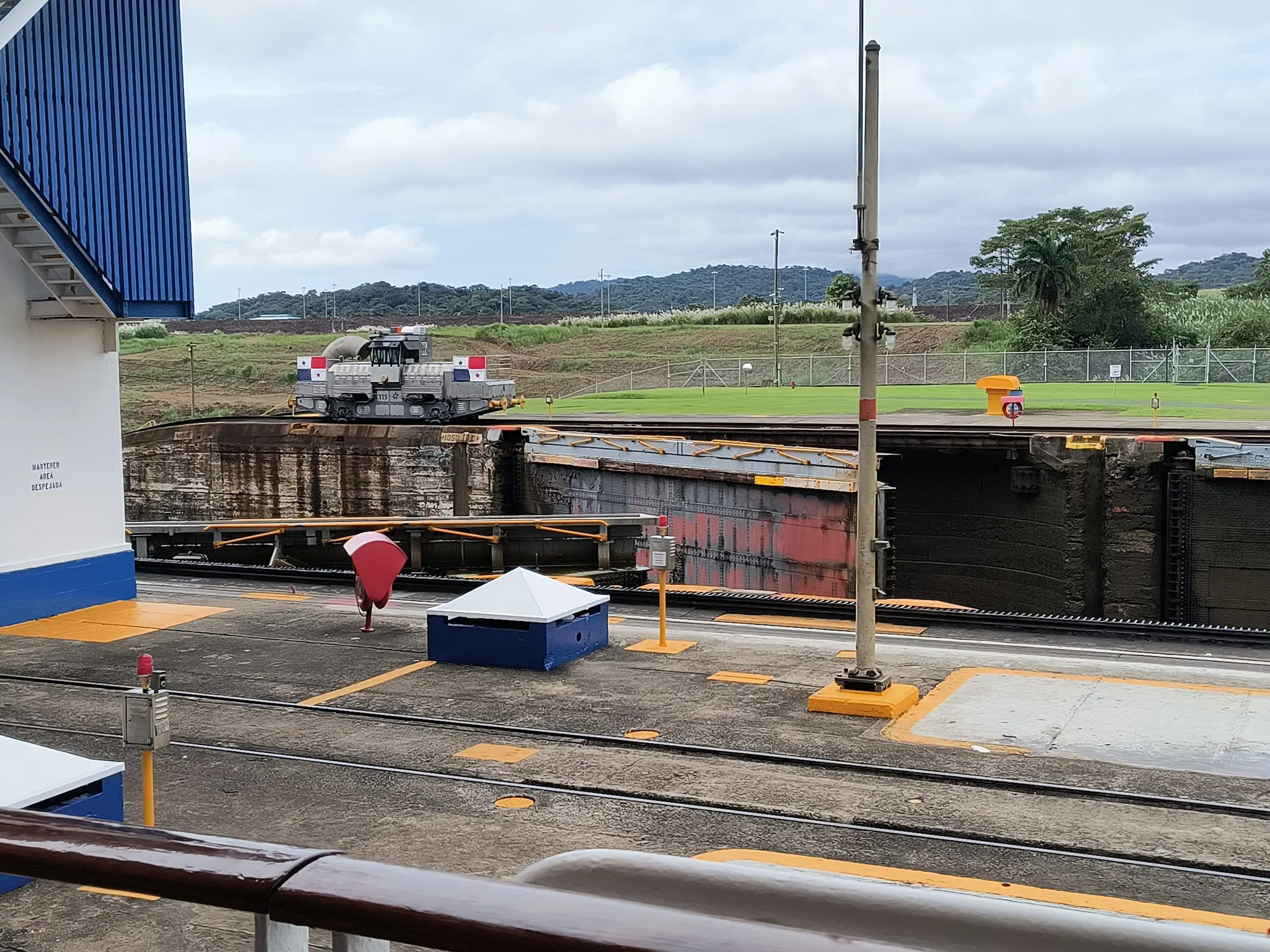
Gates open
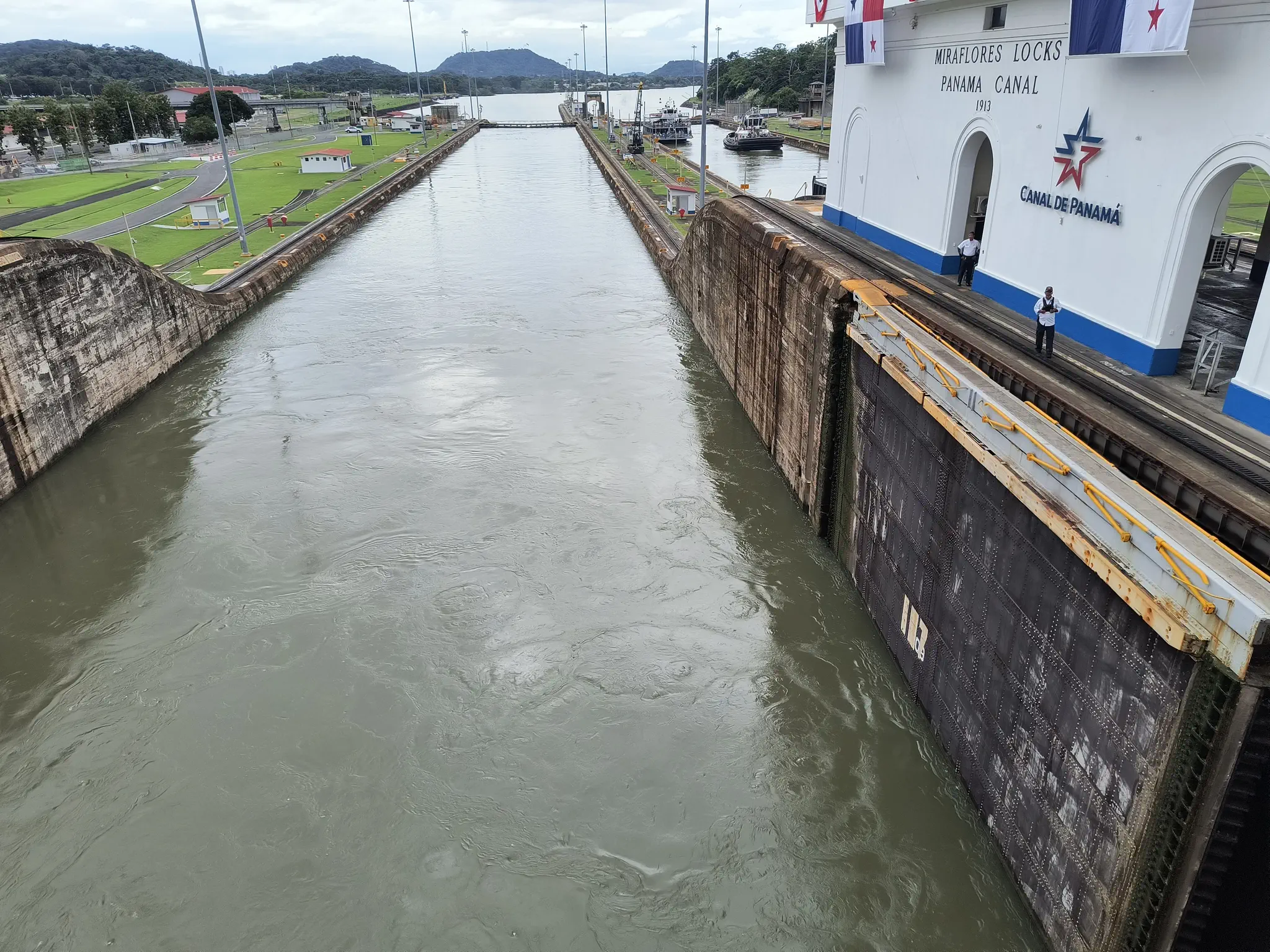
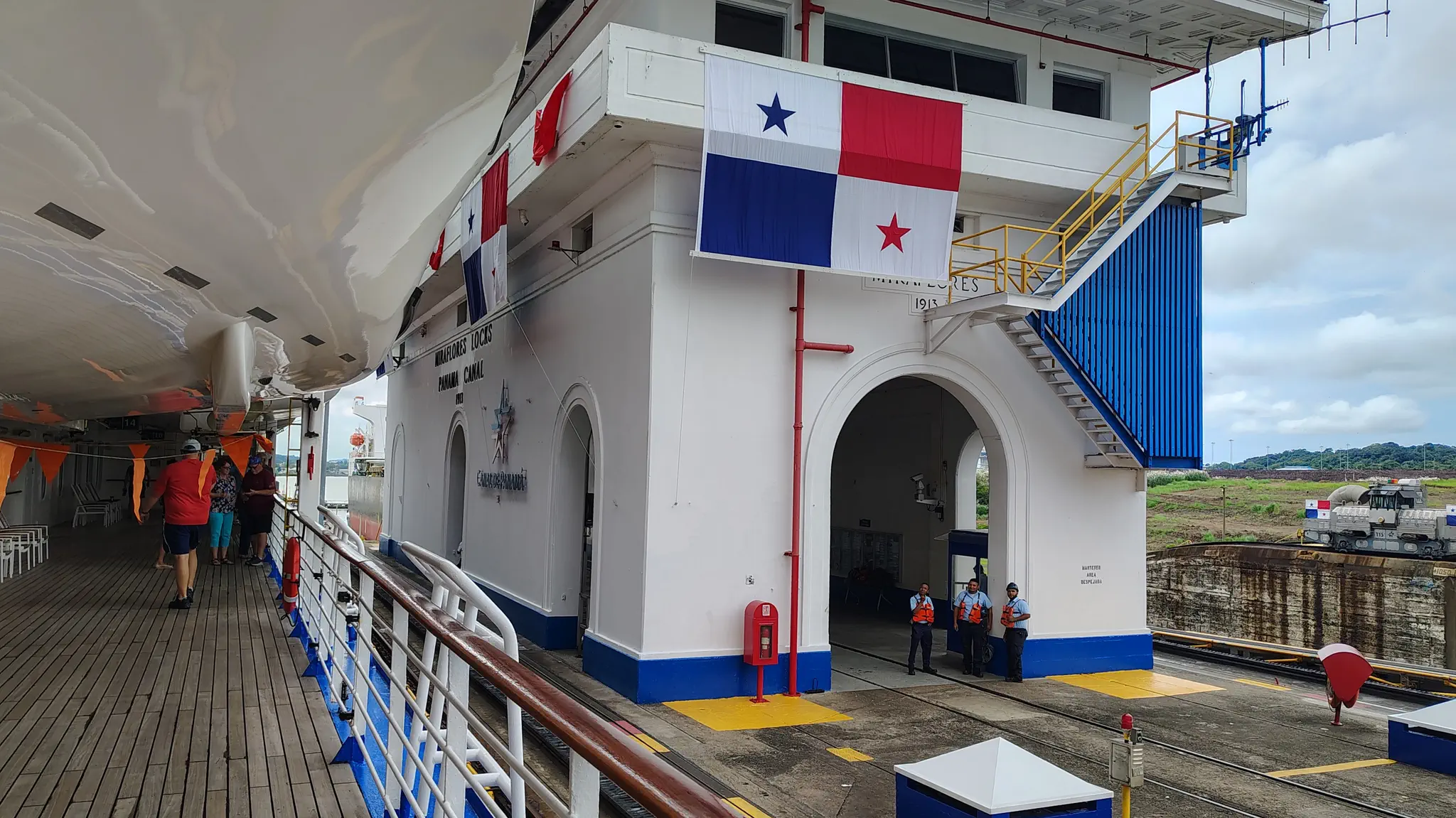
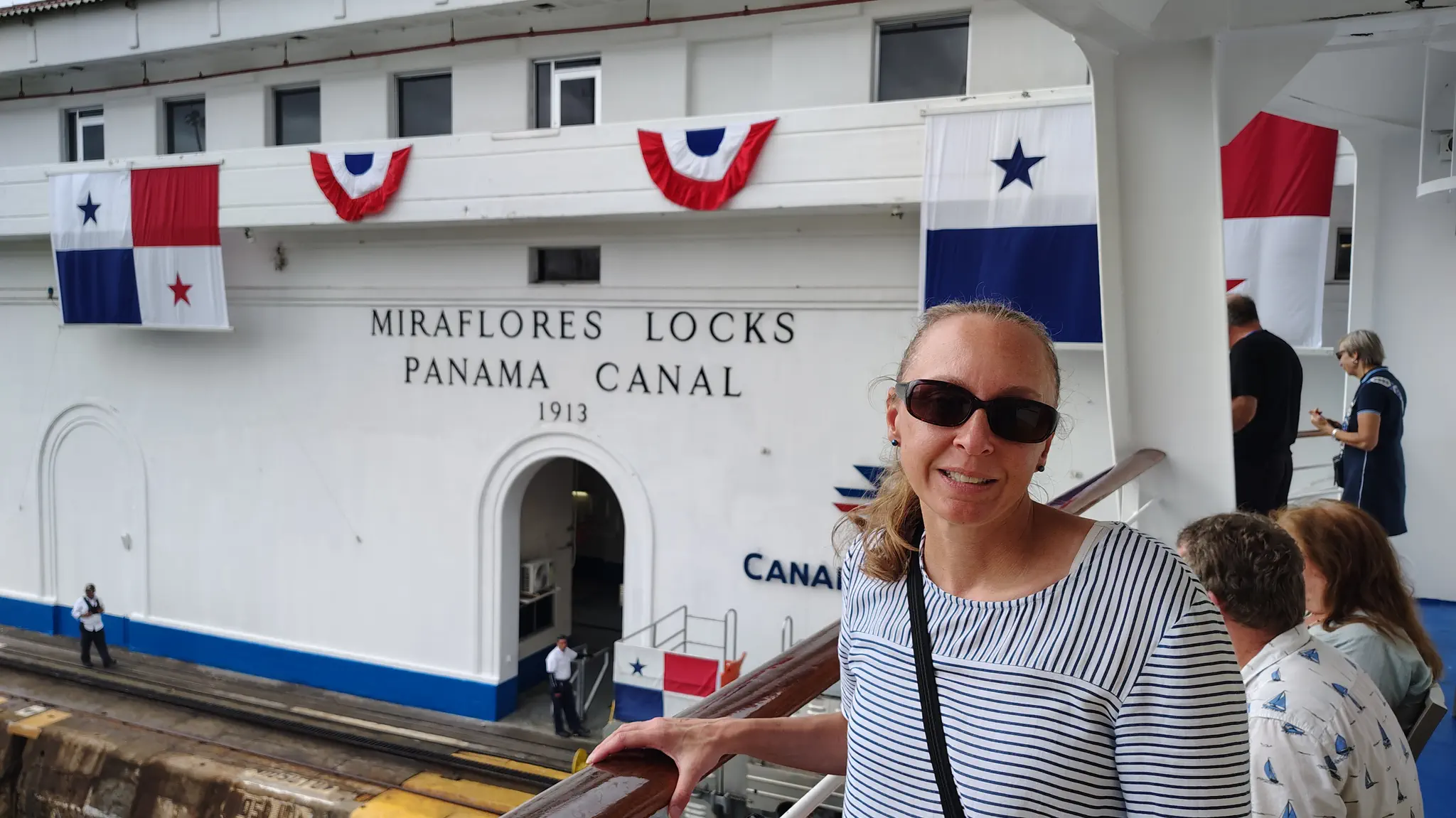
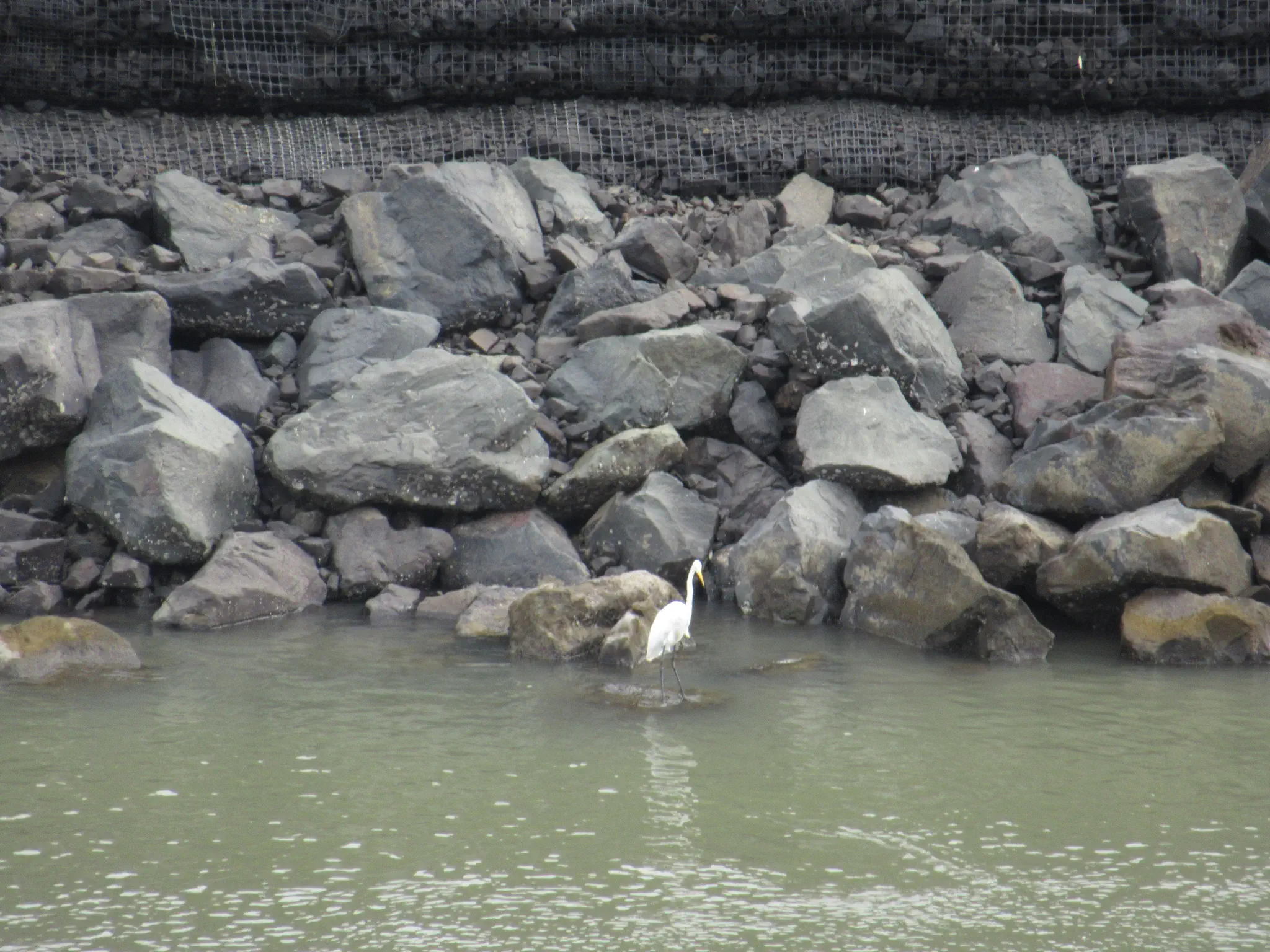
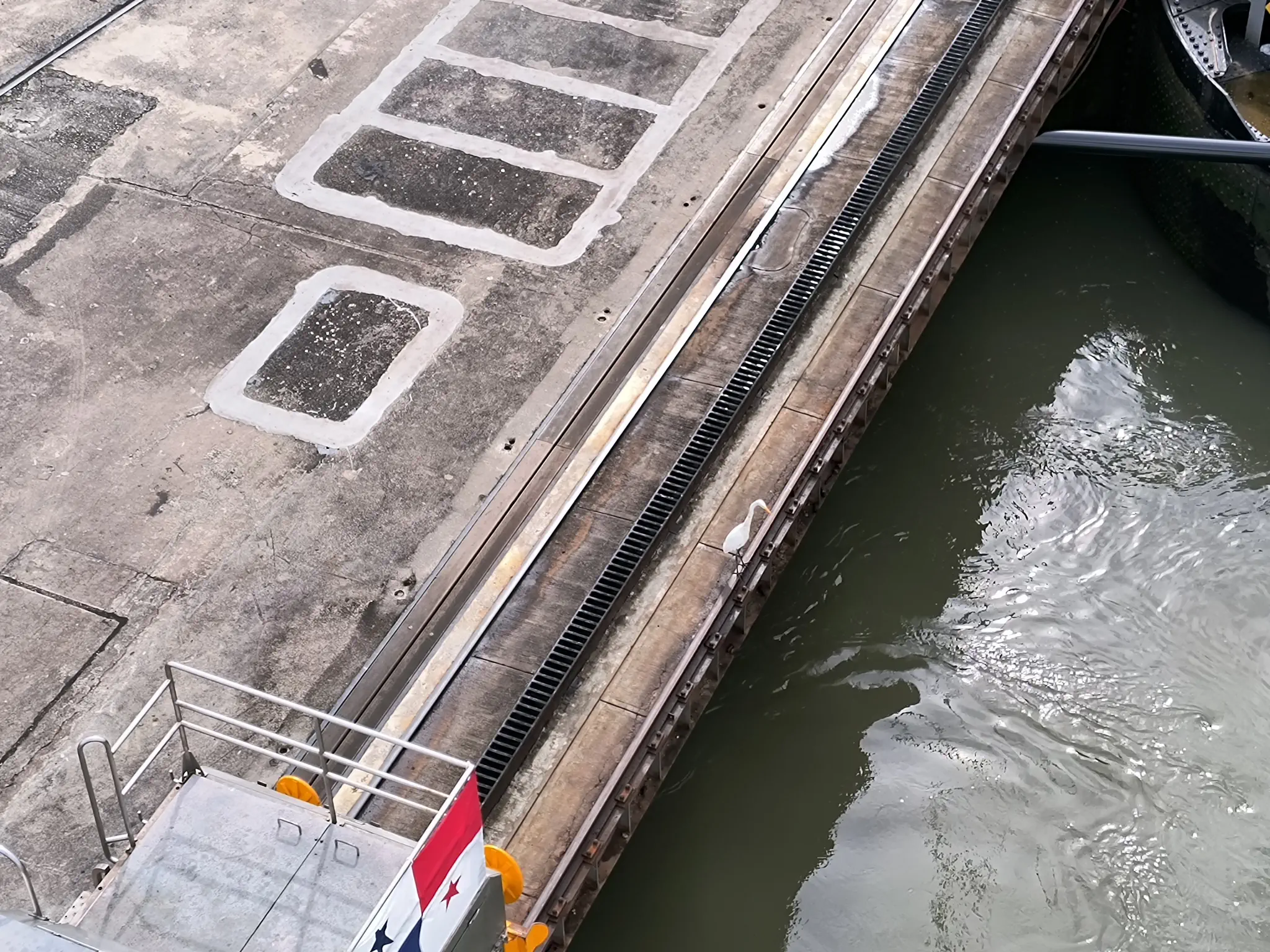
Egret hanging out in Miraflores Lake. Another in the lock that caught a fish. Visiting Herman the German again.
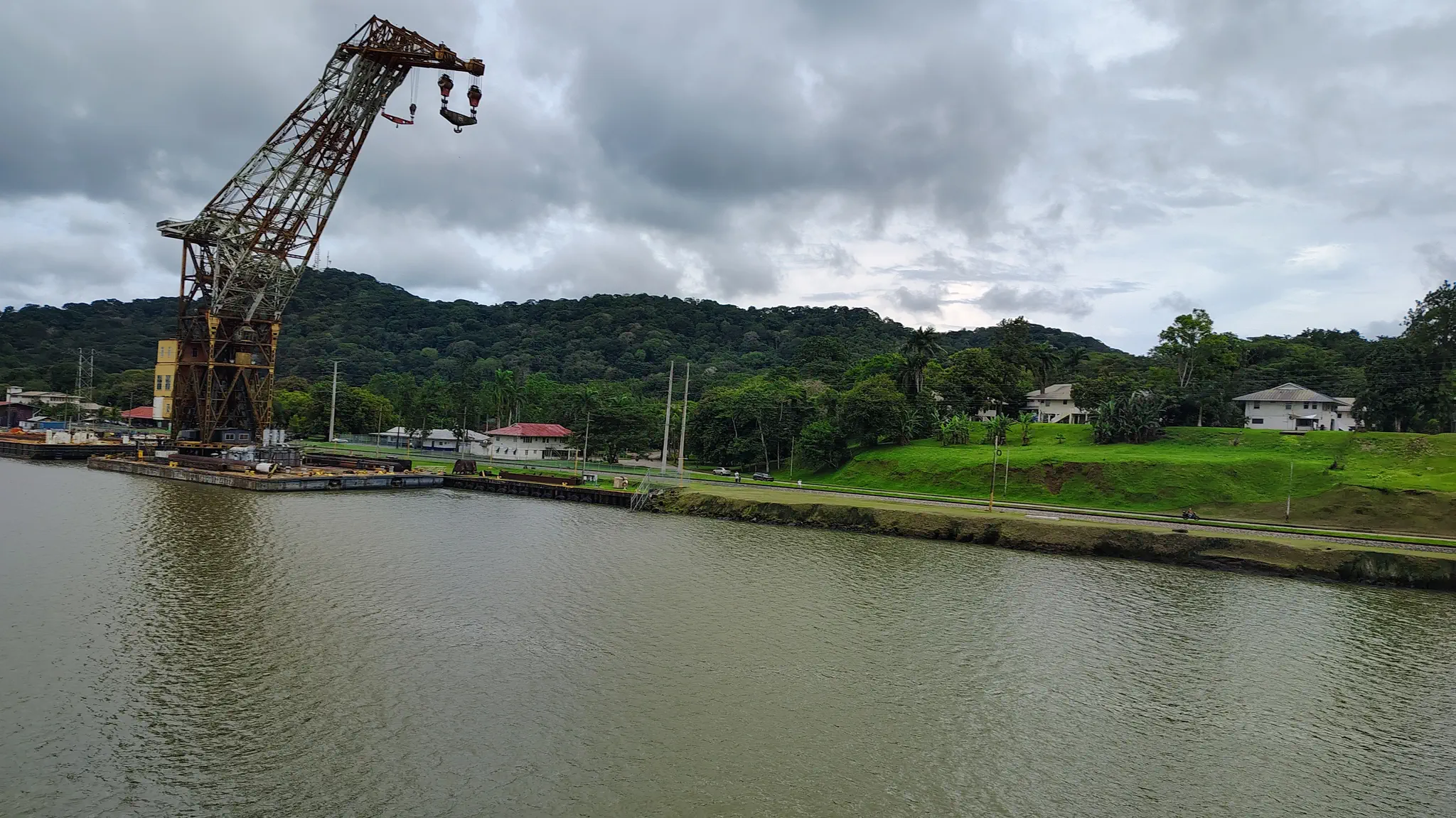
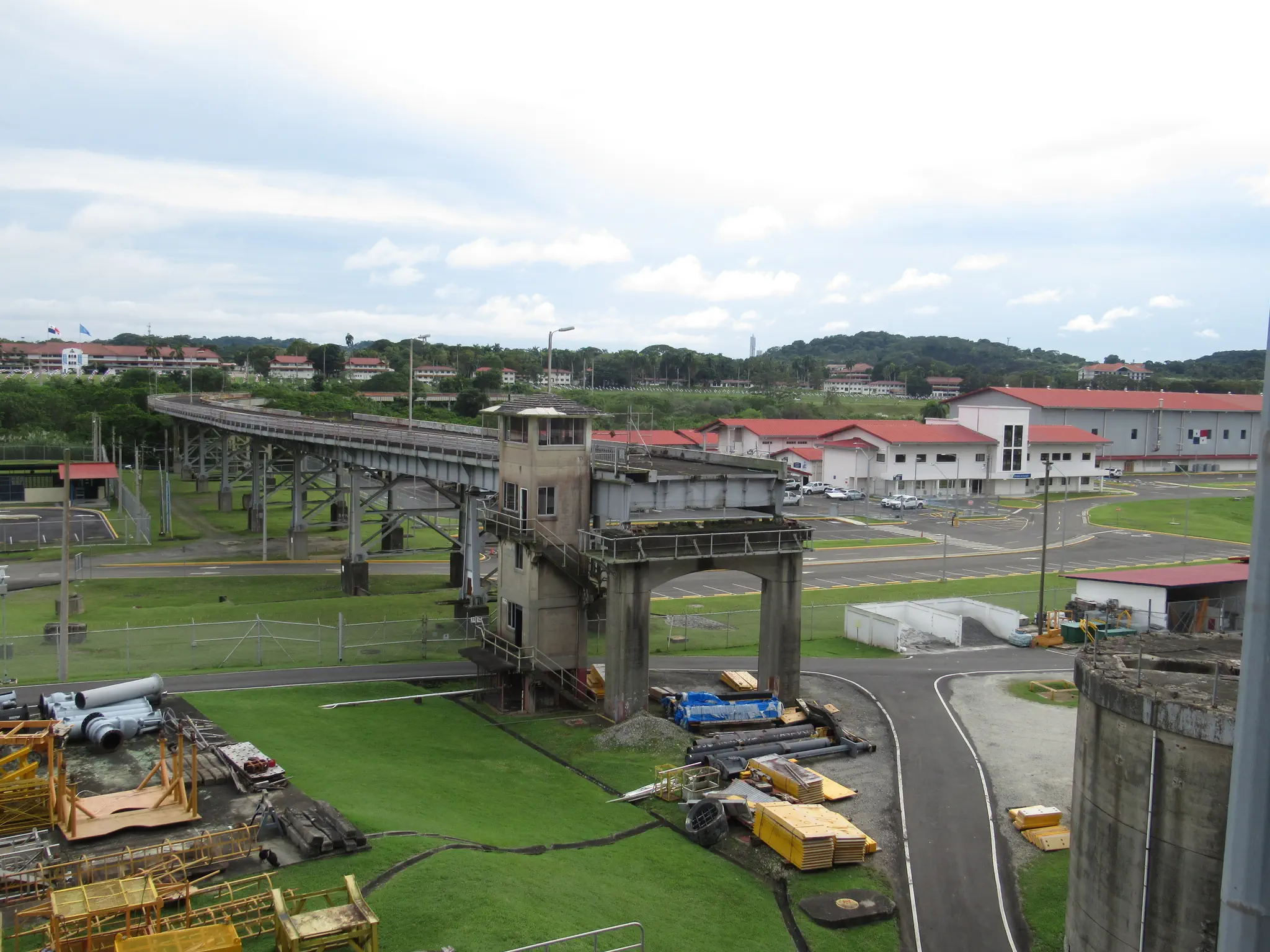
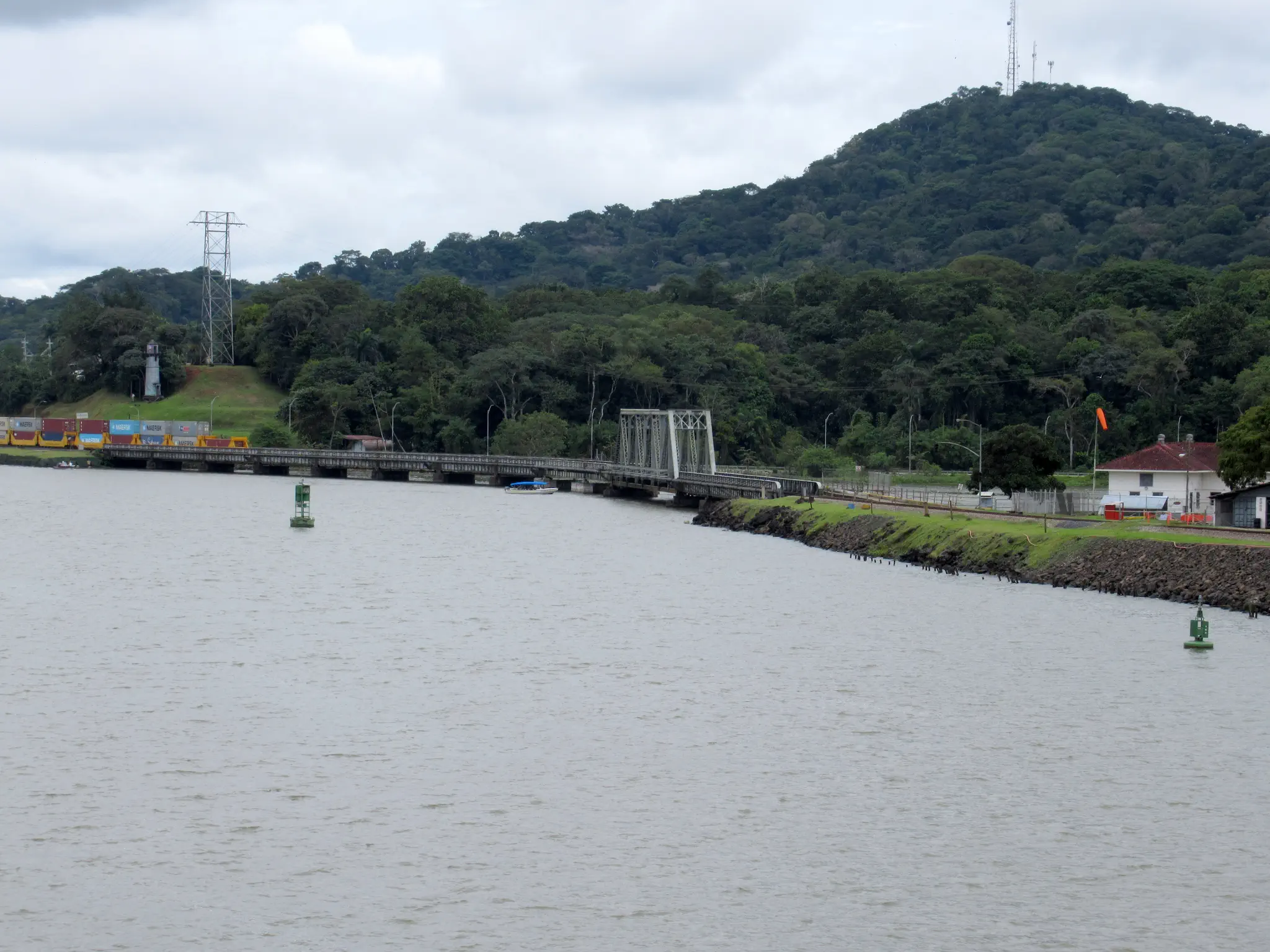
An old bridge. Finishing the first set of locks.
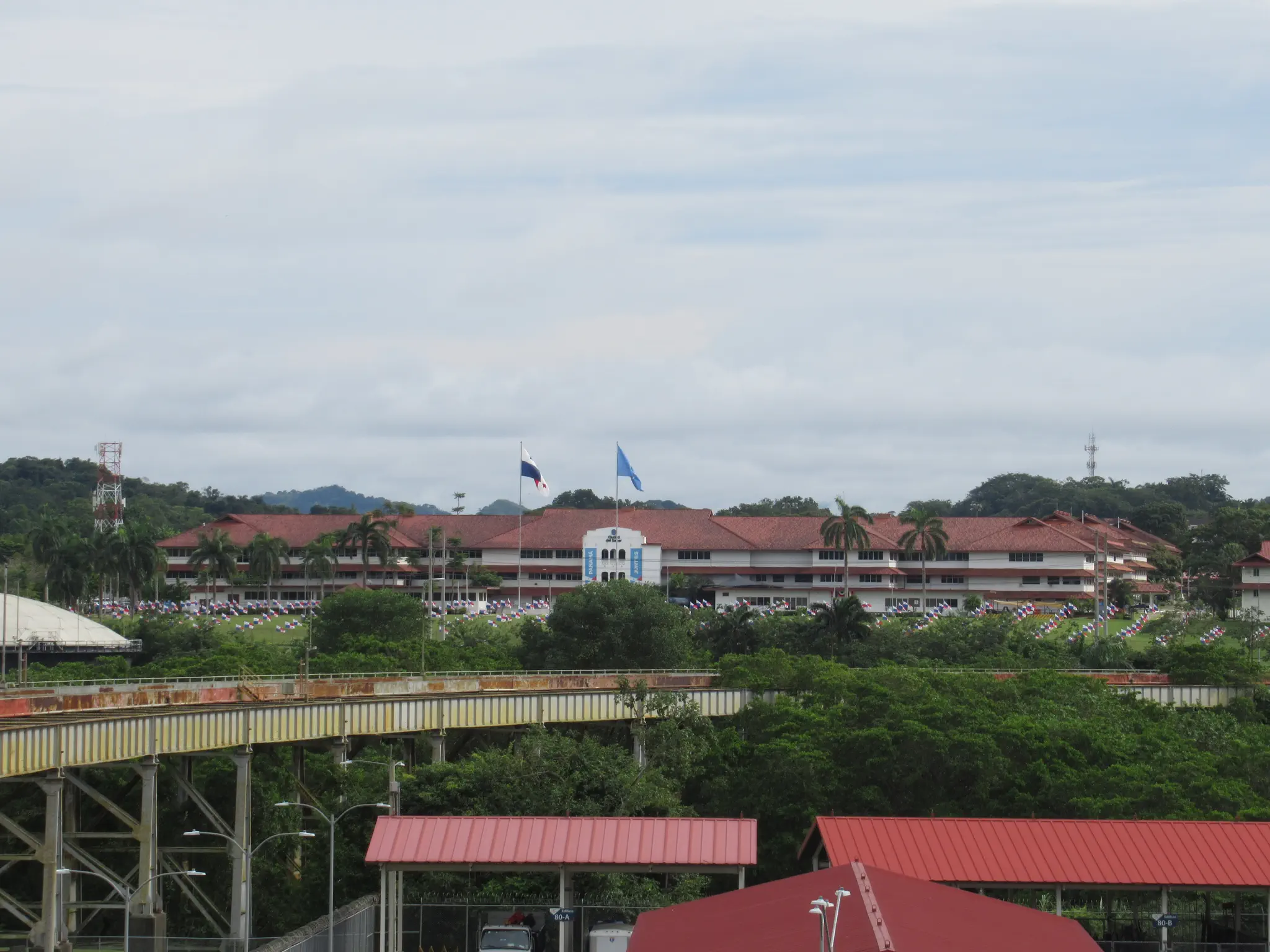
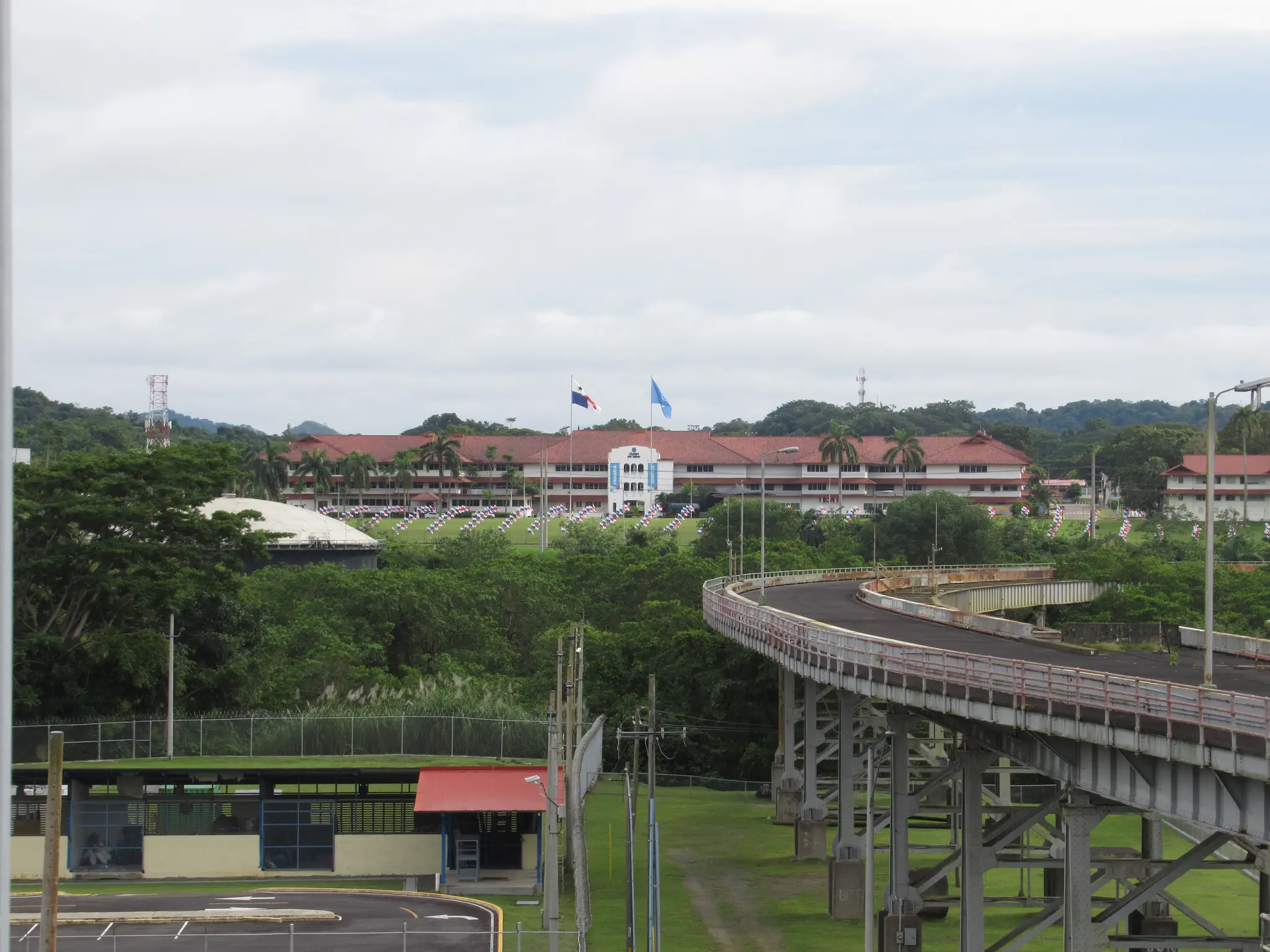
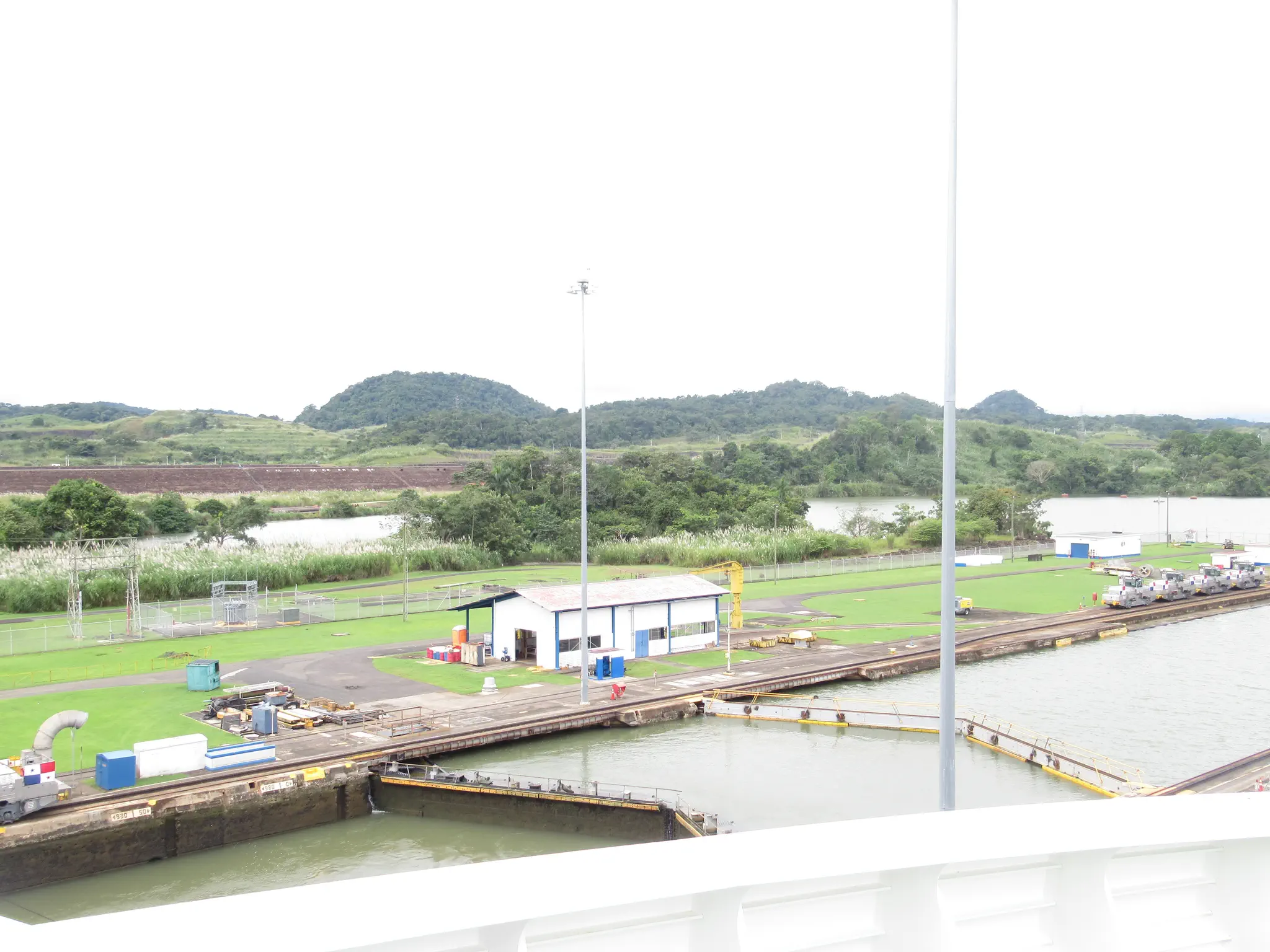
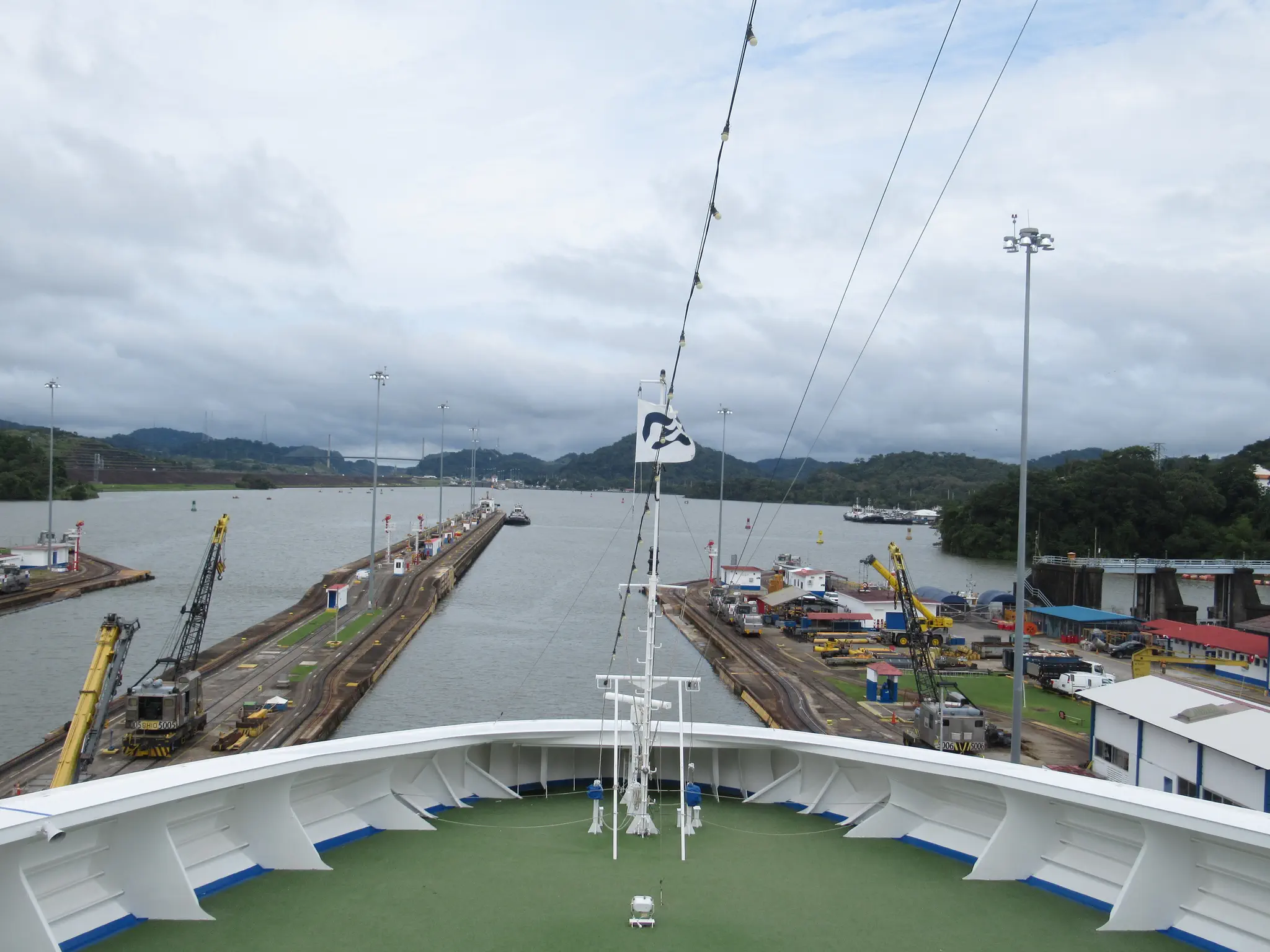
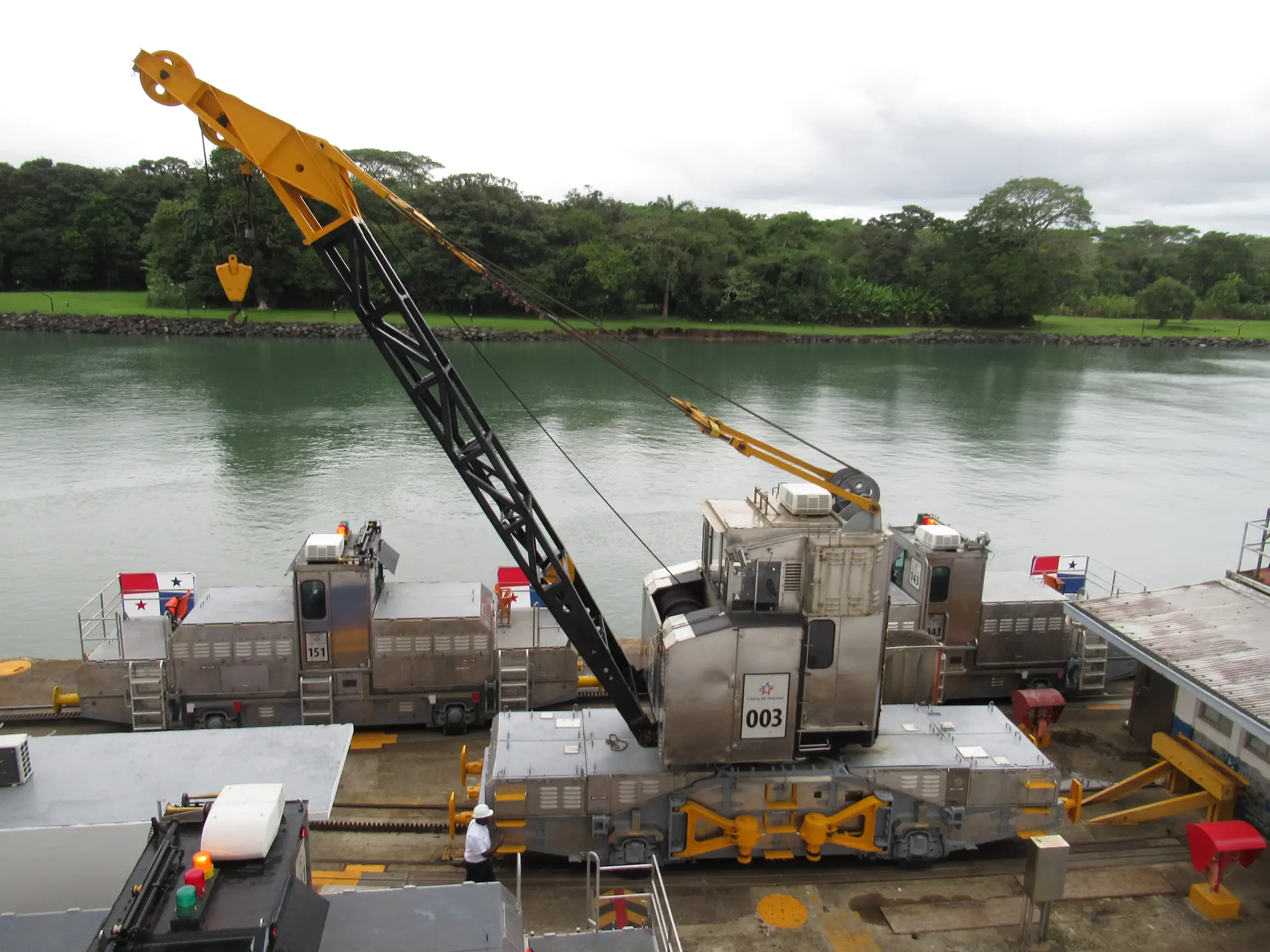
Interesting other types of mule.
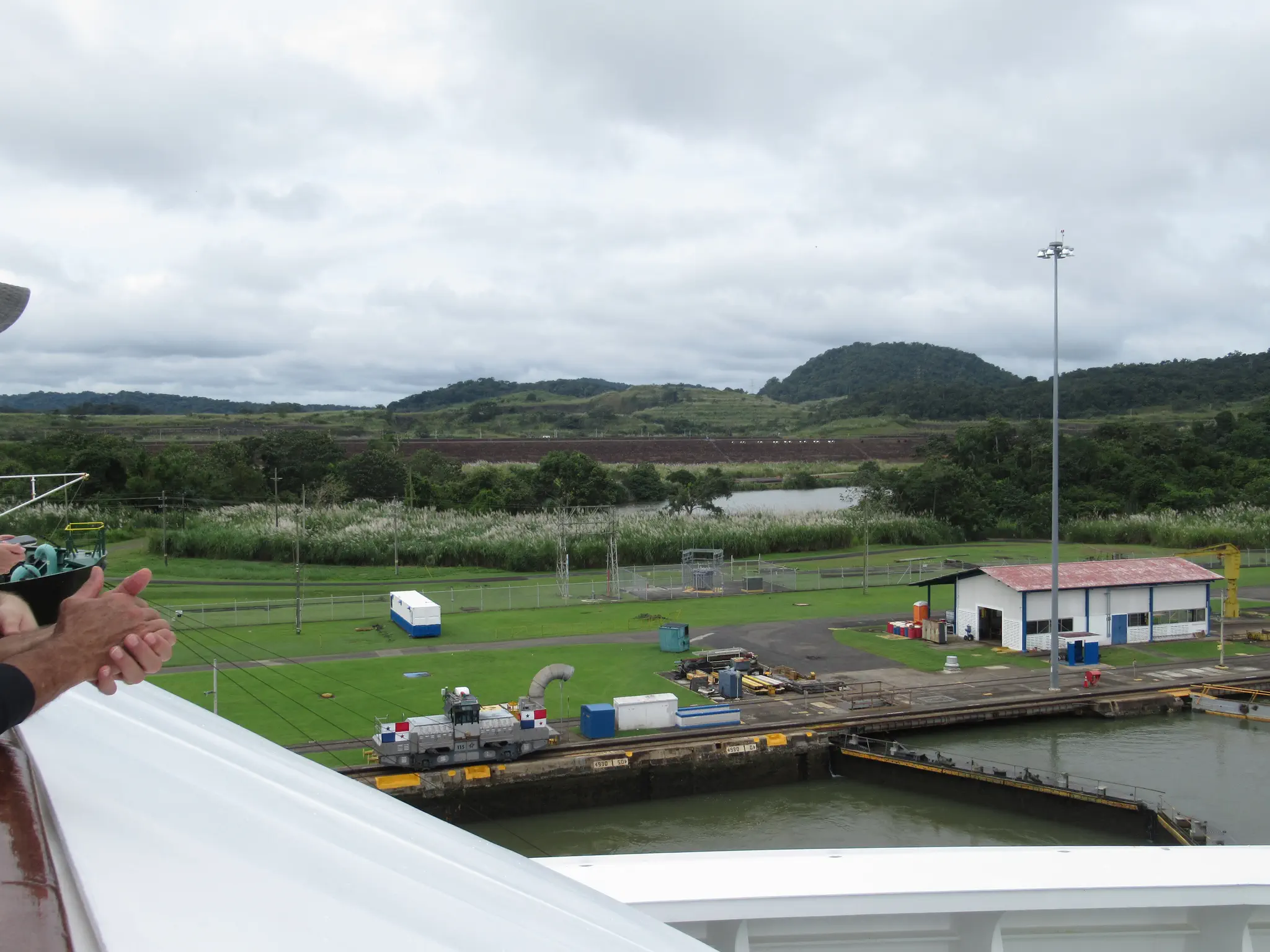
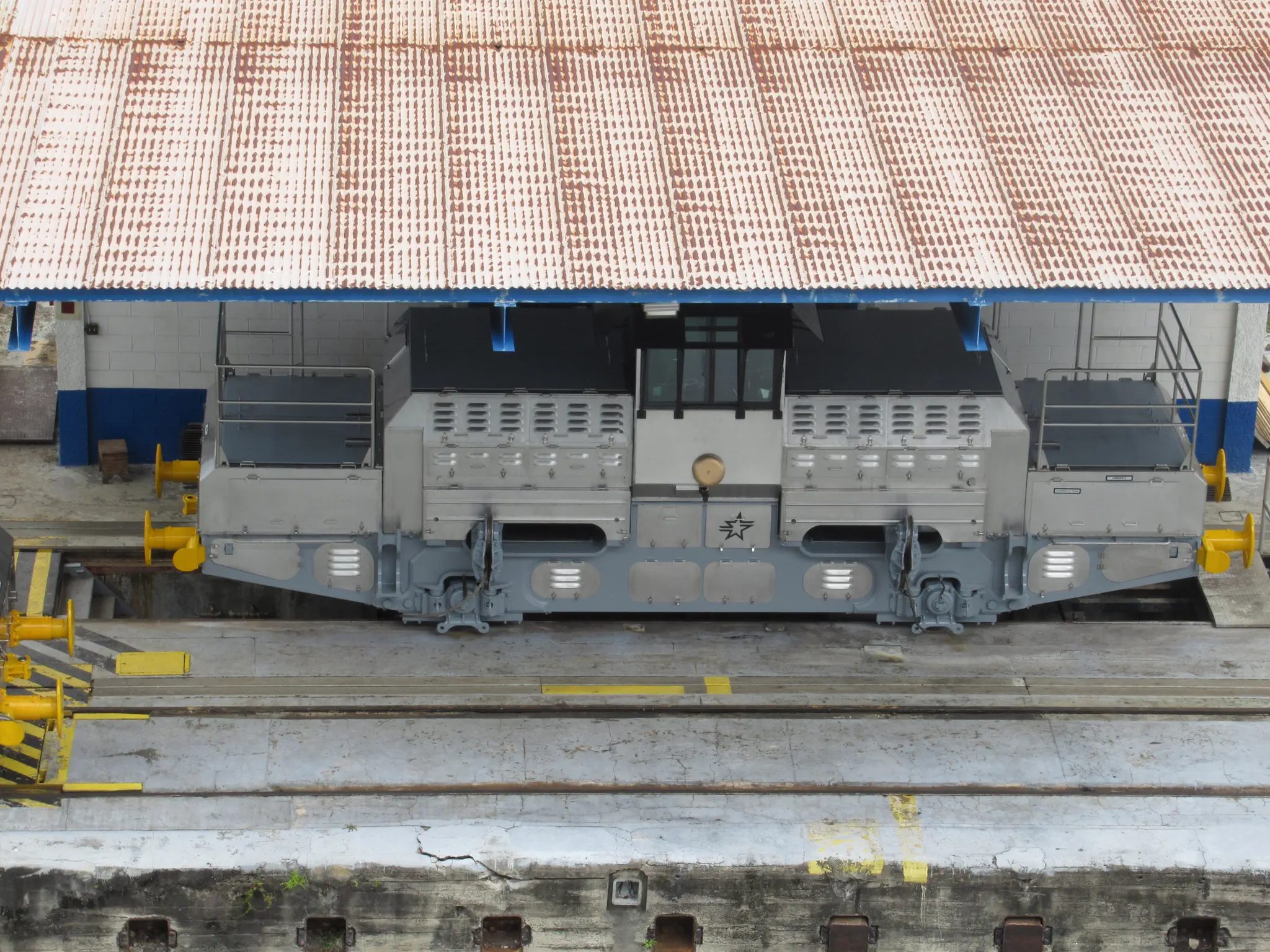
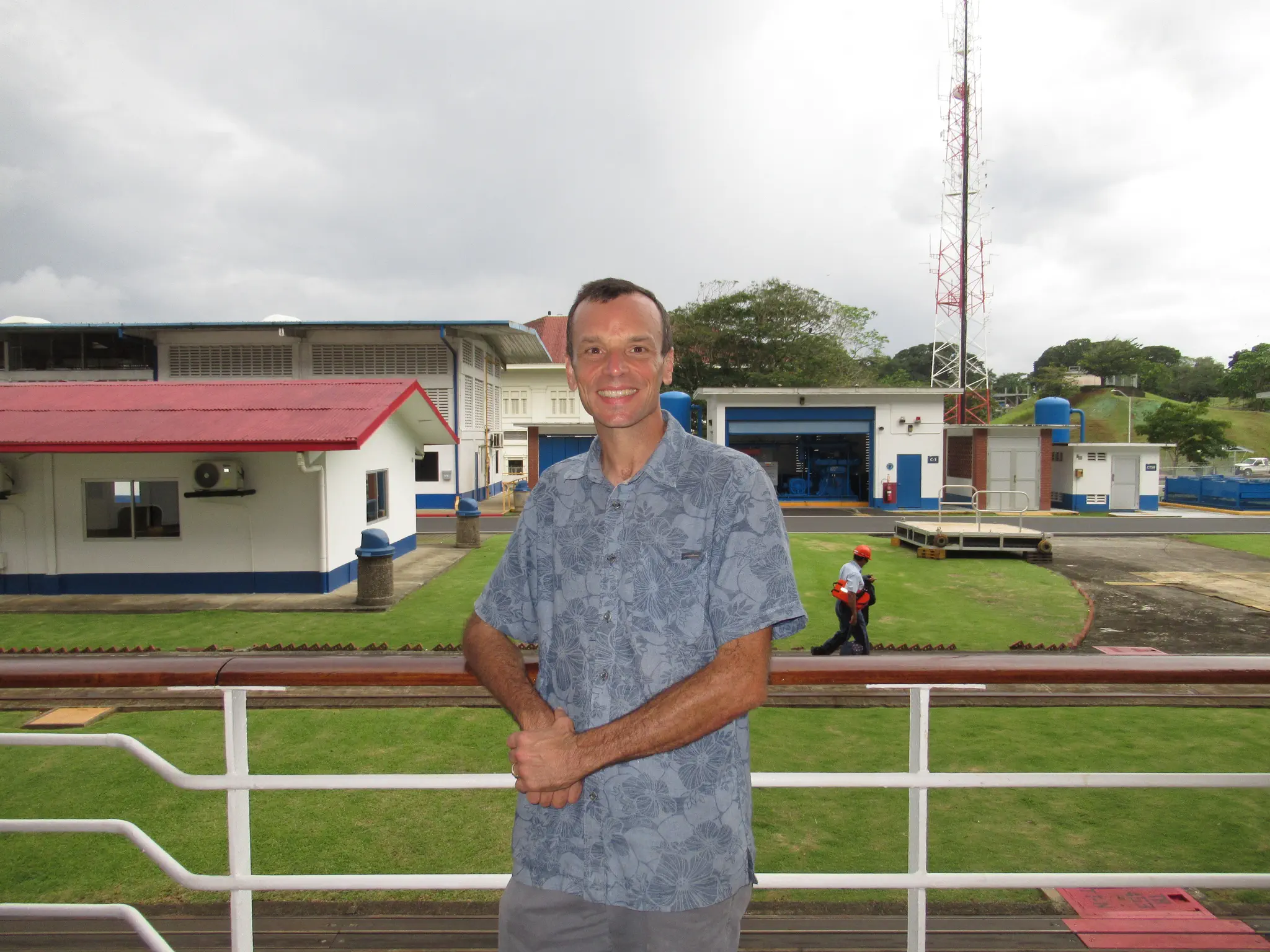
Me playing with the fisheye affect on the camera.
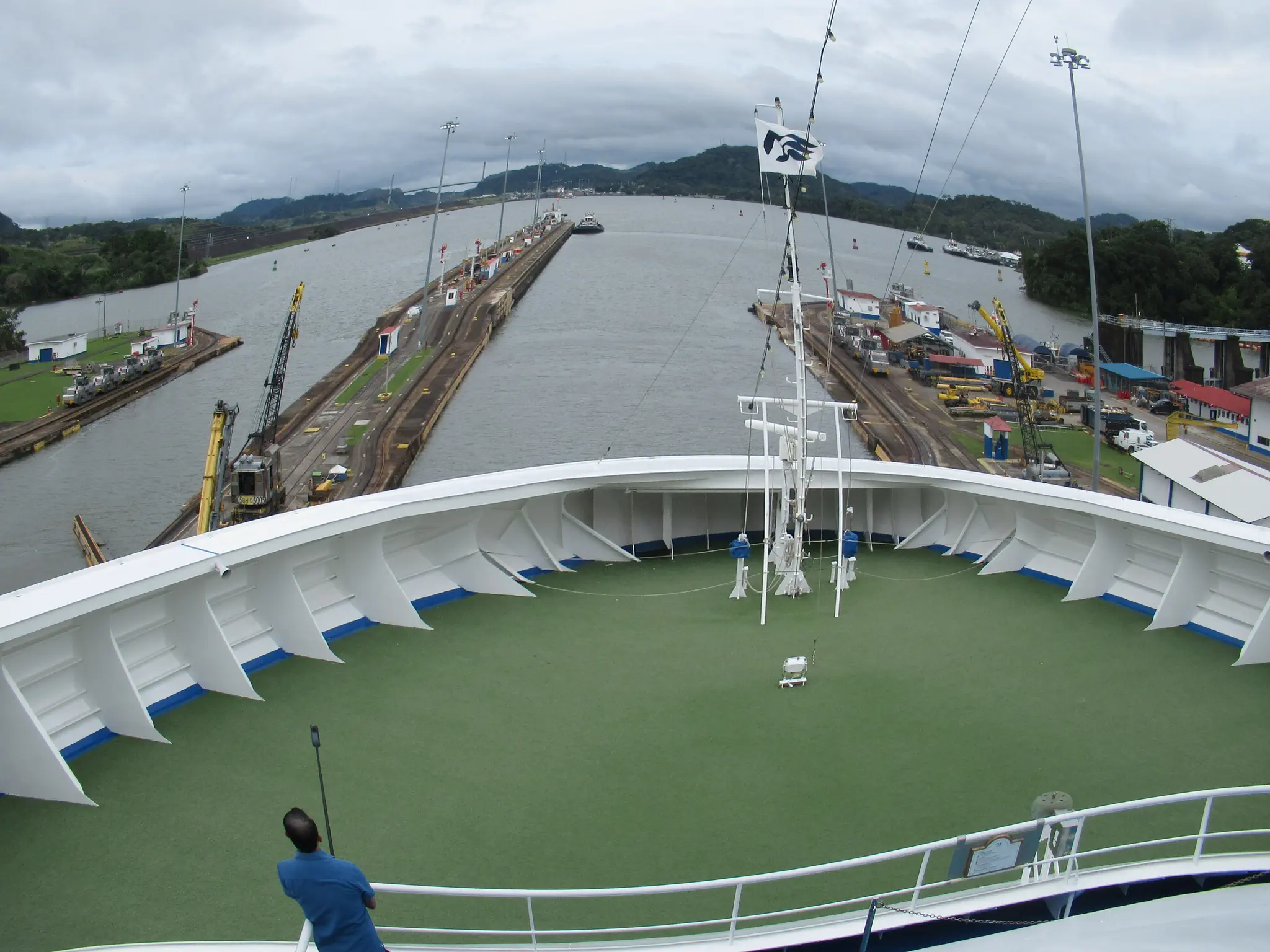
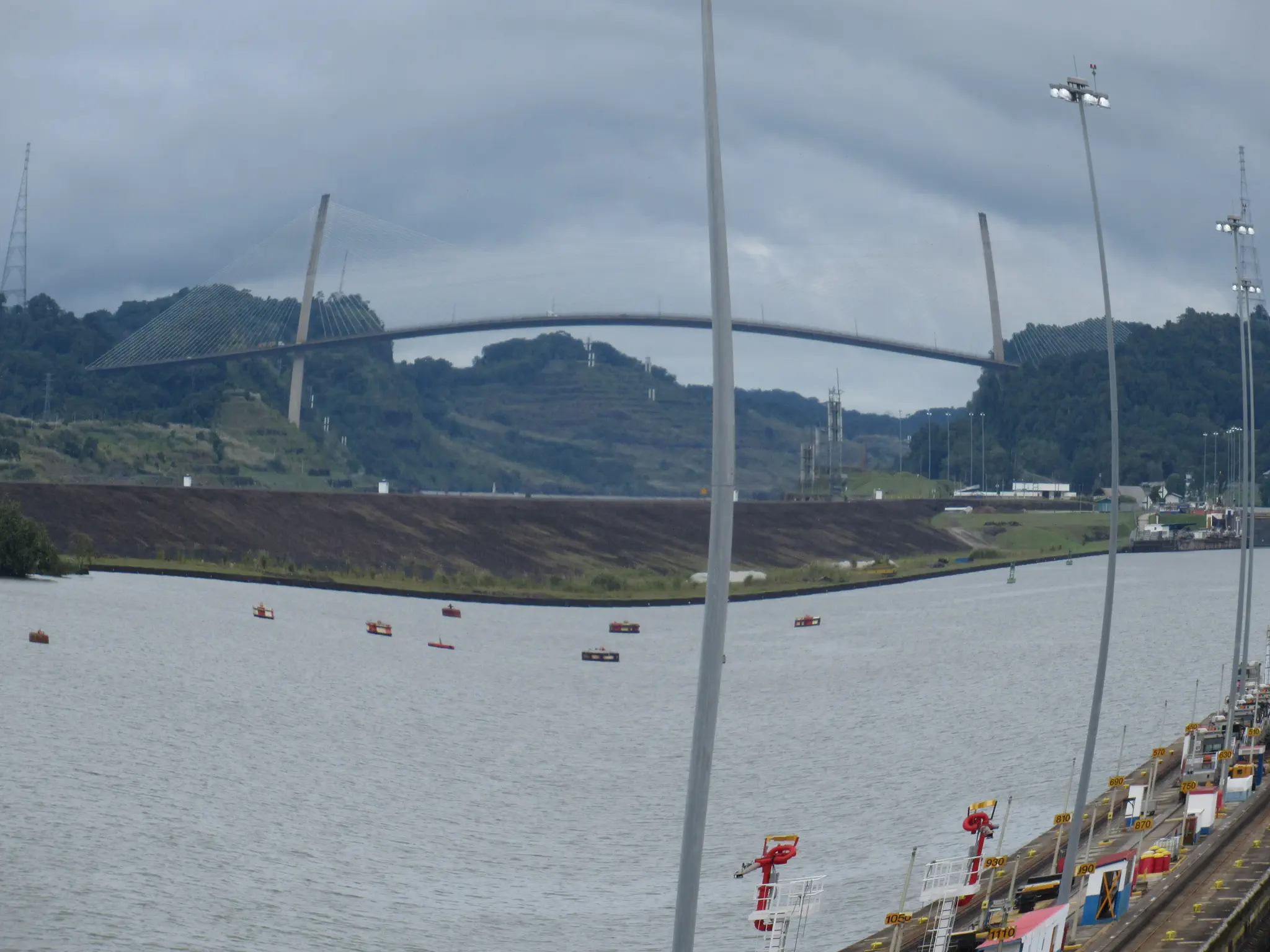
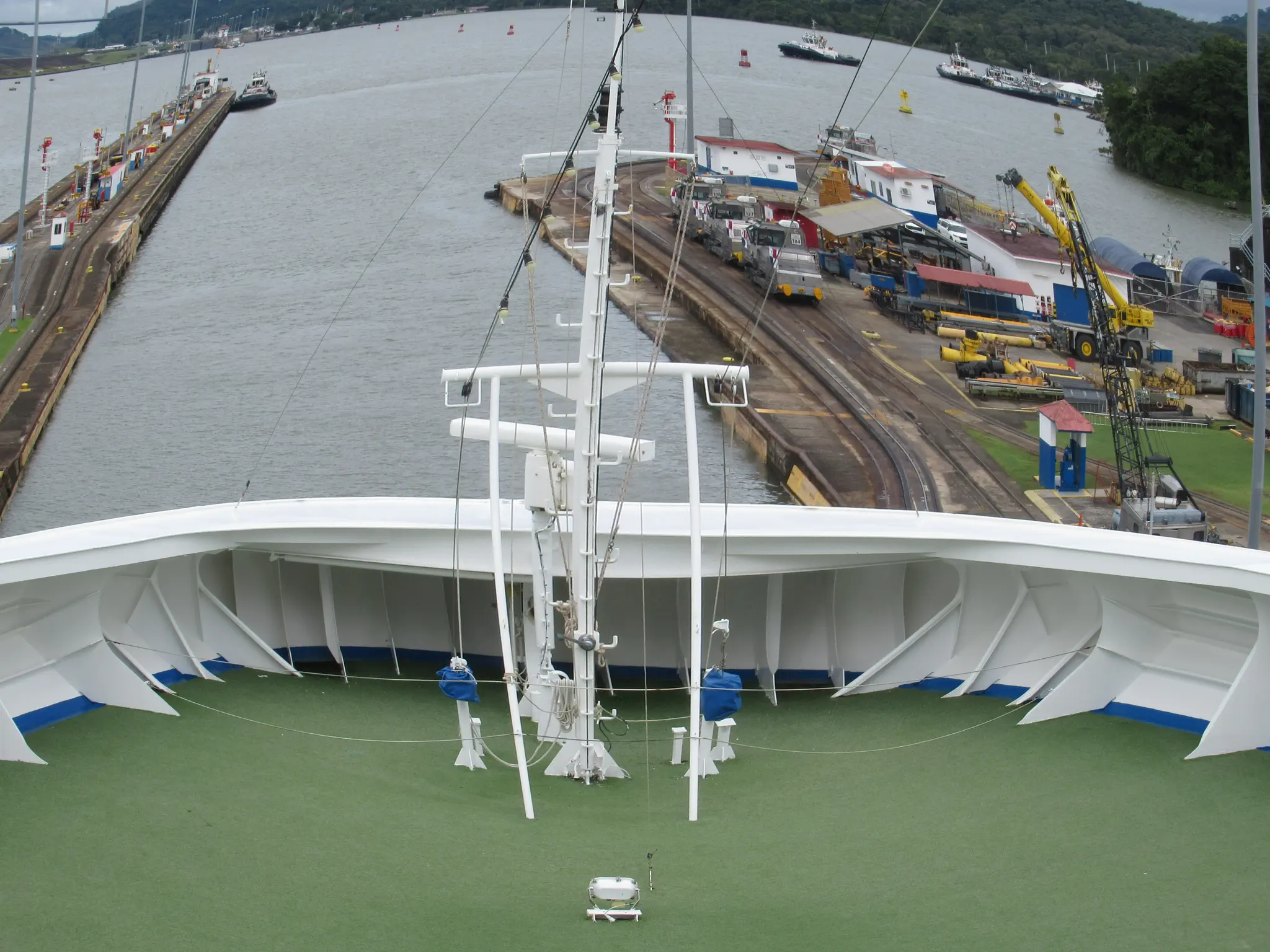
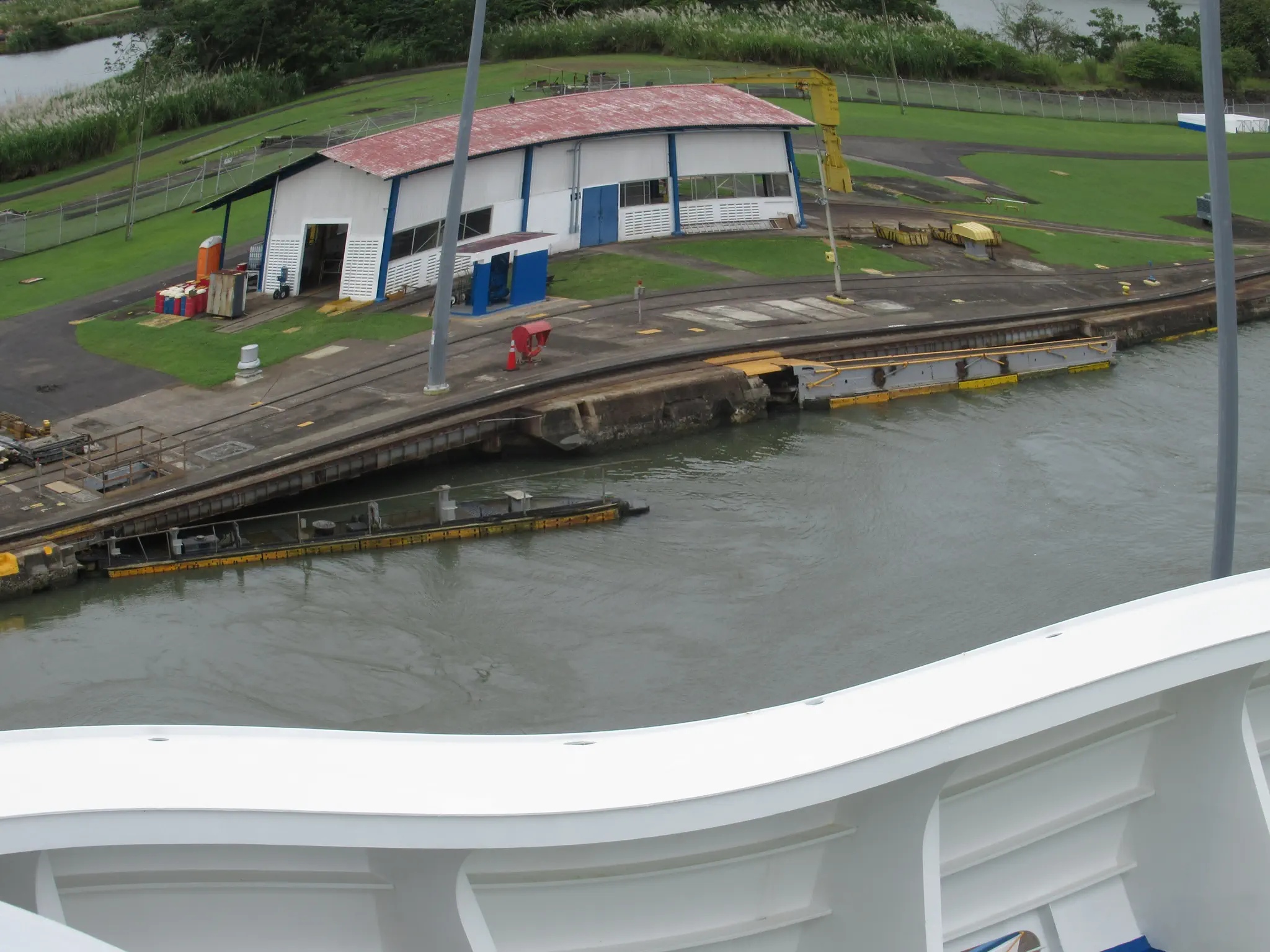
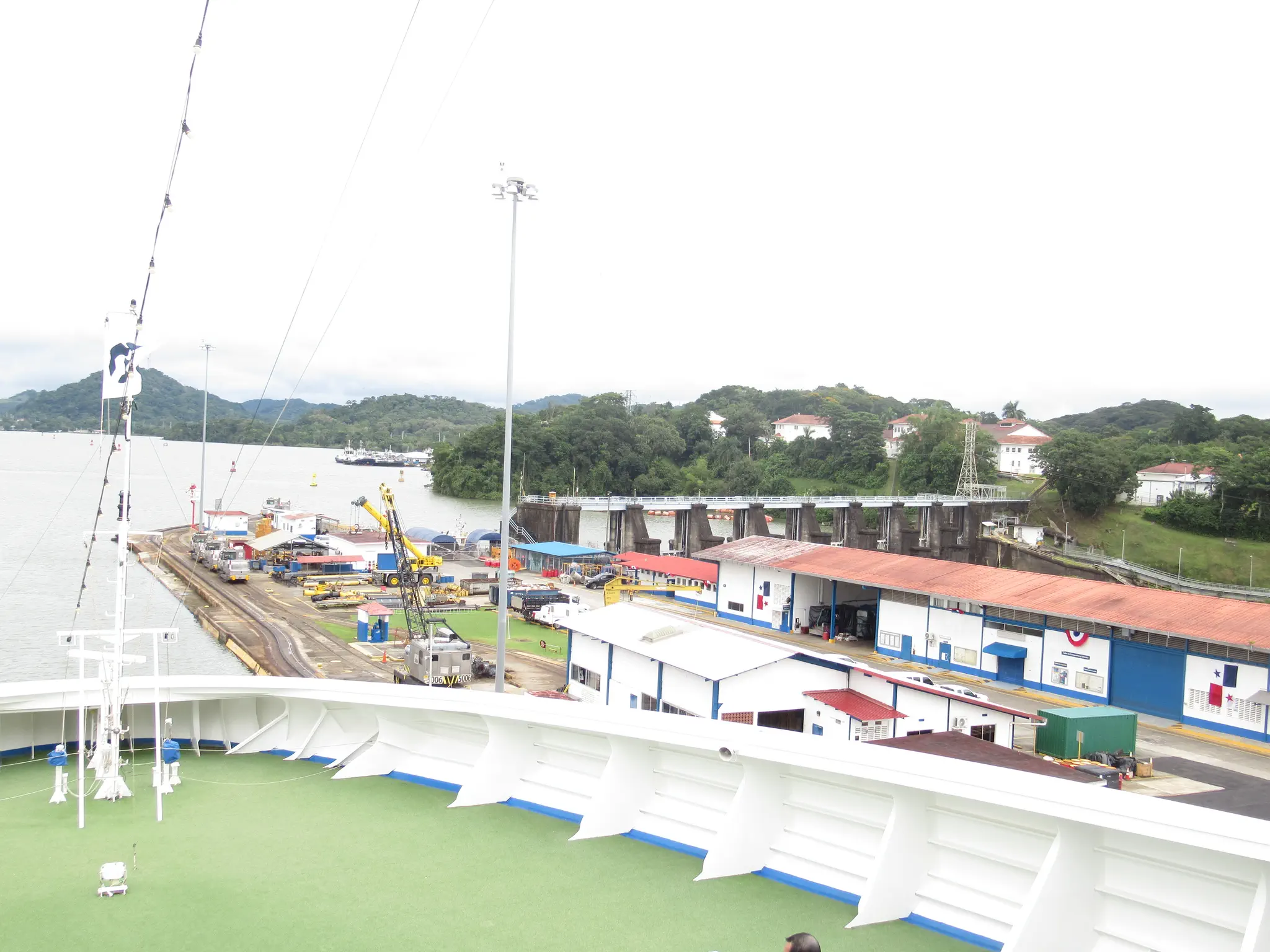
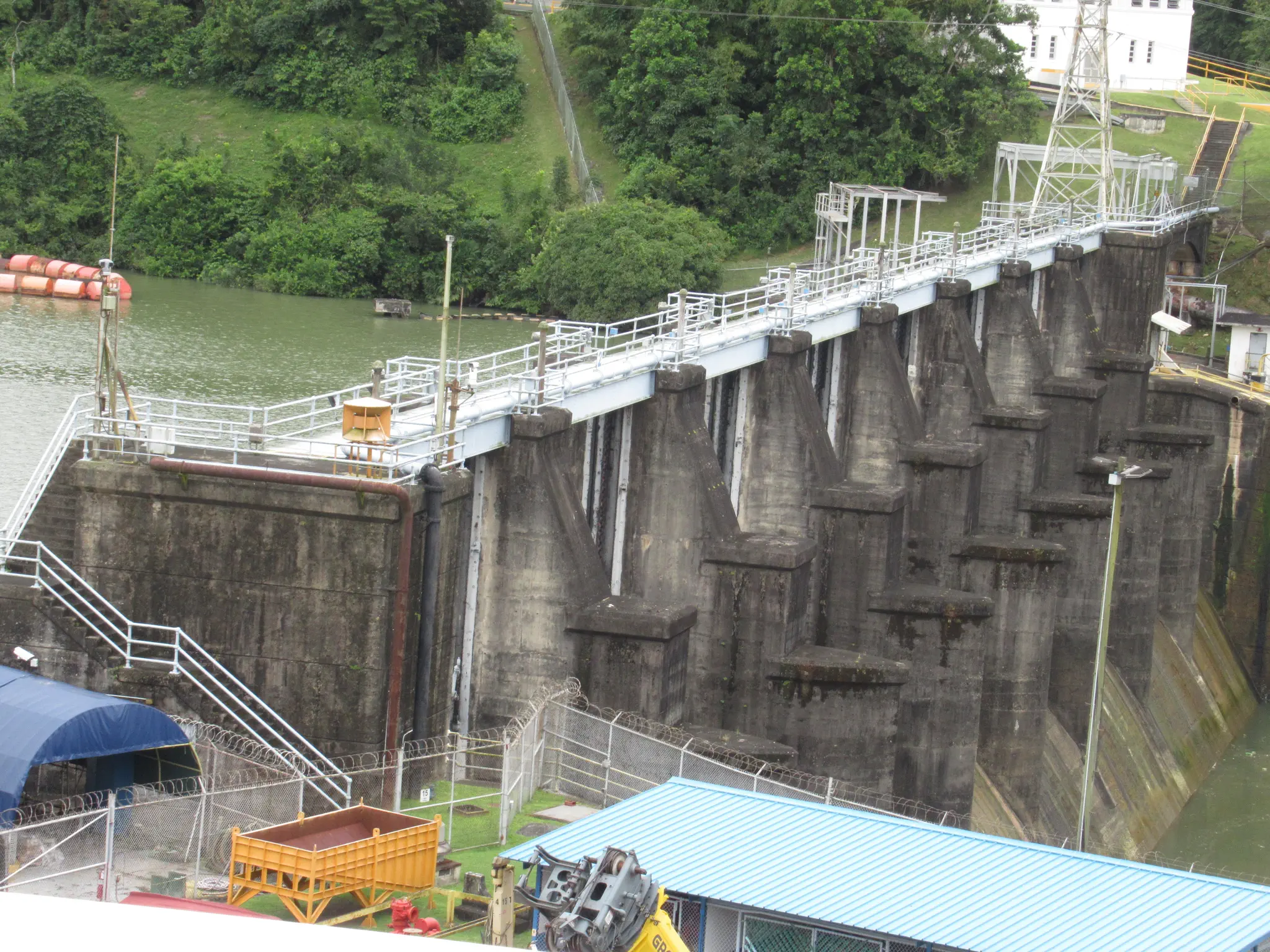
Miraflores Dam
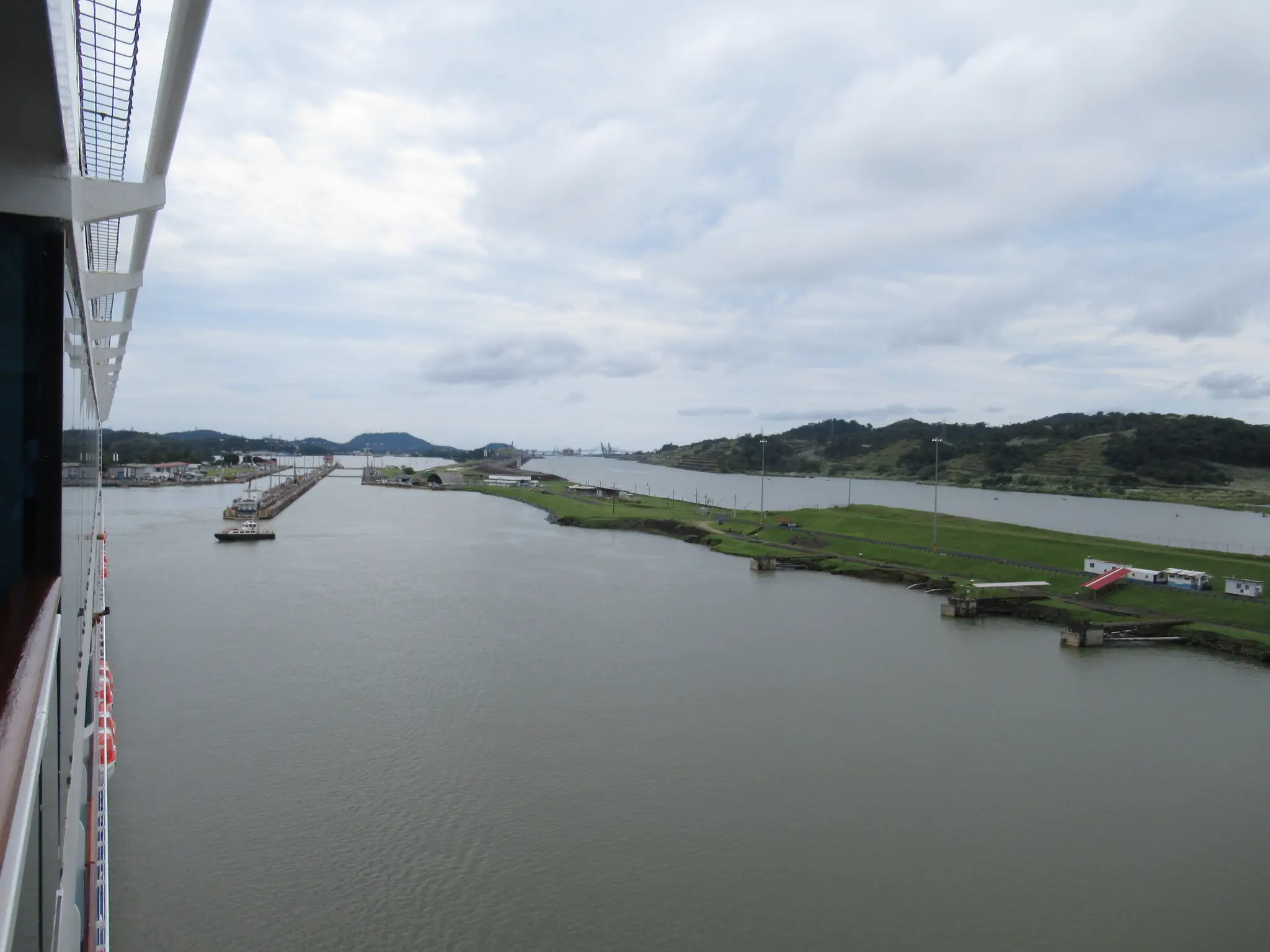
This is where the old and new locks rejoined in the lake.
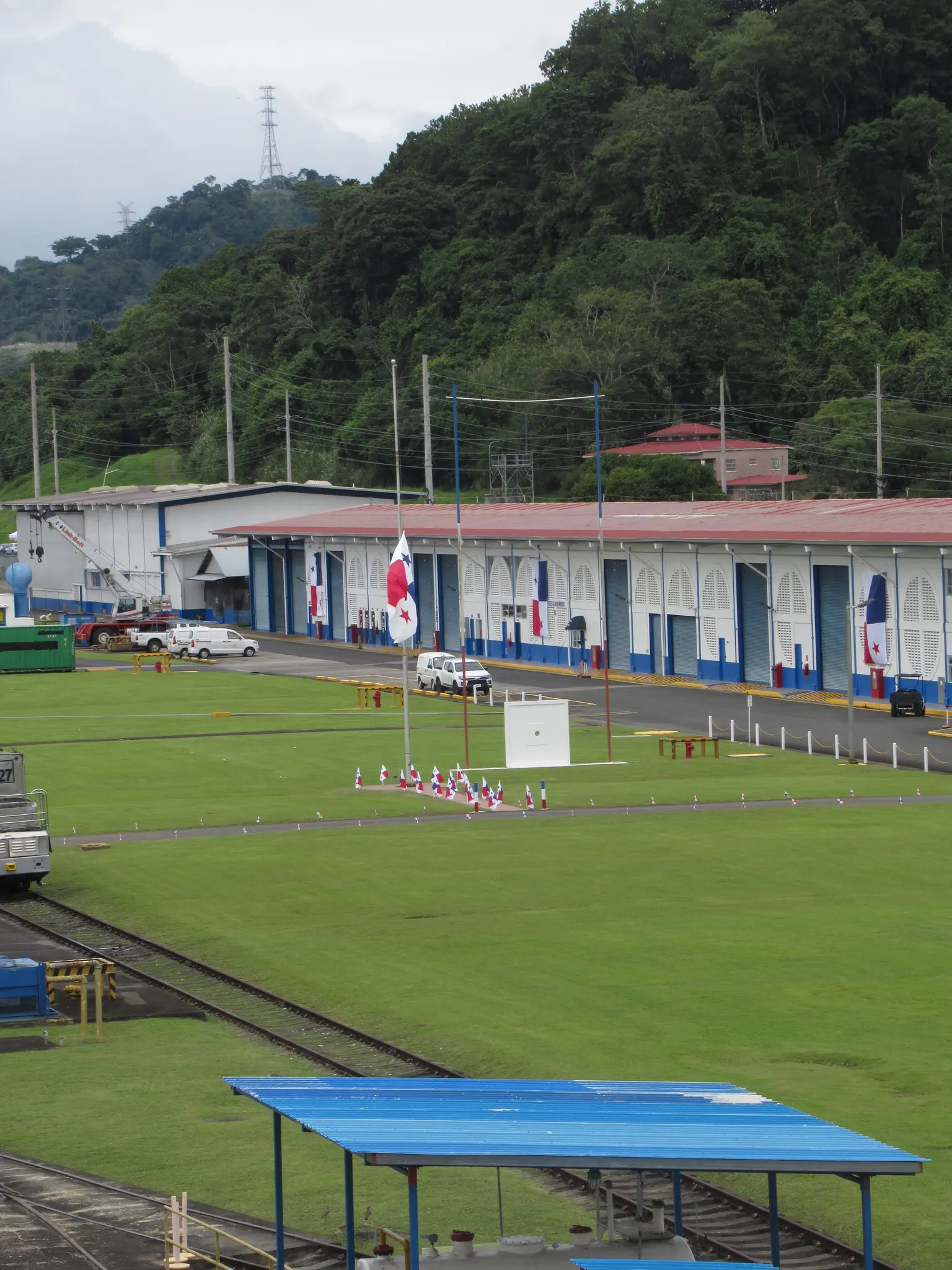
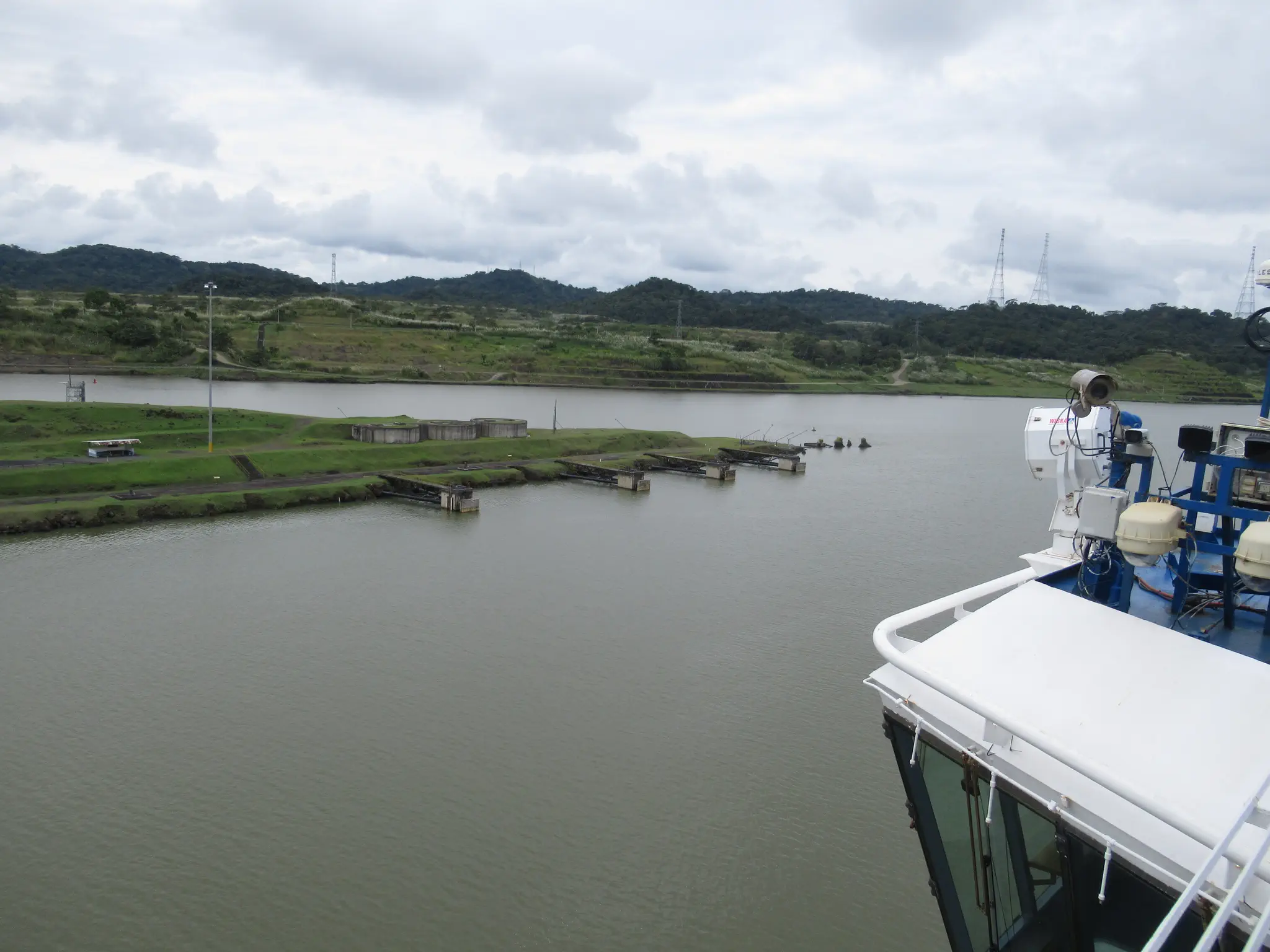
Sailing through the Culebra Cut with the terraces and vegetation plantings to prevent landslides and some landslides that still occurred. We found some elephant grass planted that our lecturer mentioned.
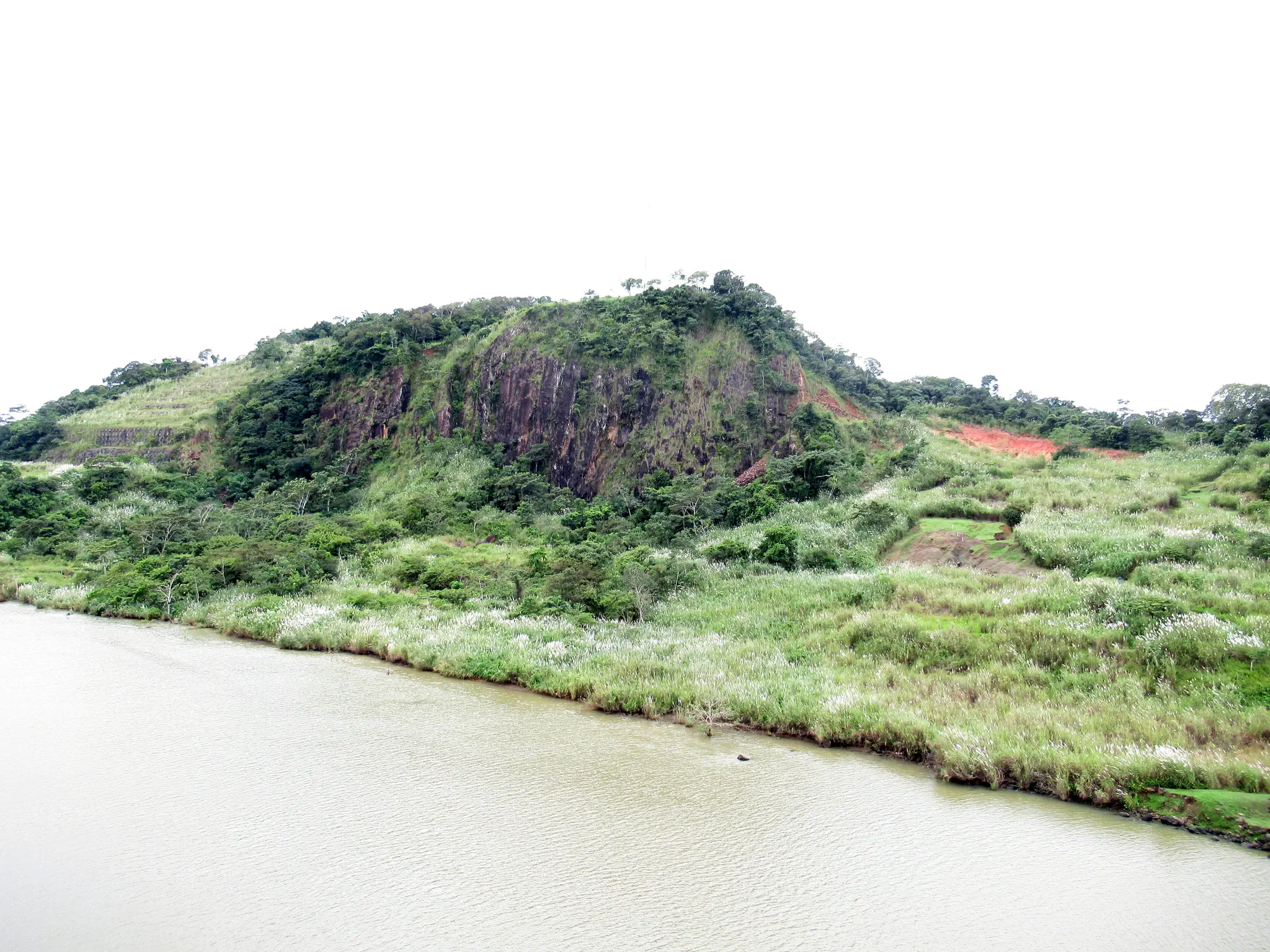
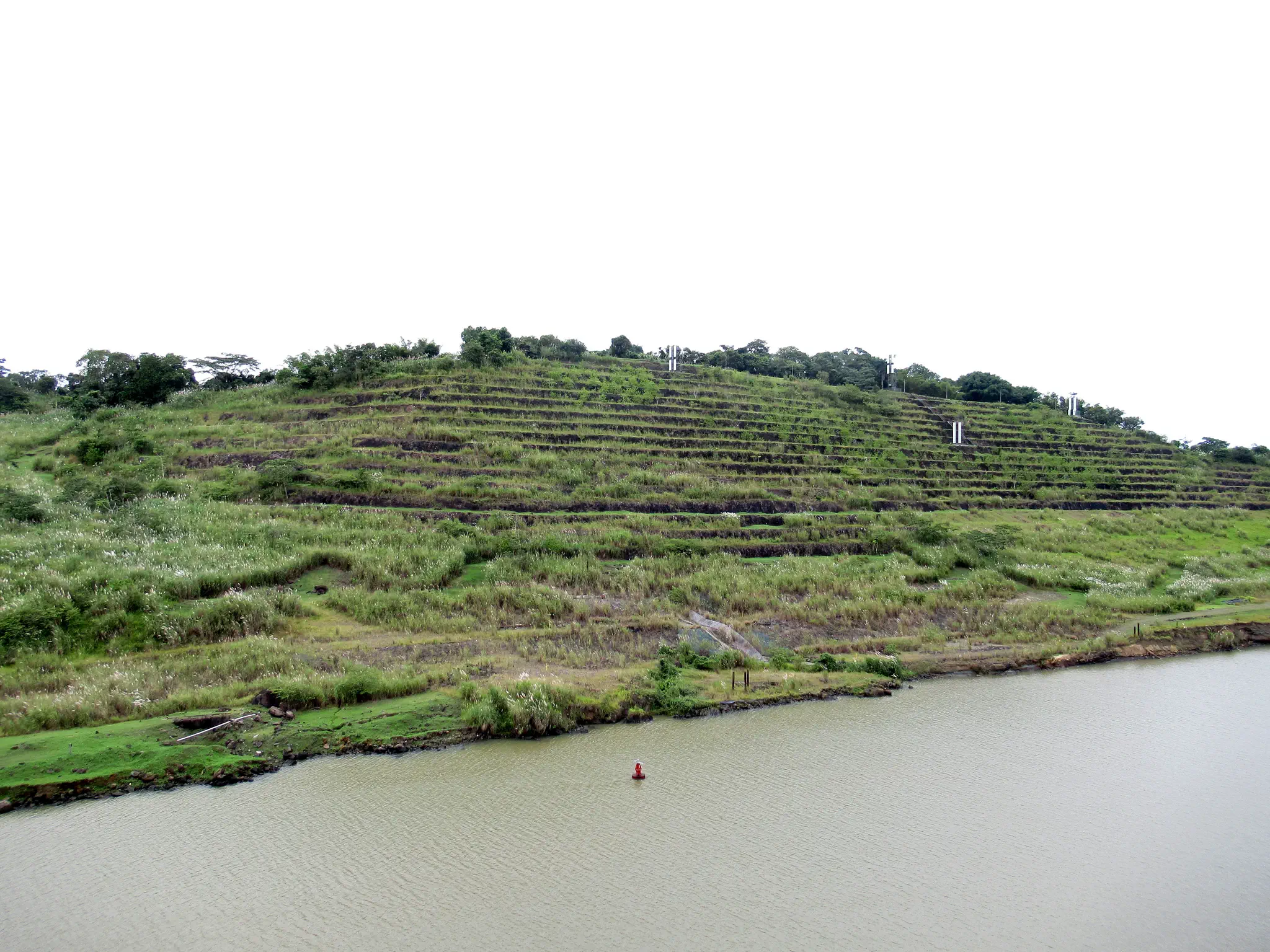
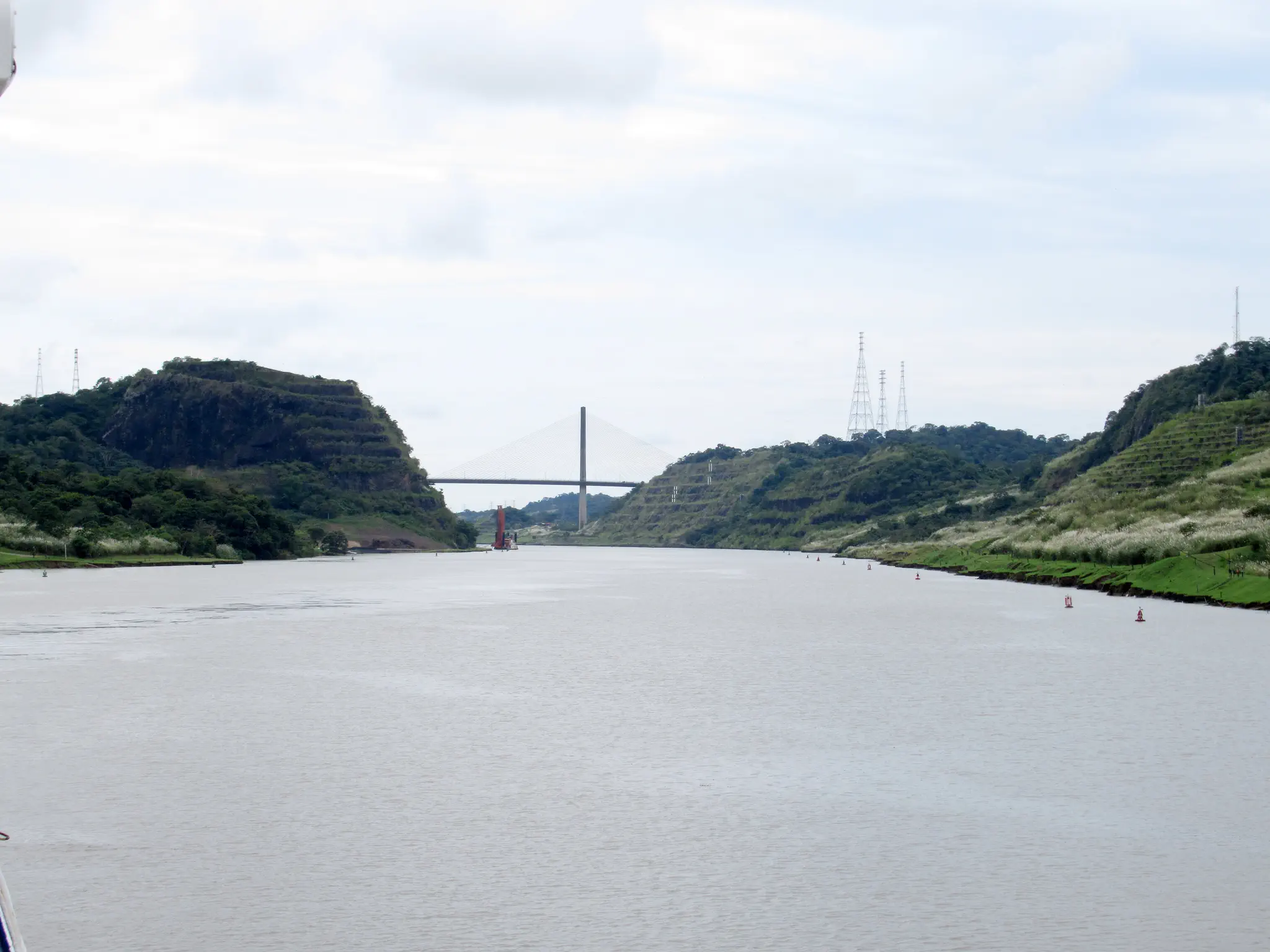
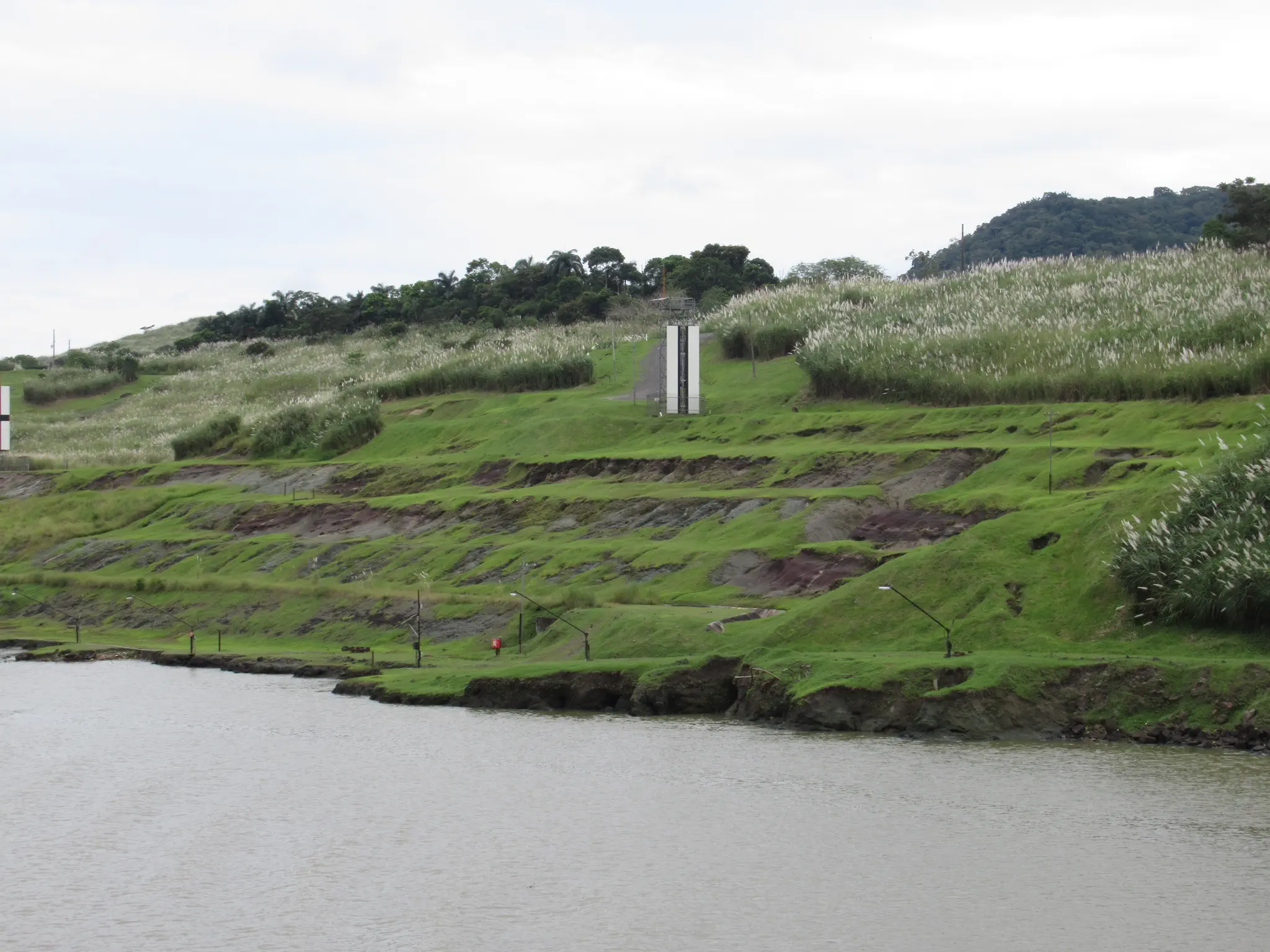
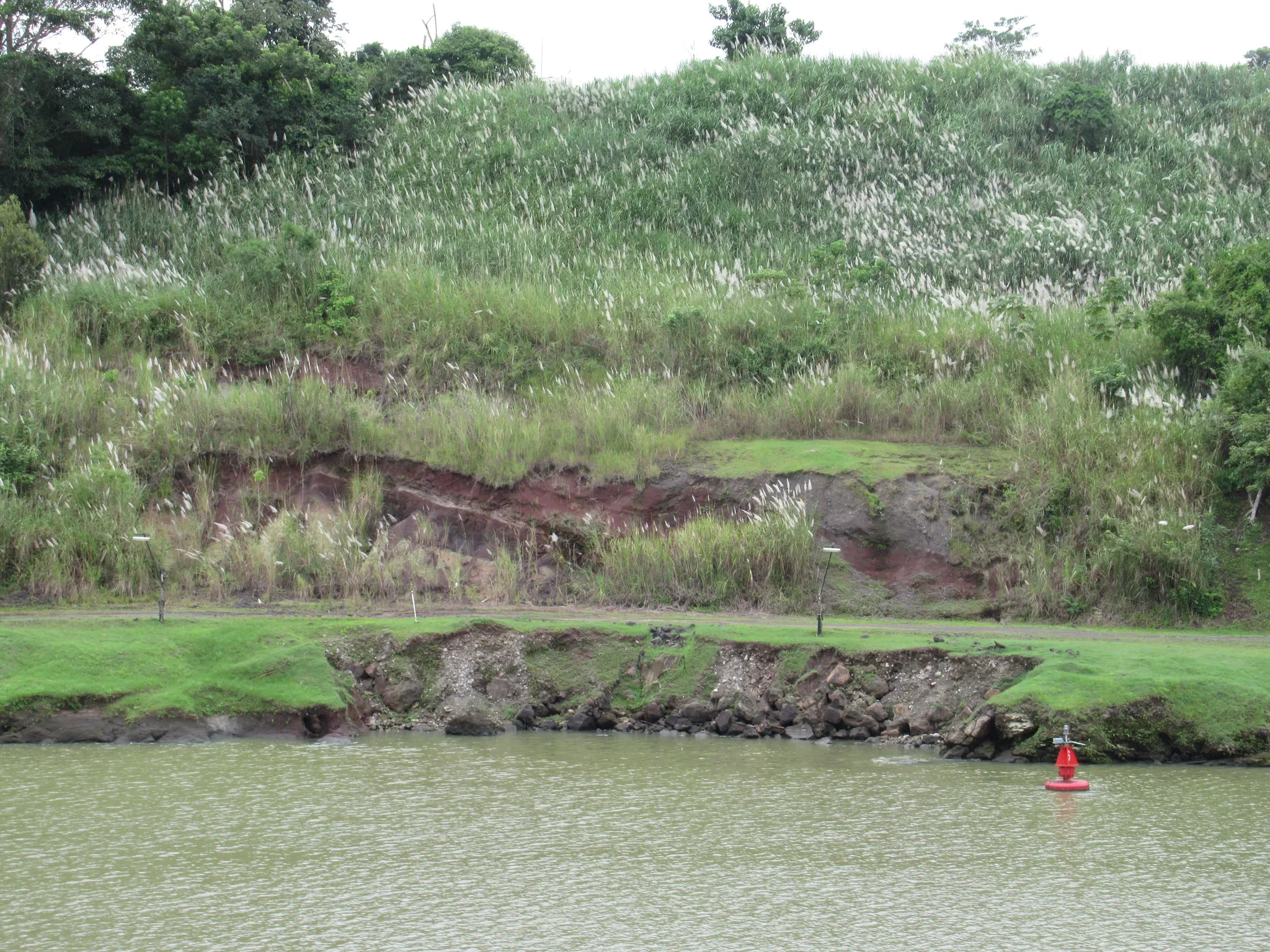
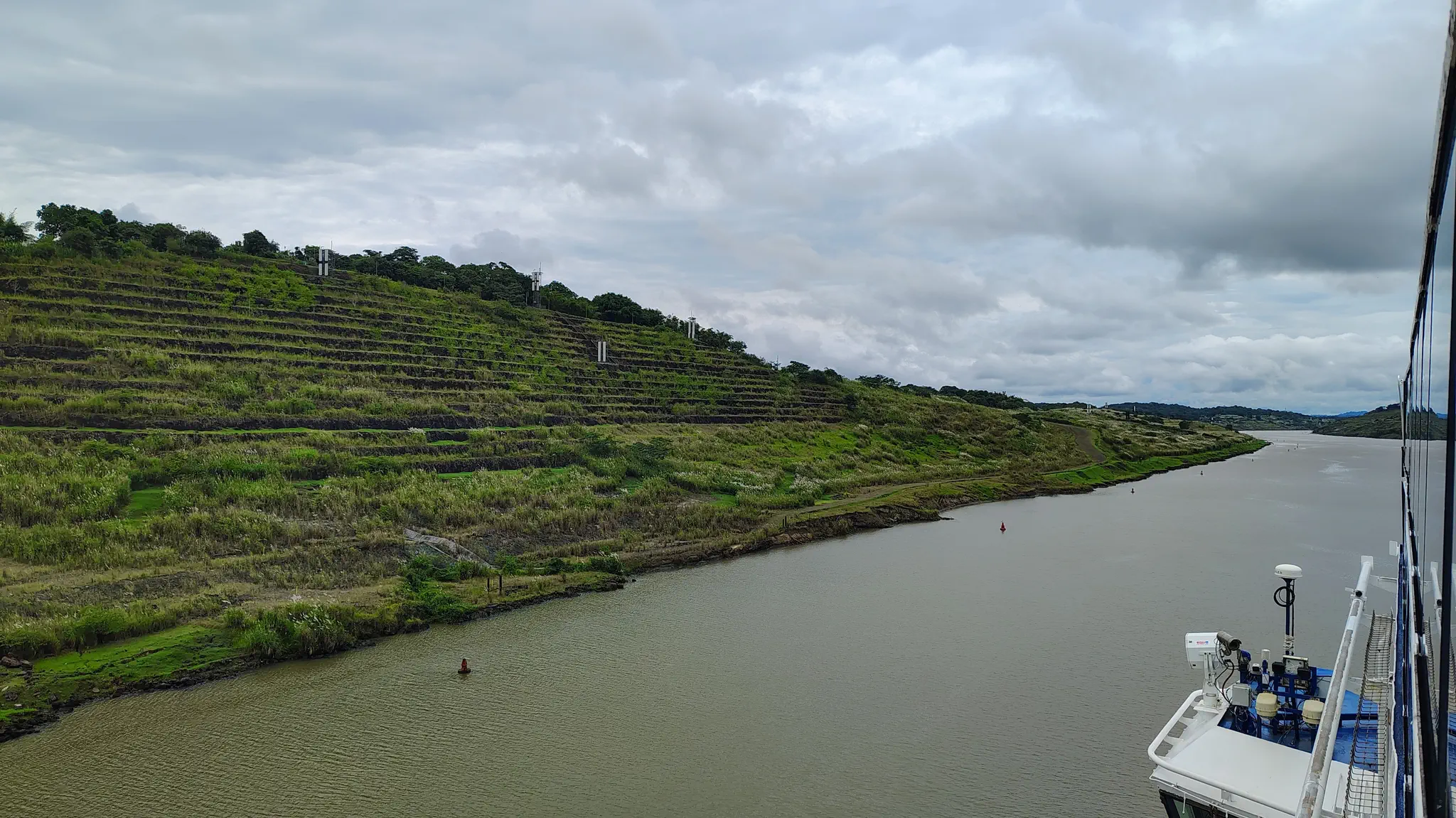
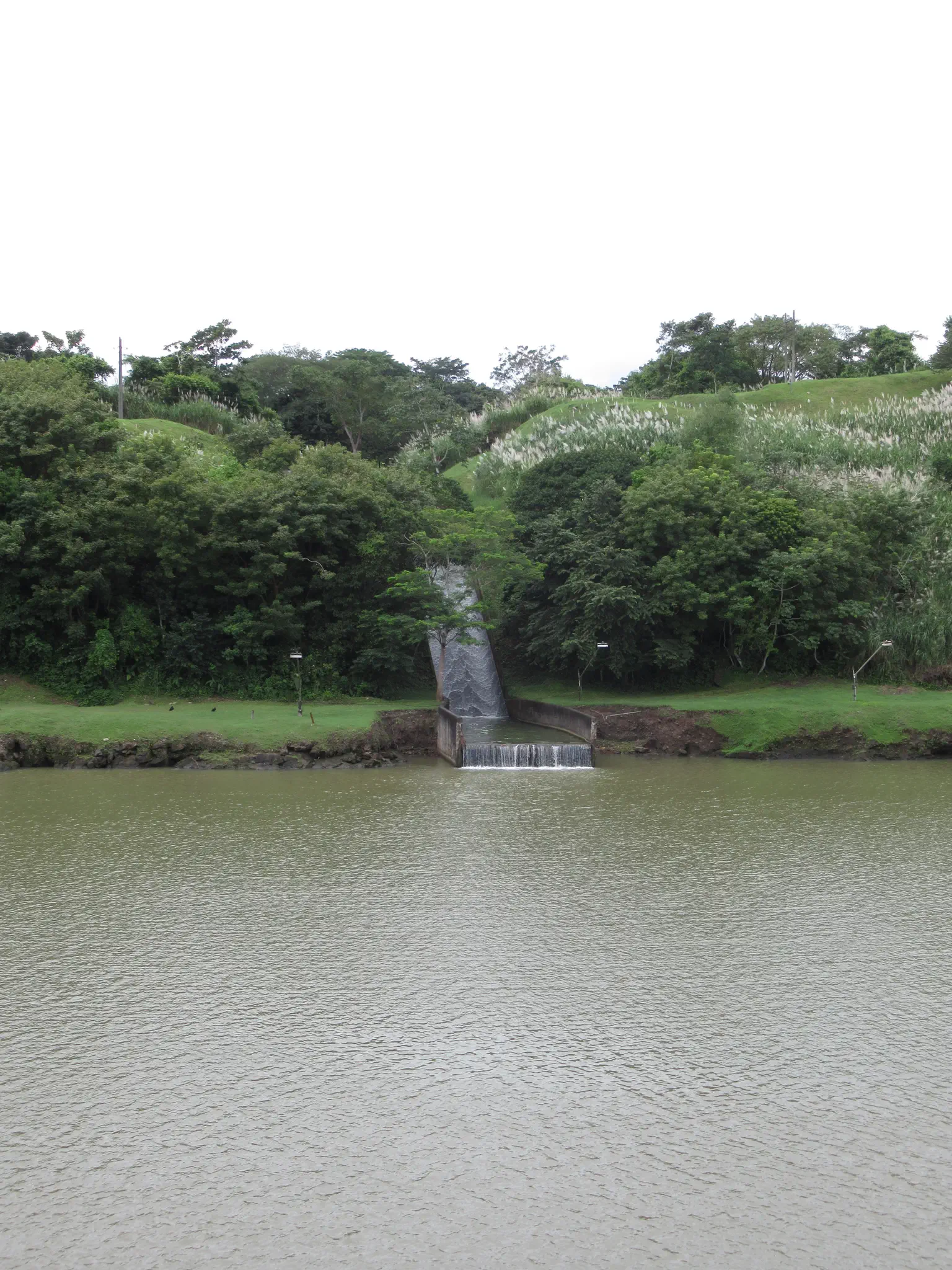
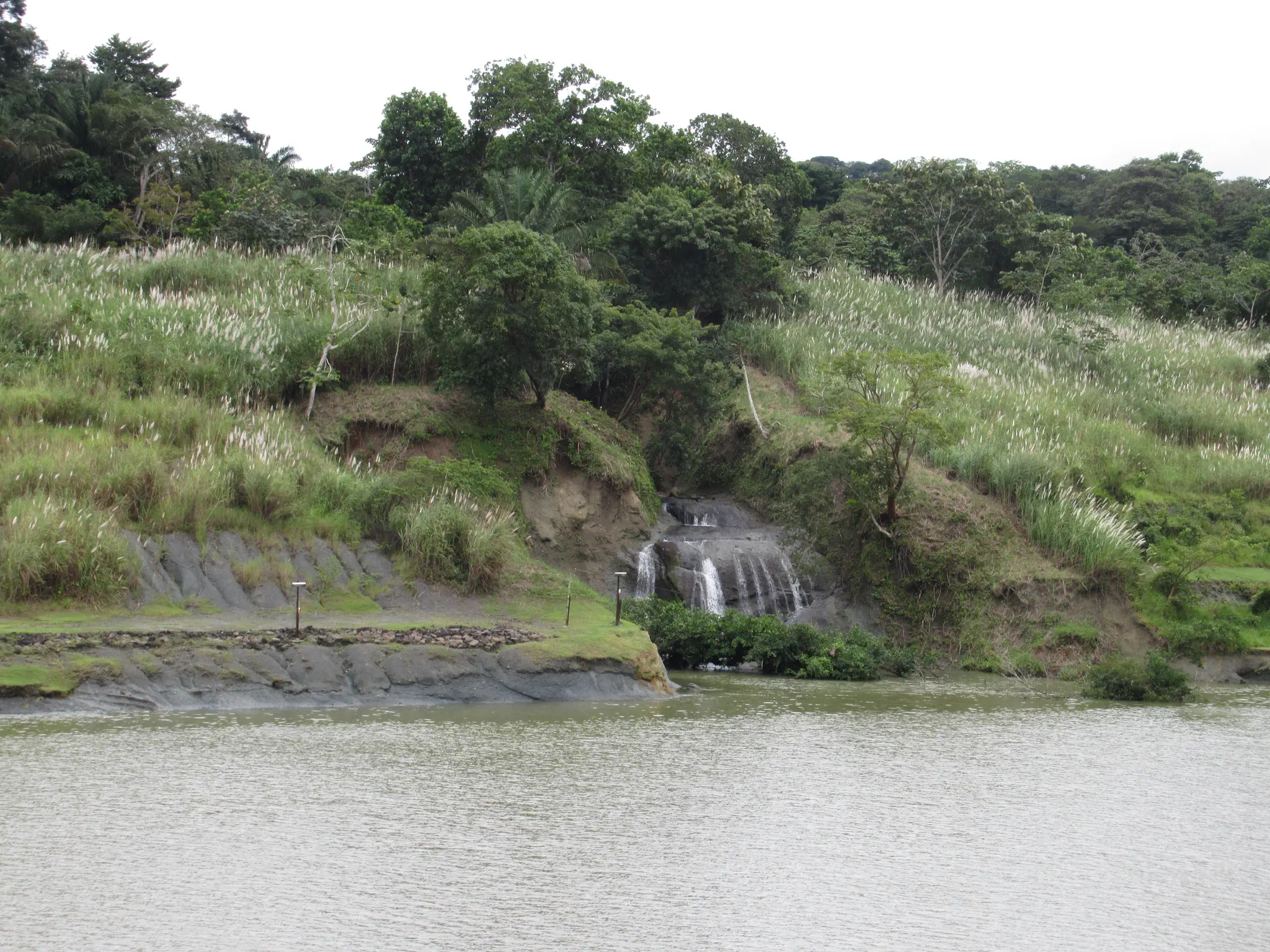
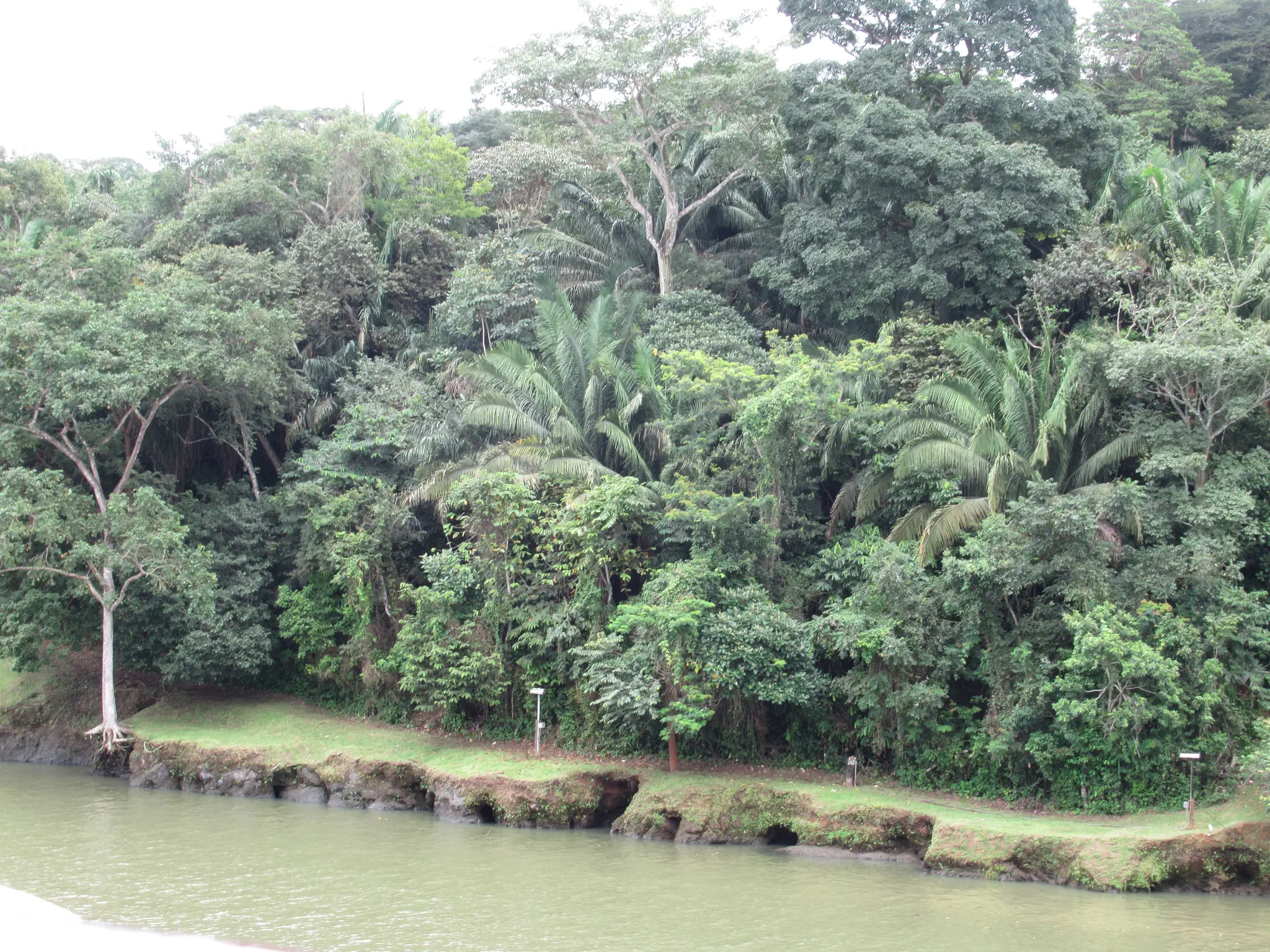
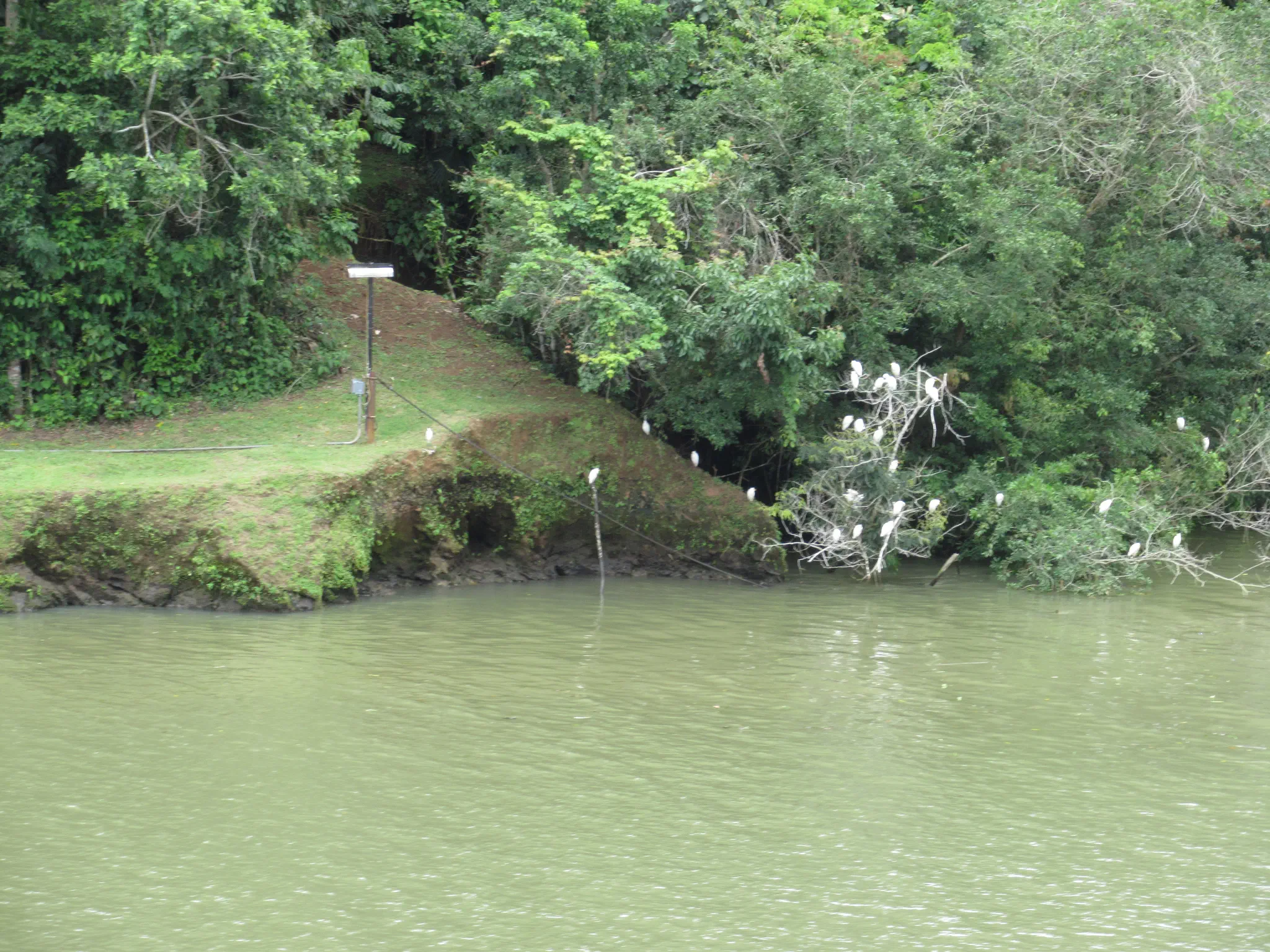
Some drainage waterfalls, you can see the juggle that the thousands of workers had to work in, and many birds that were a little far away for a picture.
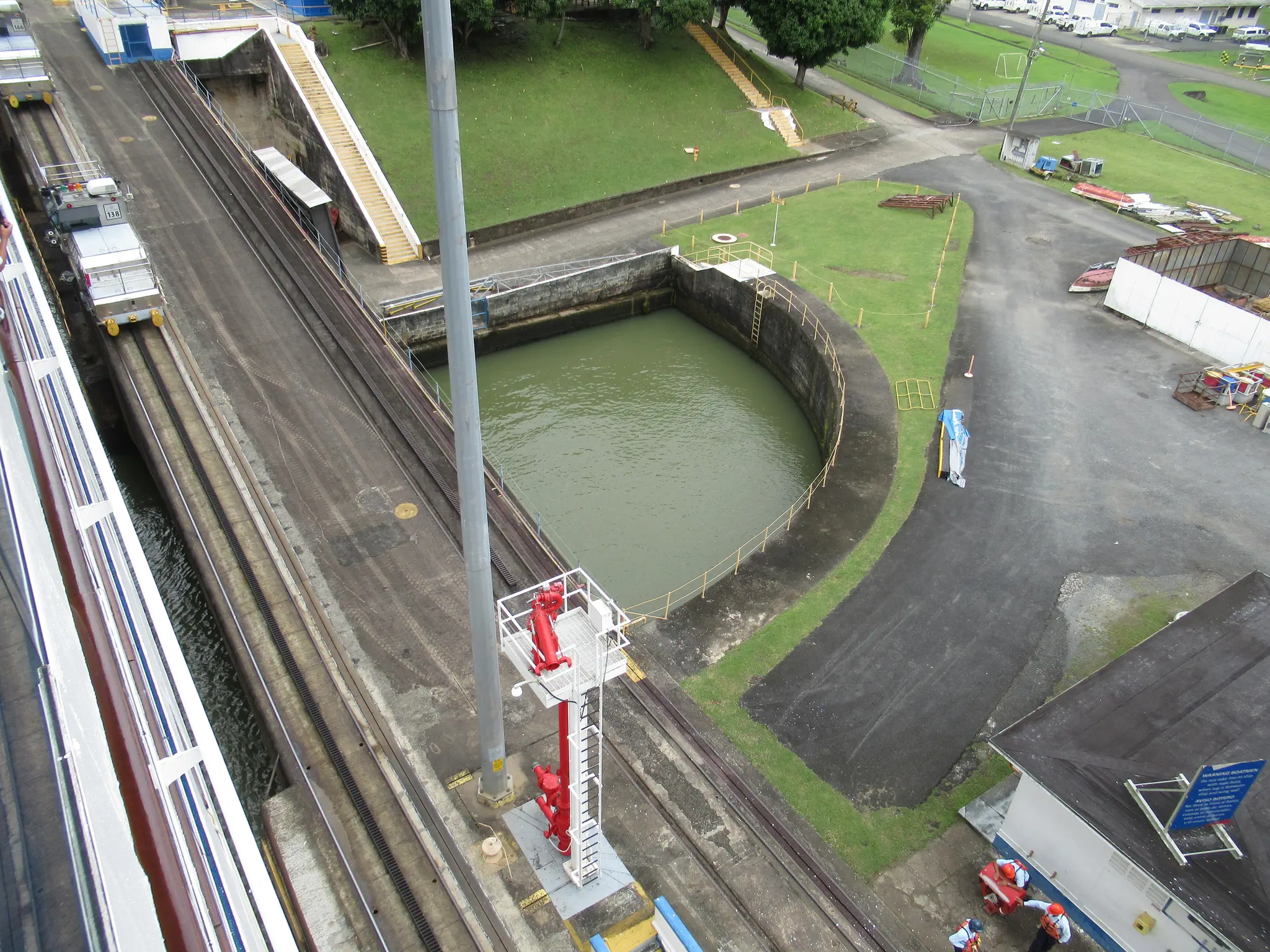
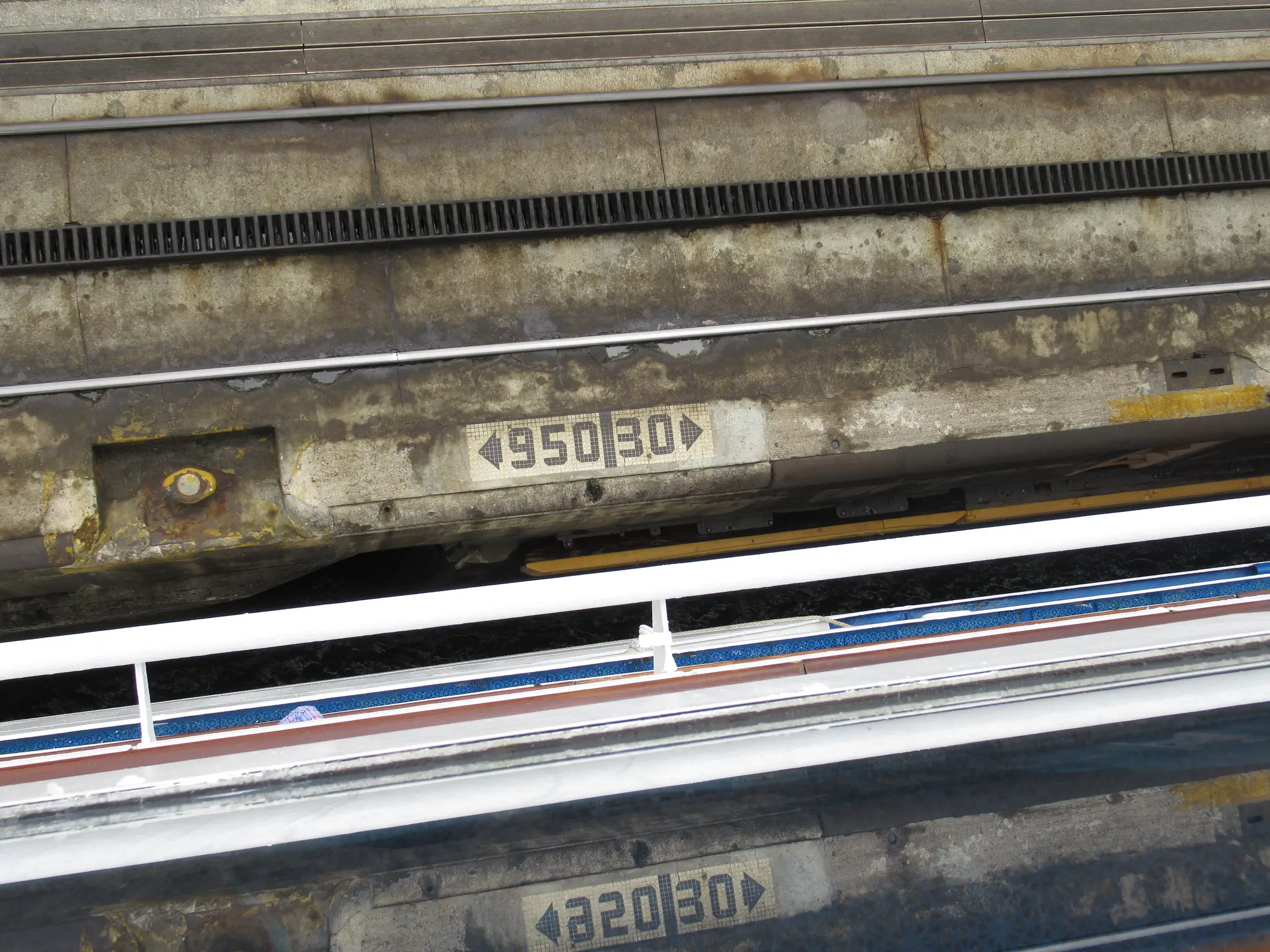
Starting through the Gatun Locks. Water reservoir that pushed water in the lock in front of us to level the two locks before gates opened. In the new locks, they can reuse the water once, while keeping it gravity powered, by having holding tanks. Fire extinguisher ready to extinguish any fire on the edge of a ship. Look how close again.
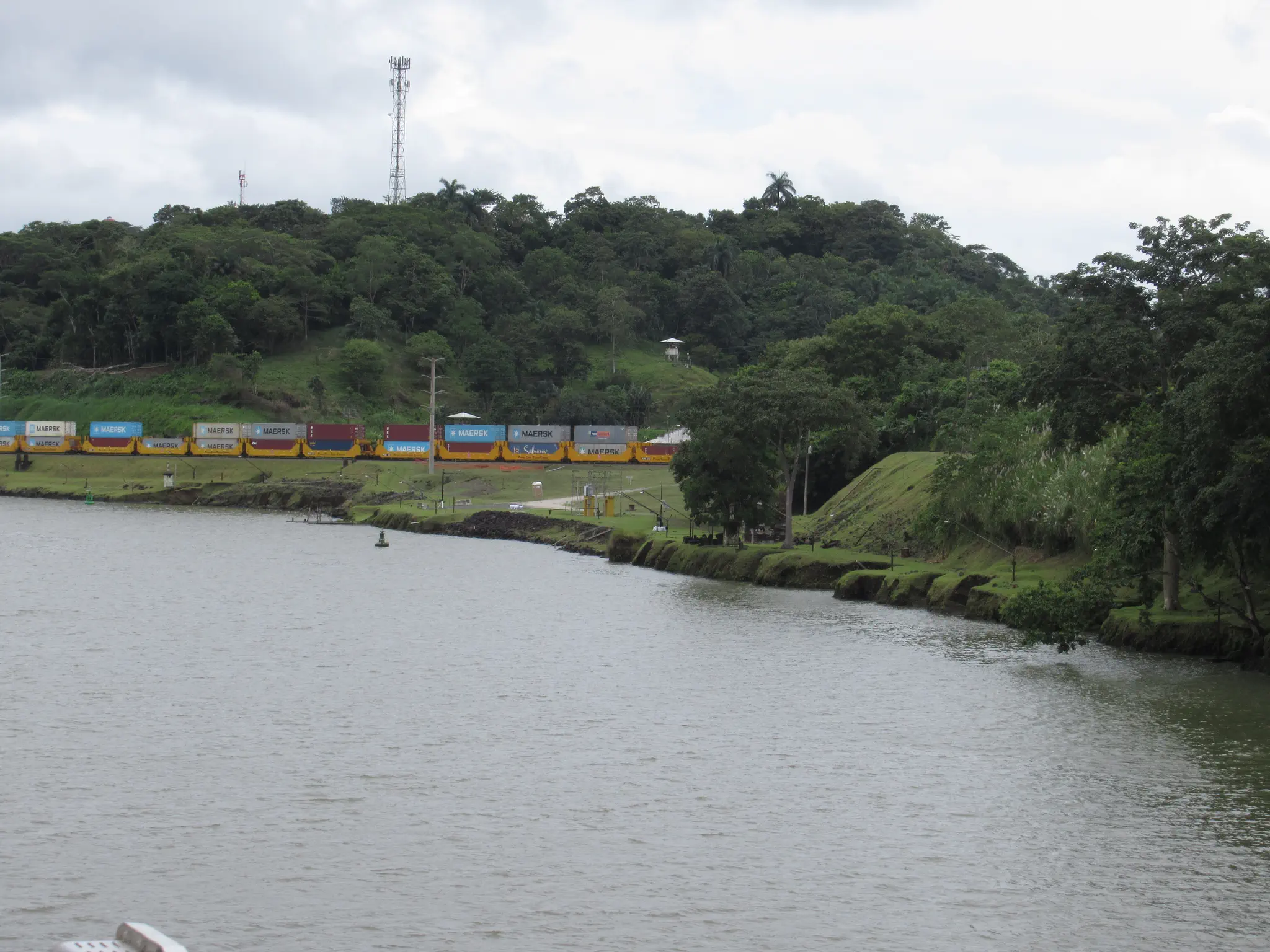
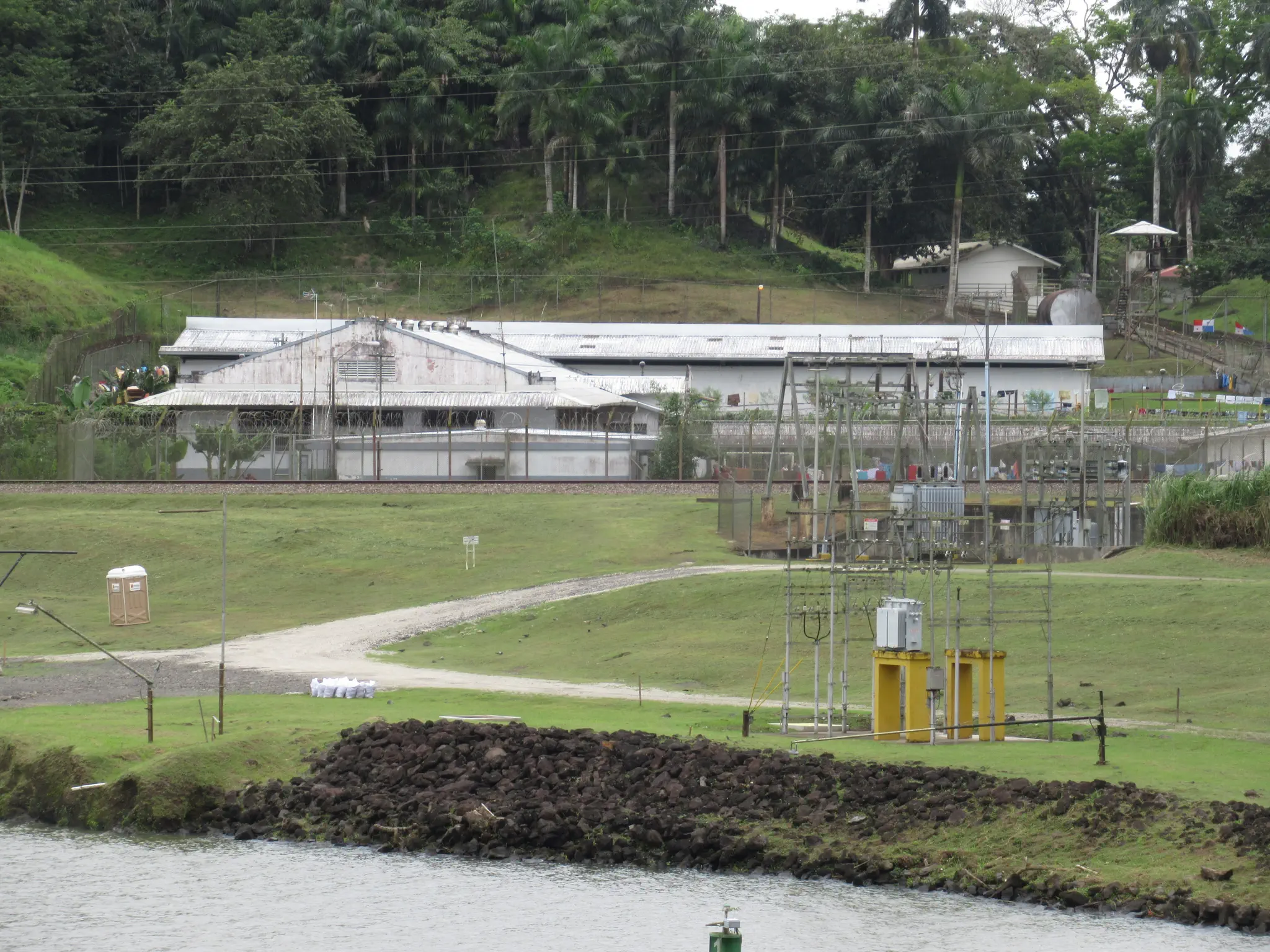
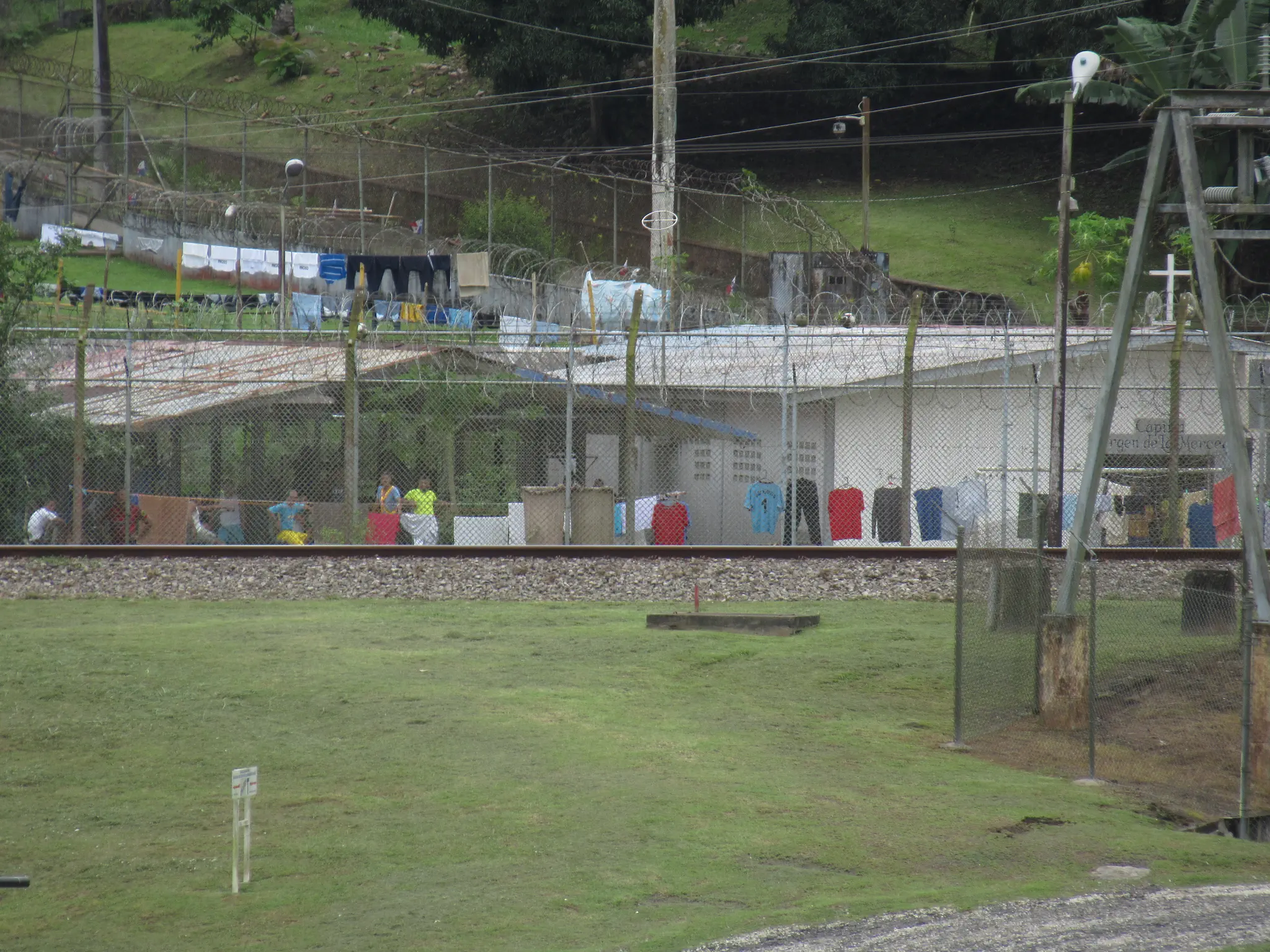
The train; I don't know why they have the containers in train cars and double decked here. The prison; it is considered a white collar or "comfortable" prison, so prisoner want to come here. It was built by the Americans during the building of the canal. Someone on the ship was saying that the prisoners have to provide their own clothes, so you see them in all different colors where they came to the fence to wave and where they were drying their clothes hanging on the fence.
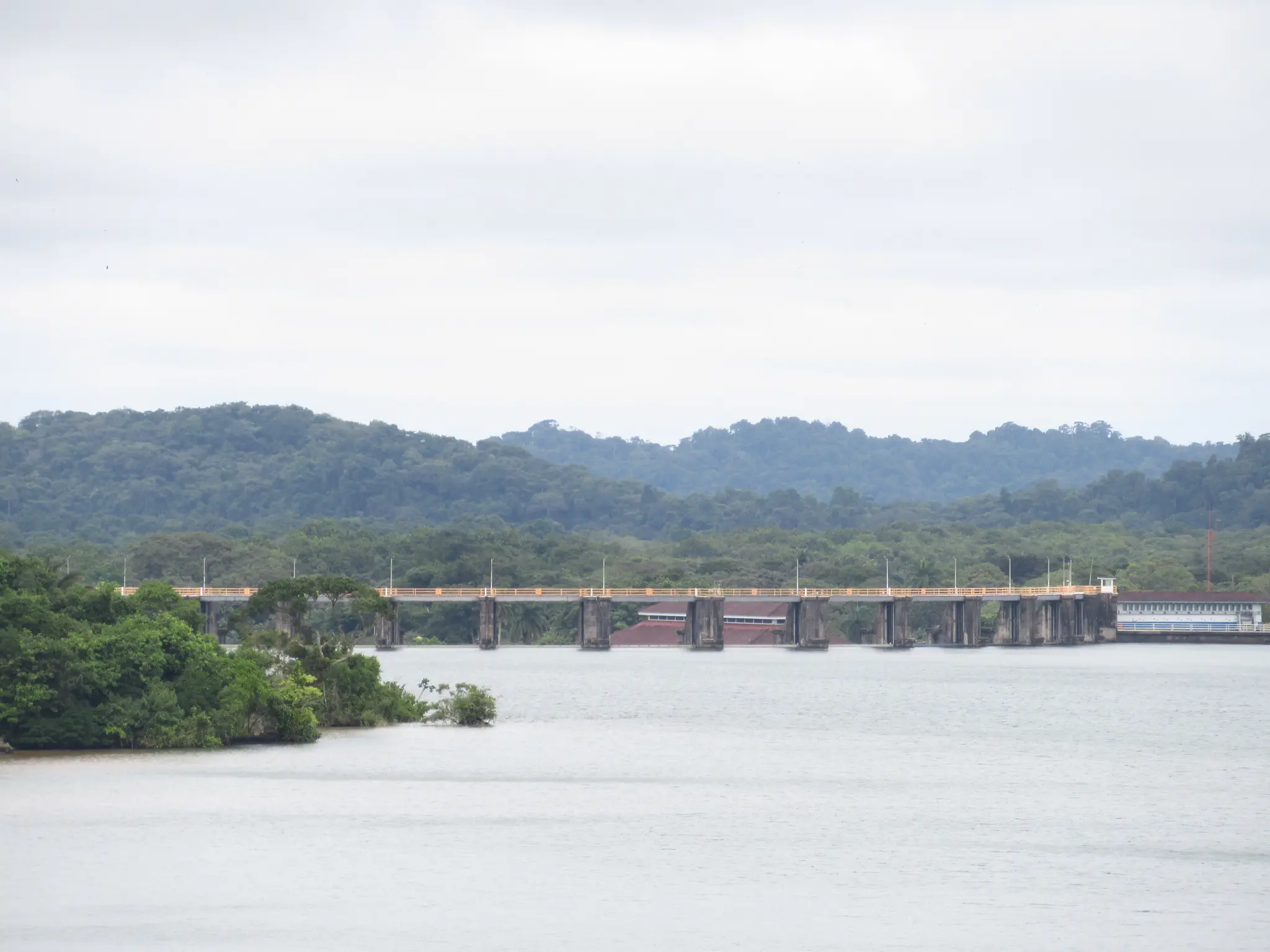
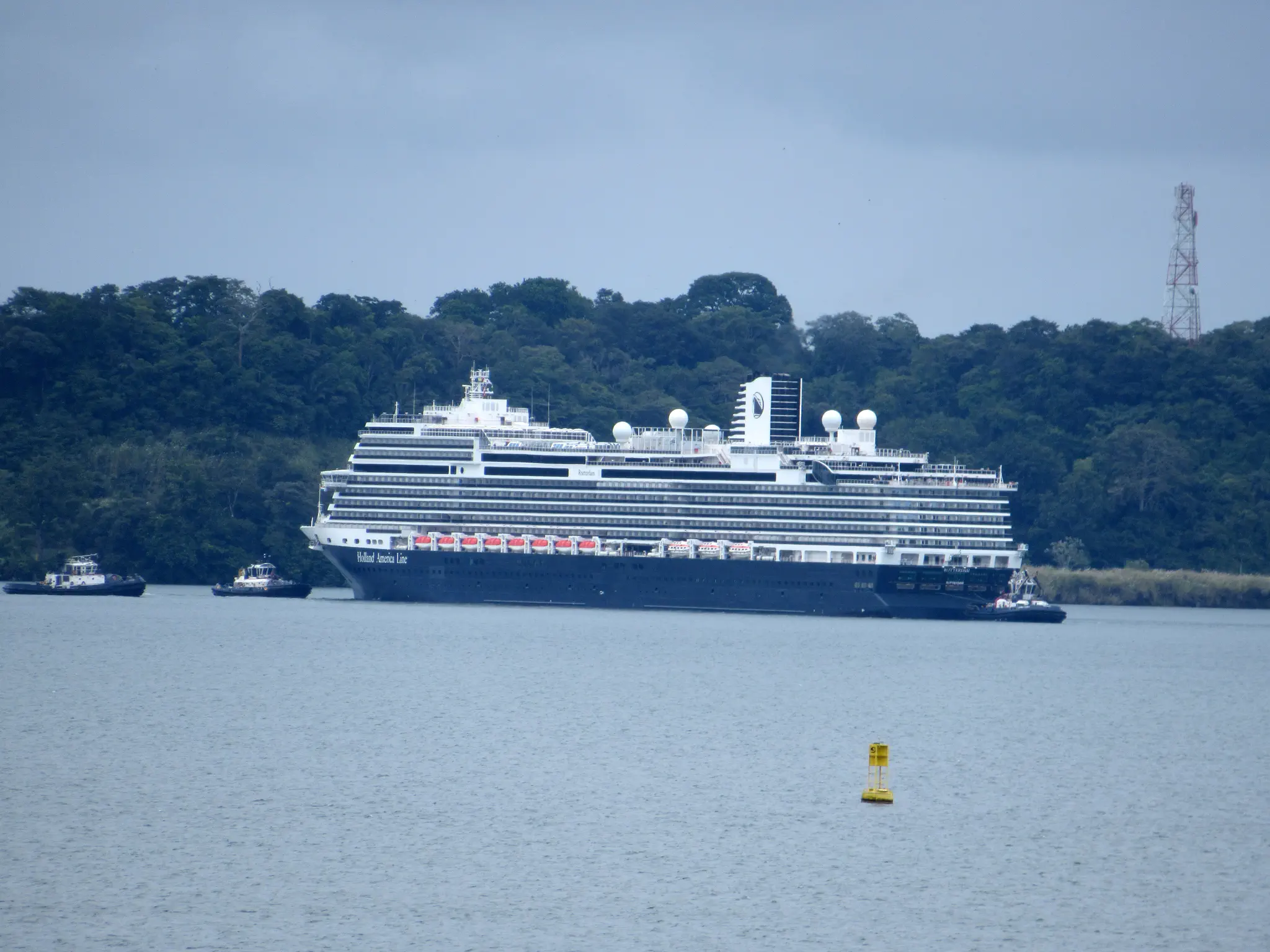
Gatun Dam. We found Holland American Line (HAL). They did a partial transit in and out of the Atlantic side in the new locks. Here they are being spun around by multiple tugs, so they can head back out the way they came in. Entering the Agua Clara Locks.
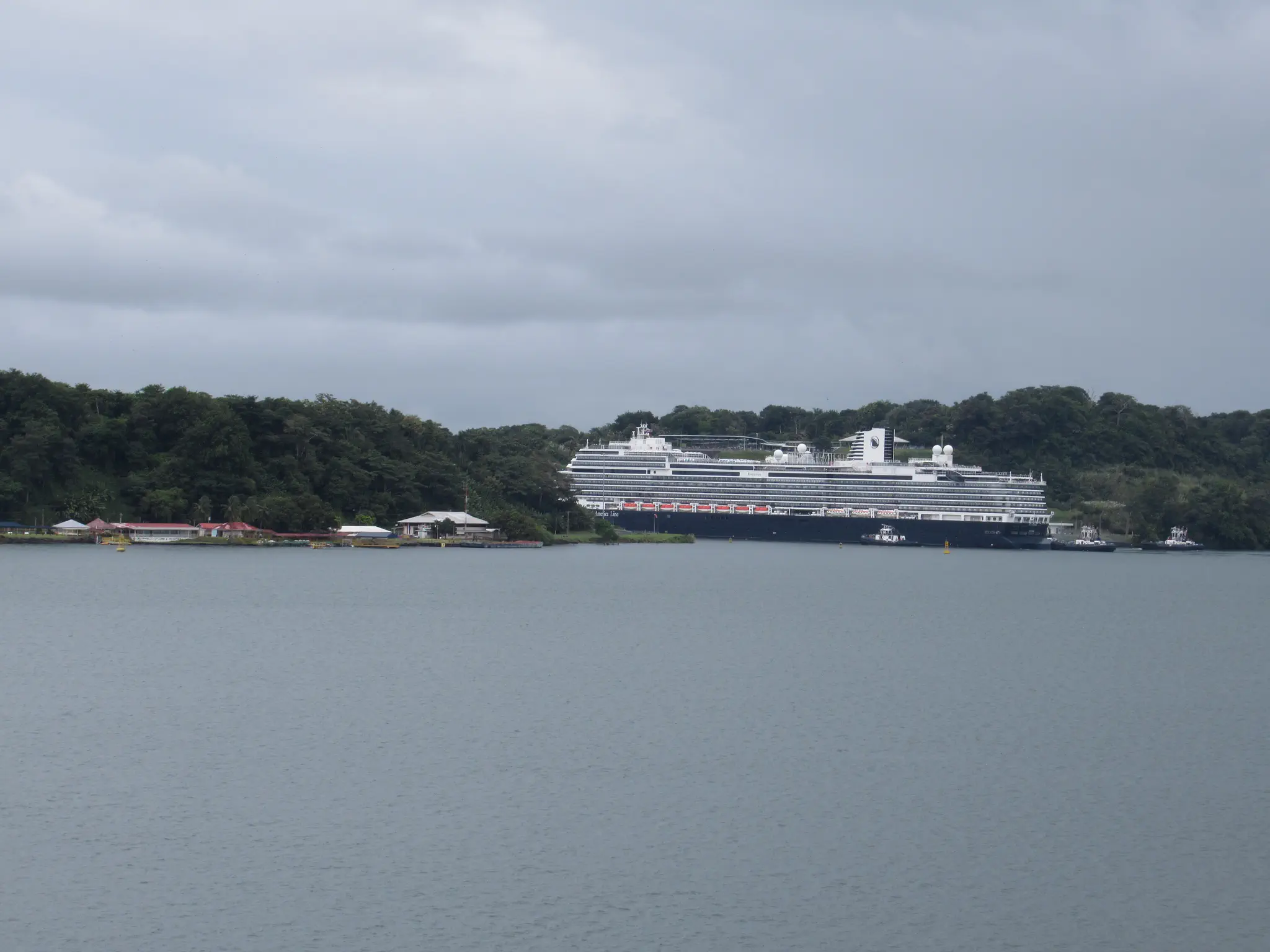
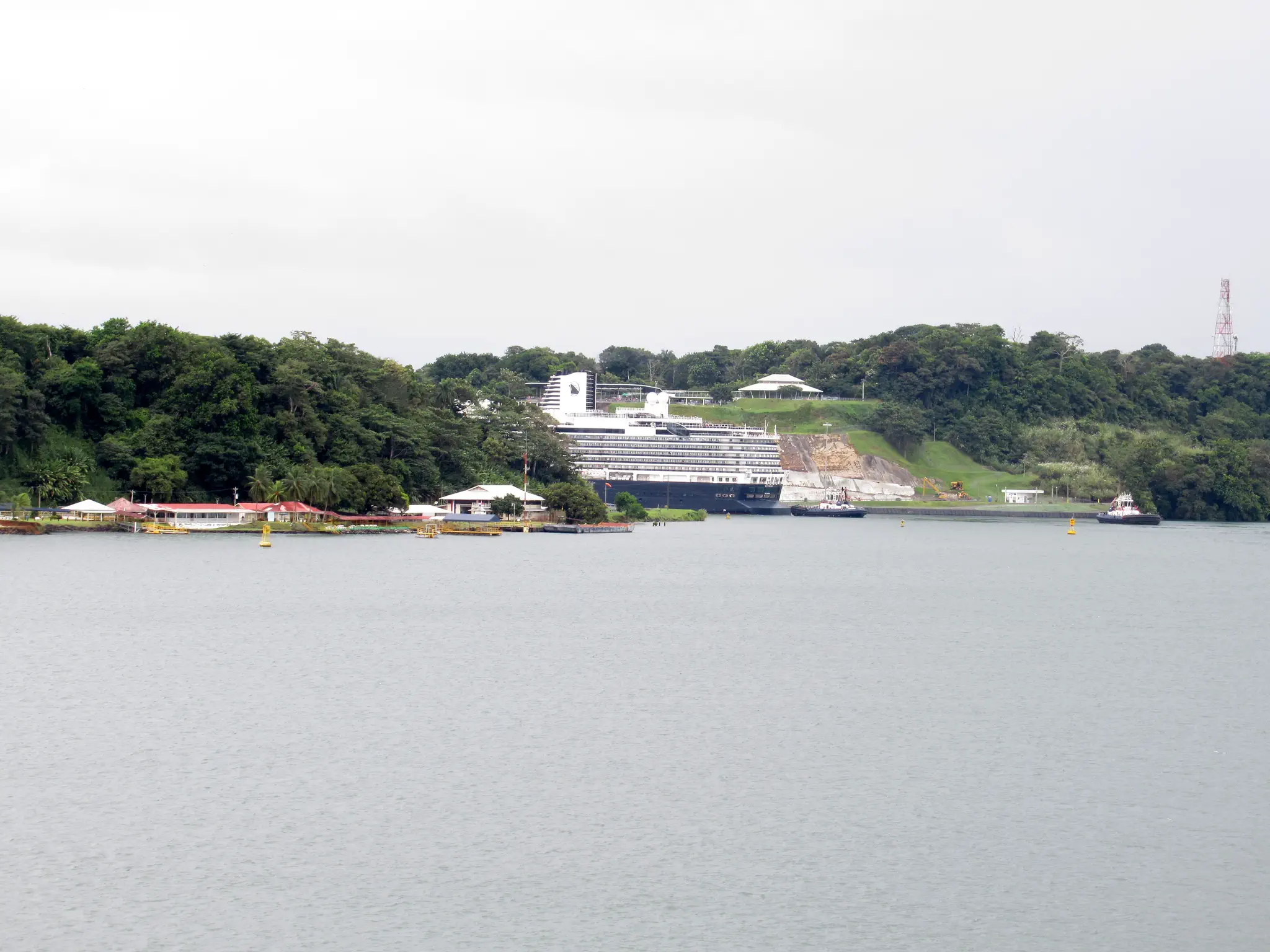
The last three locks; there is a ship in the last lock. From the buffet, 14 forward, so a blue window picture. We then went back to deck 10 forward to watch these three locks.
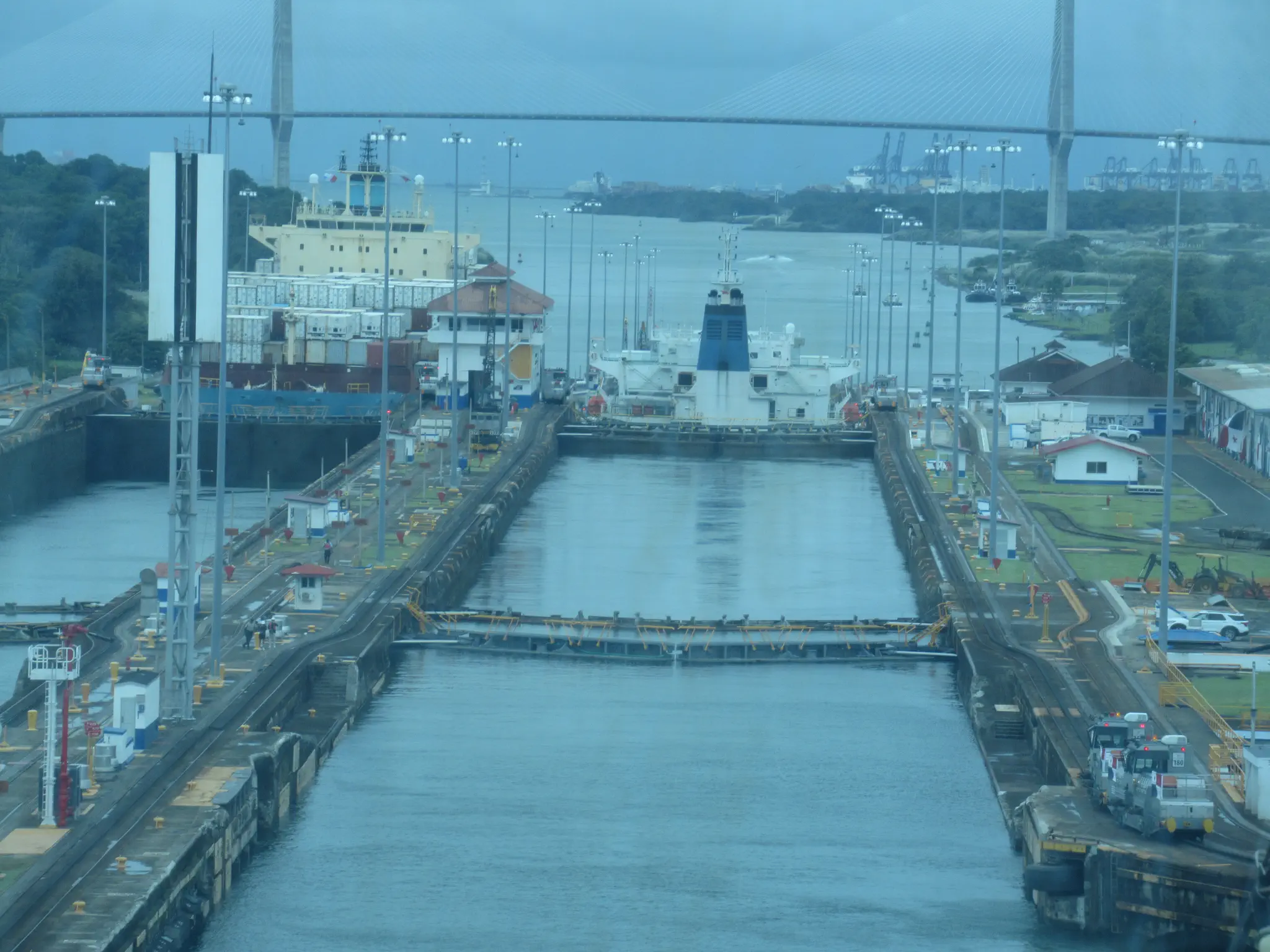
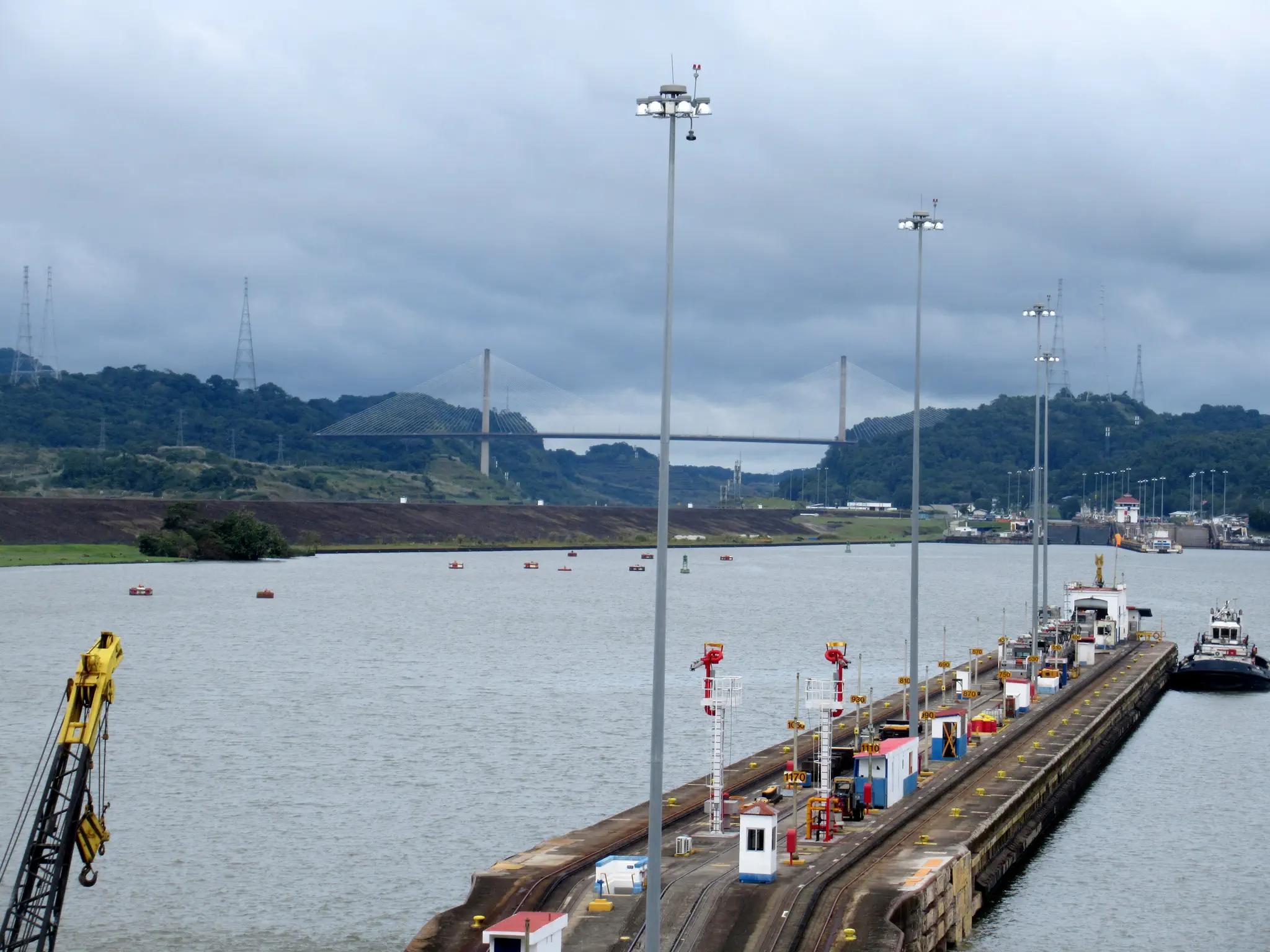
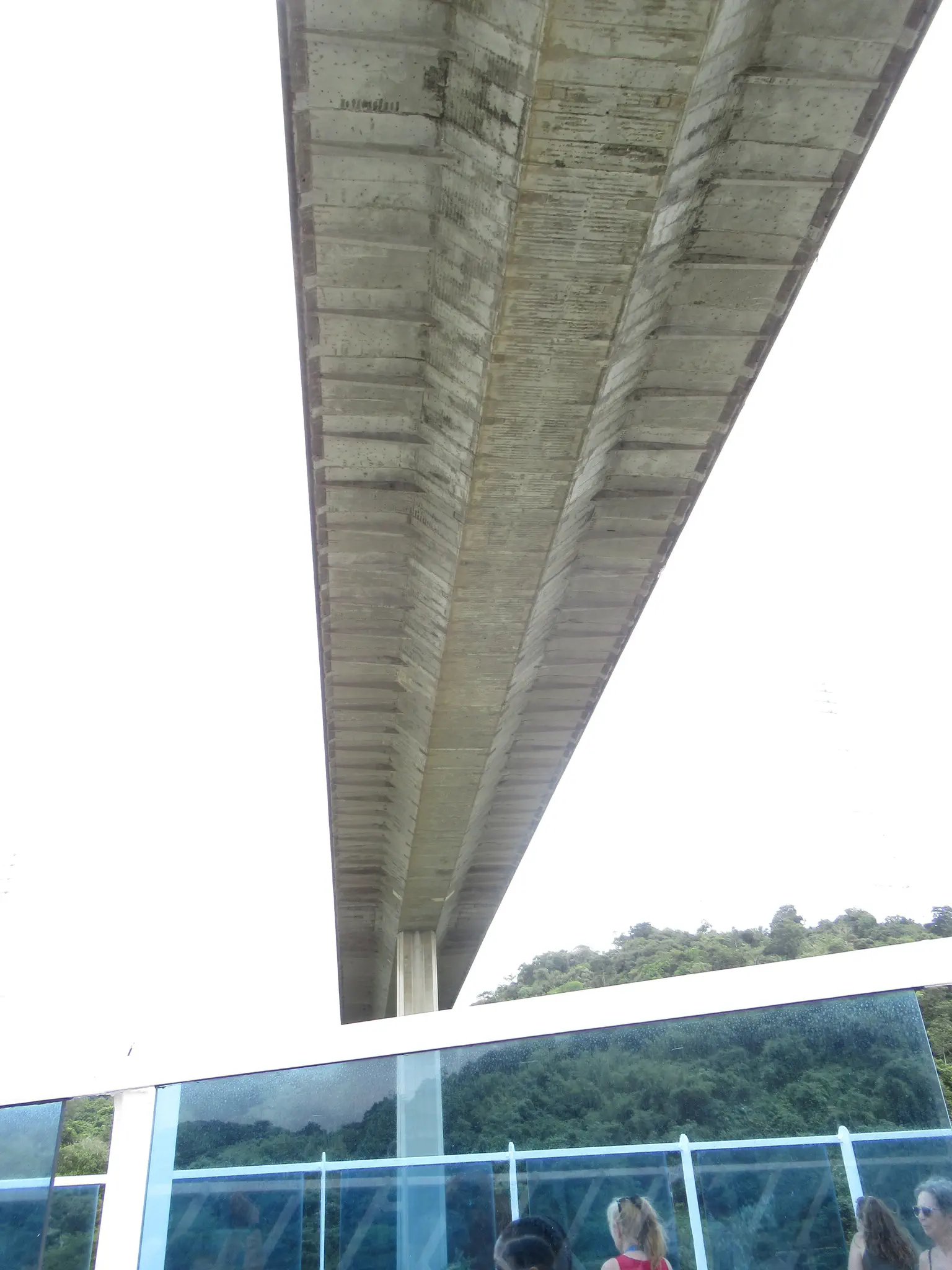
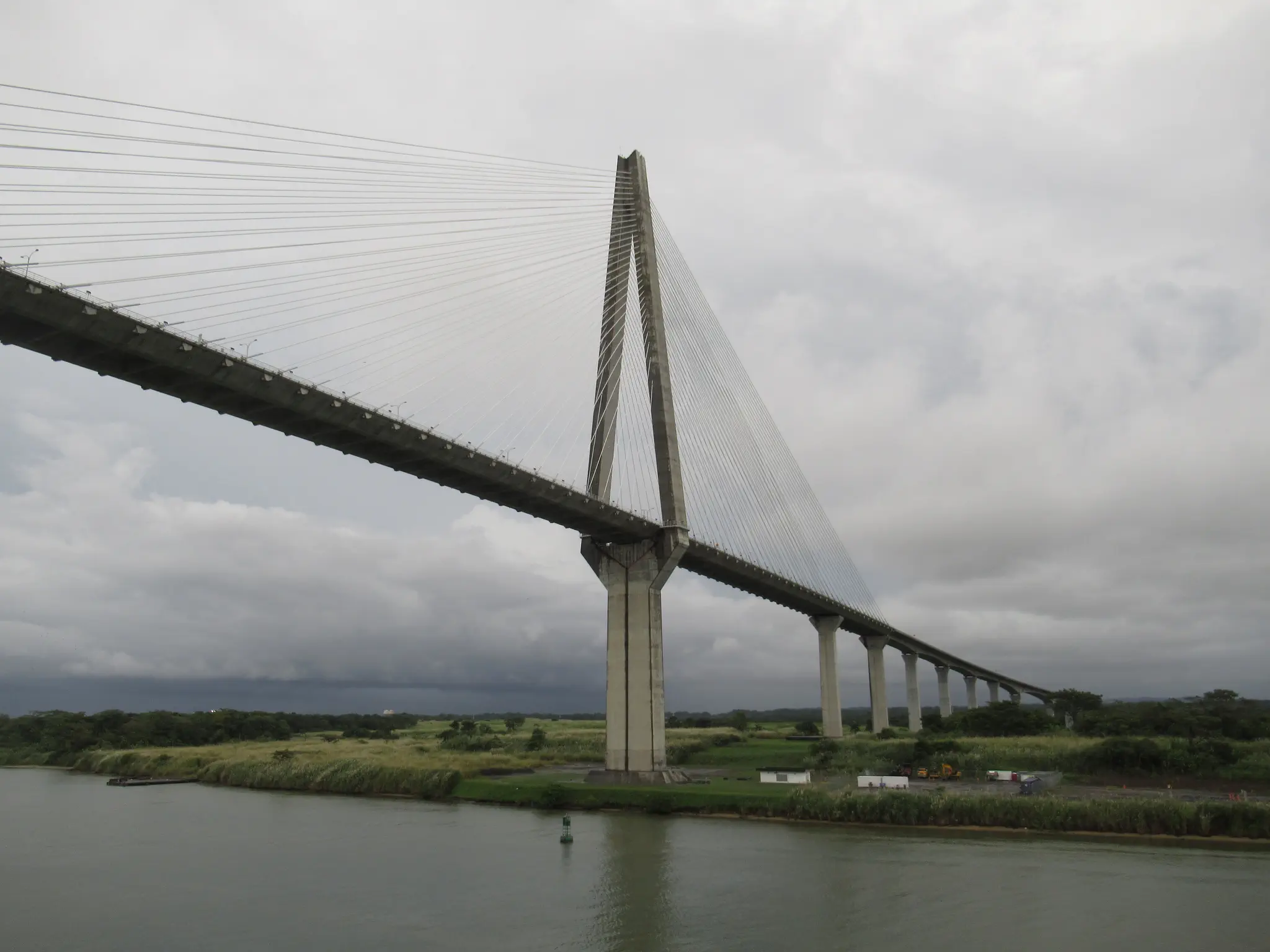
Centennial Bridge
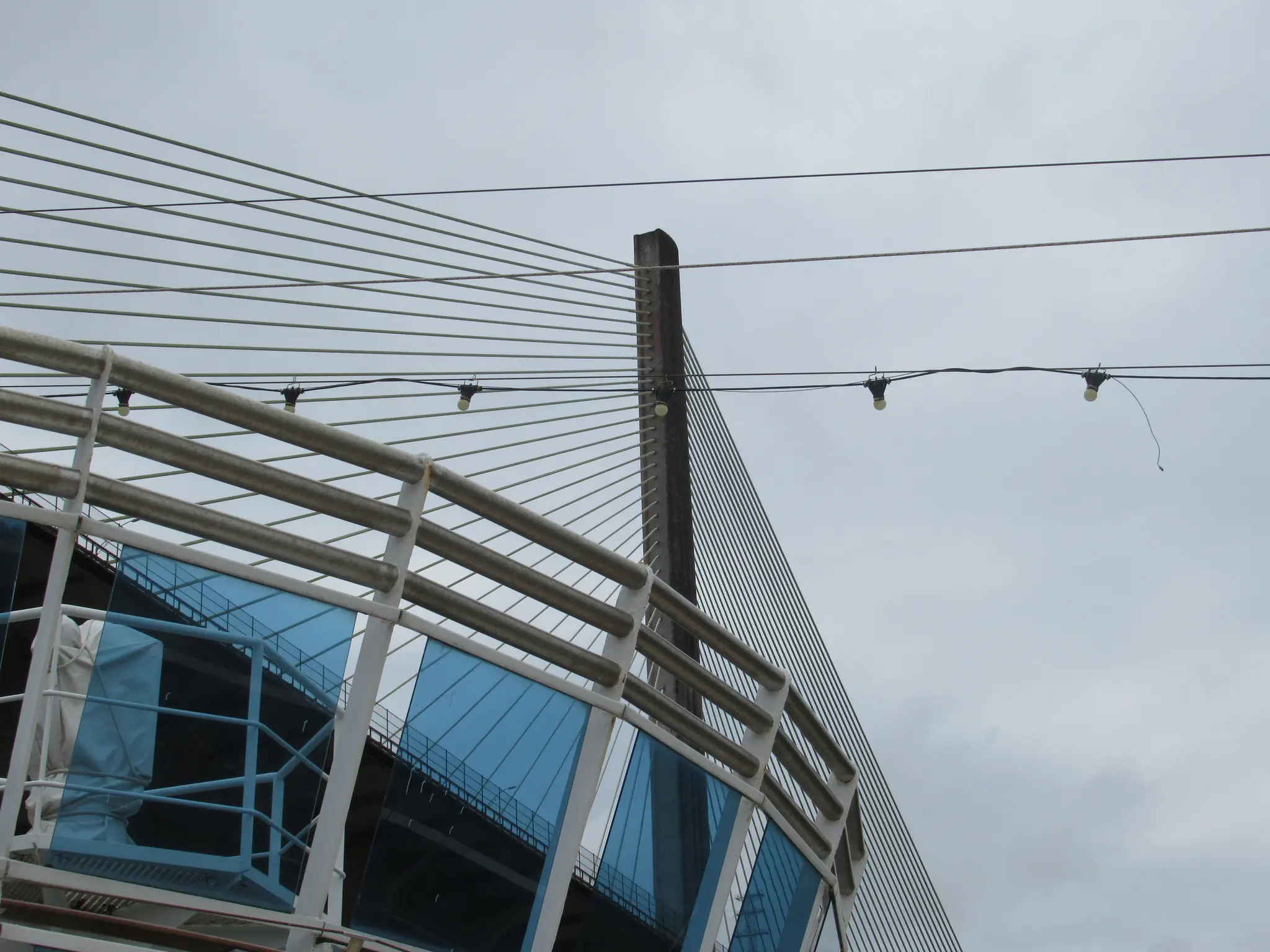
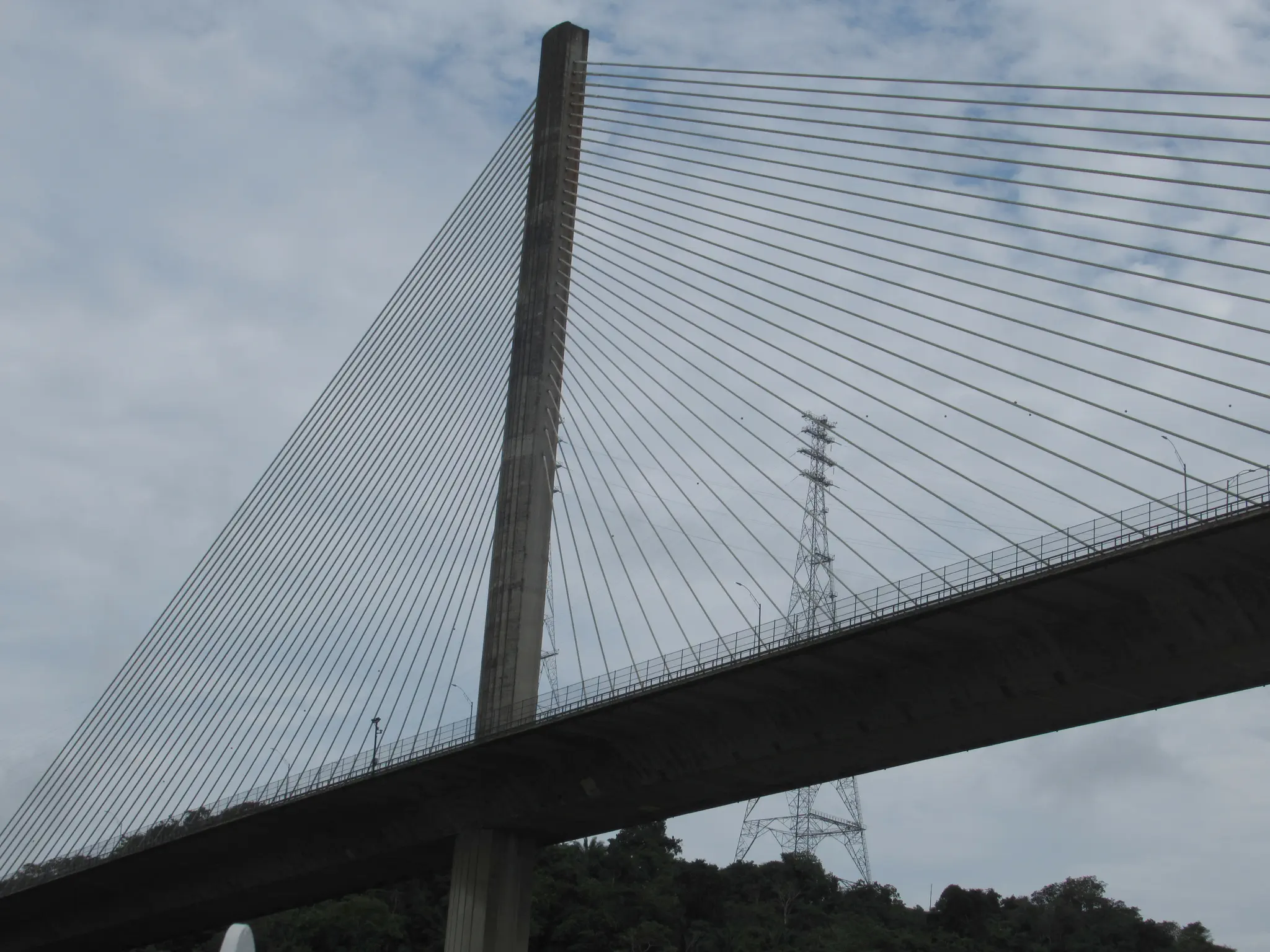
Gates and mule in the other lane. The container truck next to us. Our ship was a little cleaner.
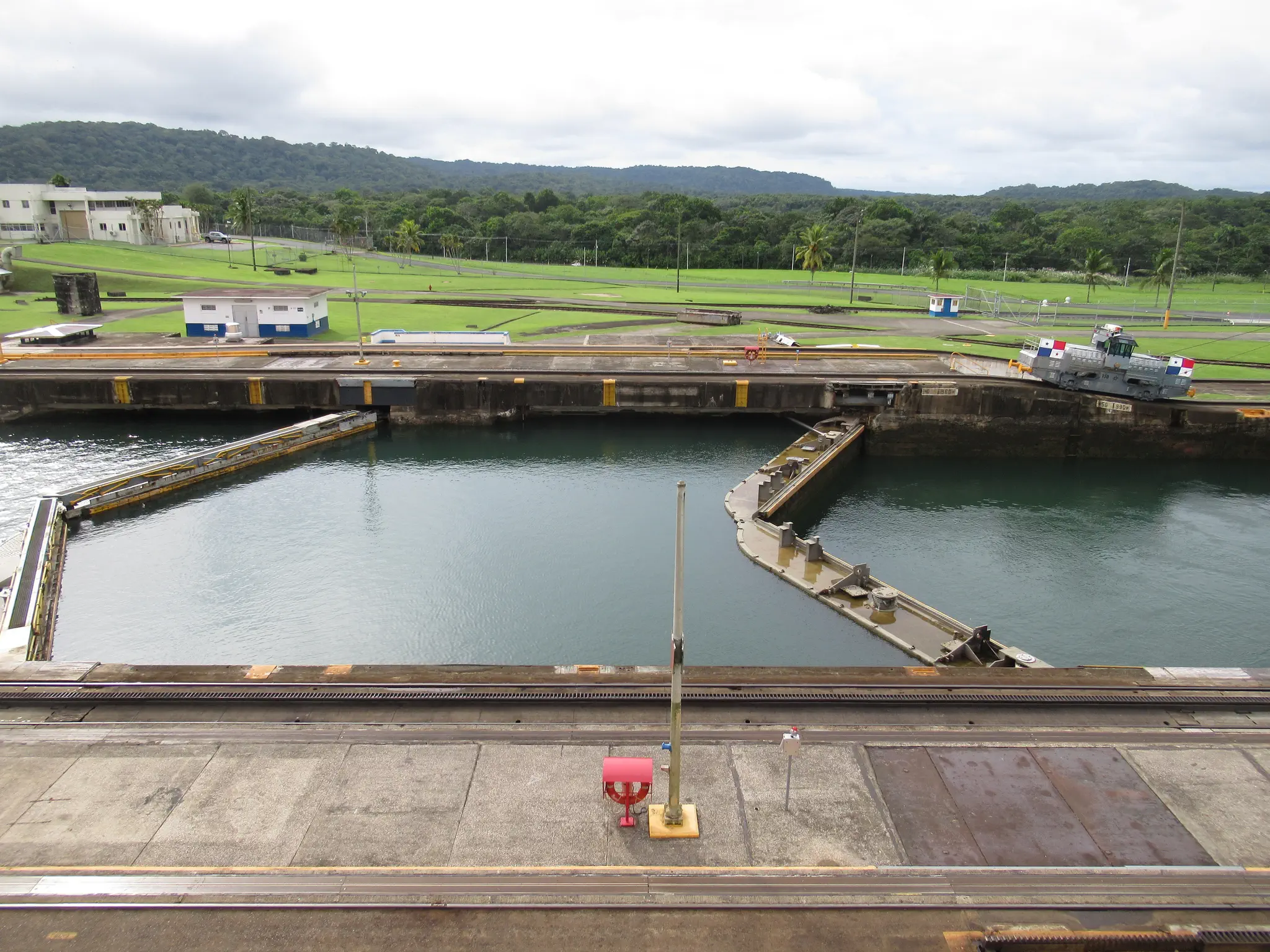
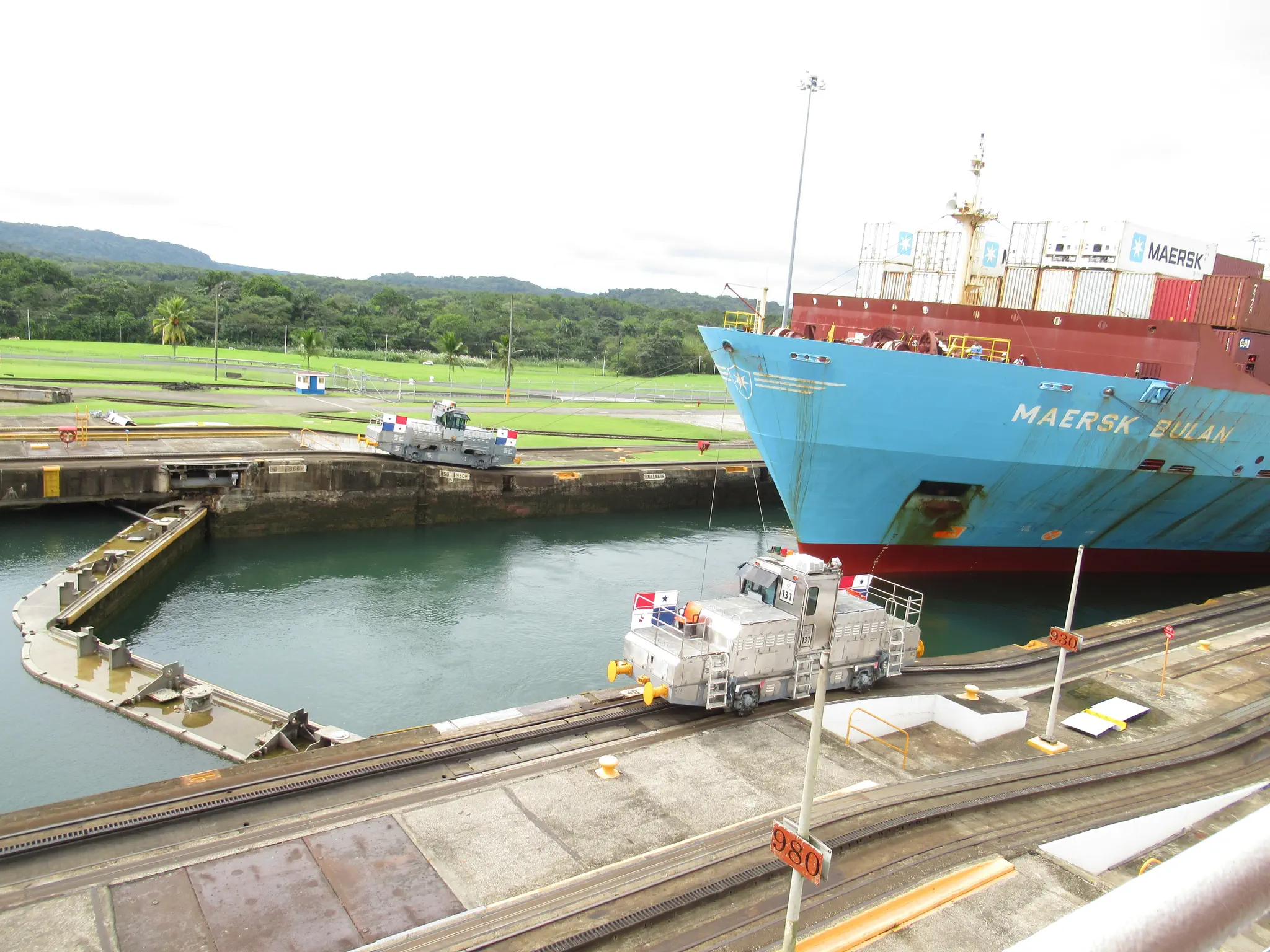
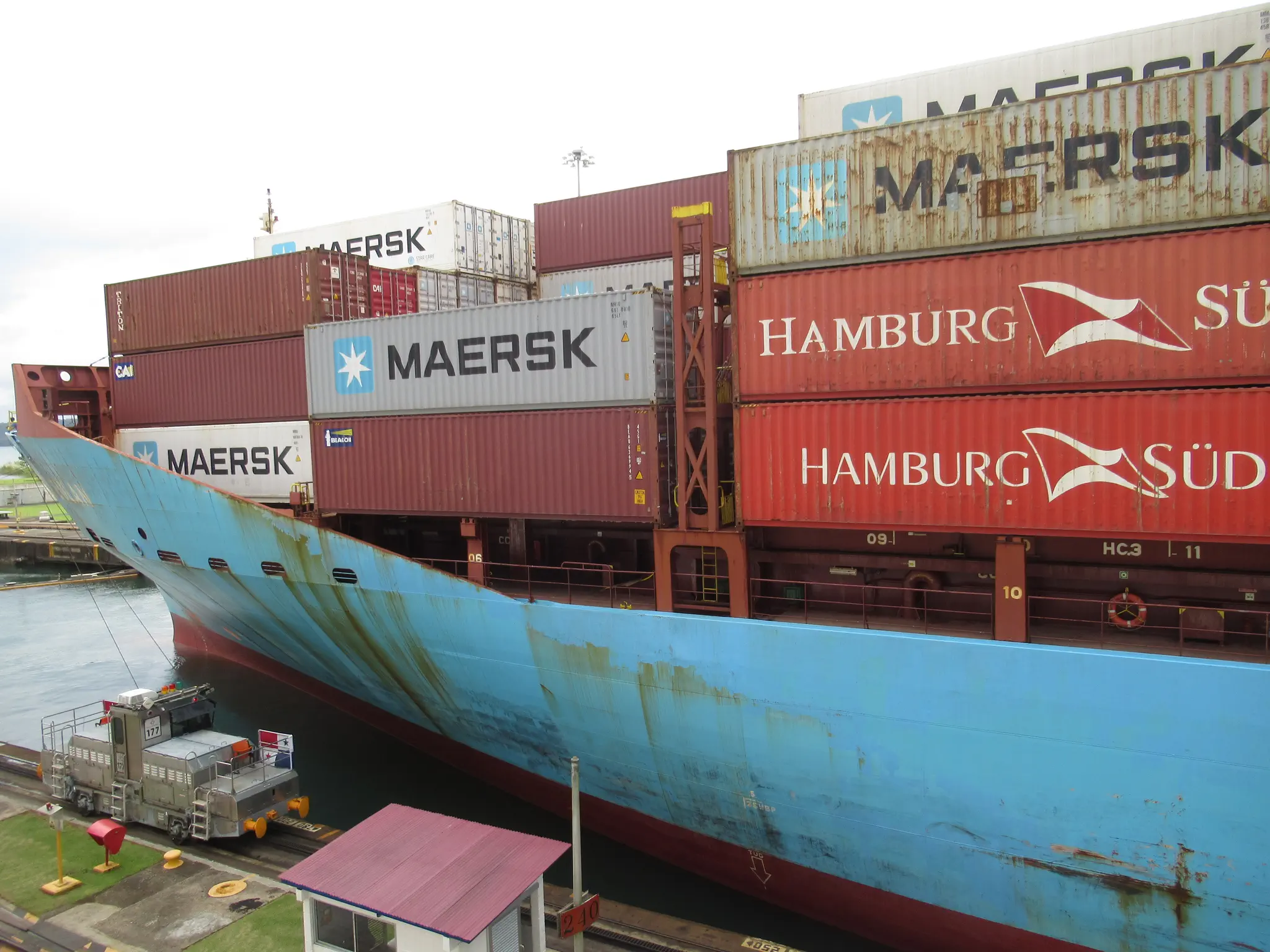
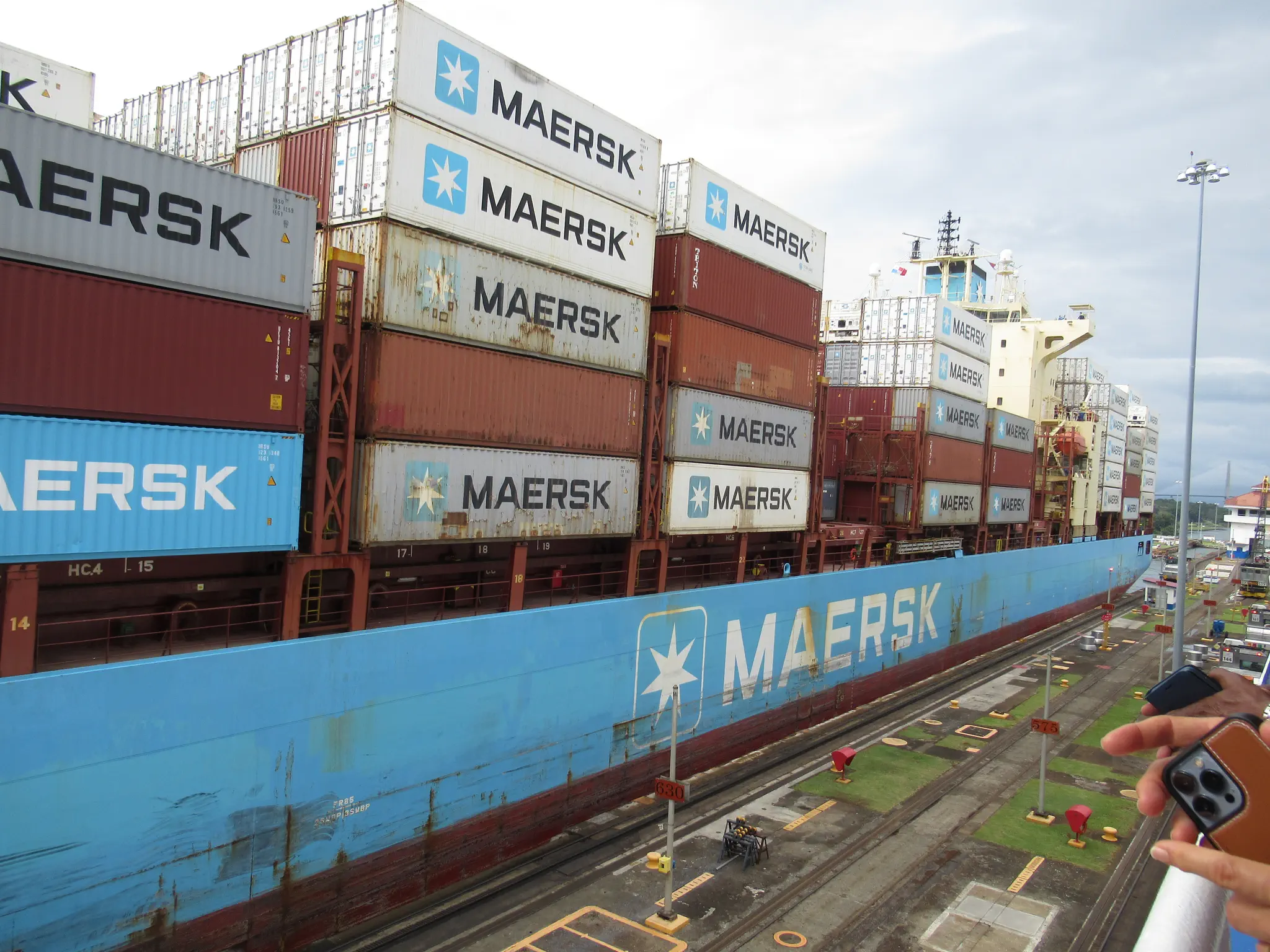
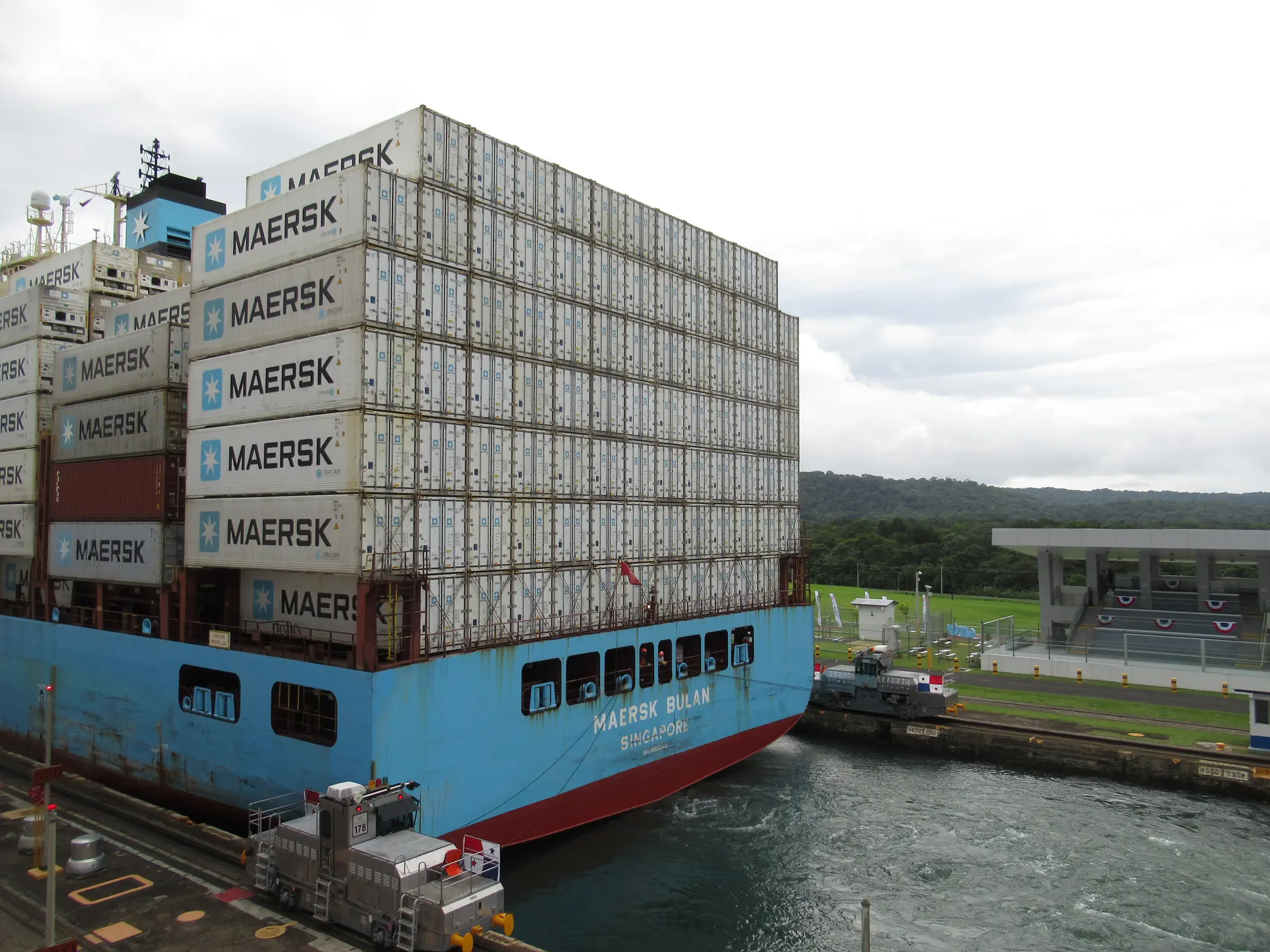
These guys in the middle section of the ship were taking pictures of each other with our cruise ship -- hehe. They had a lot of containers.
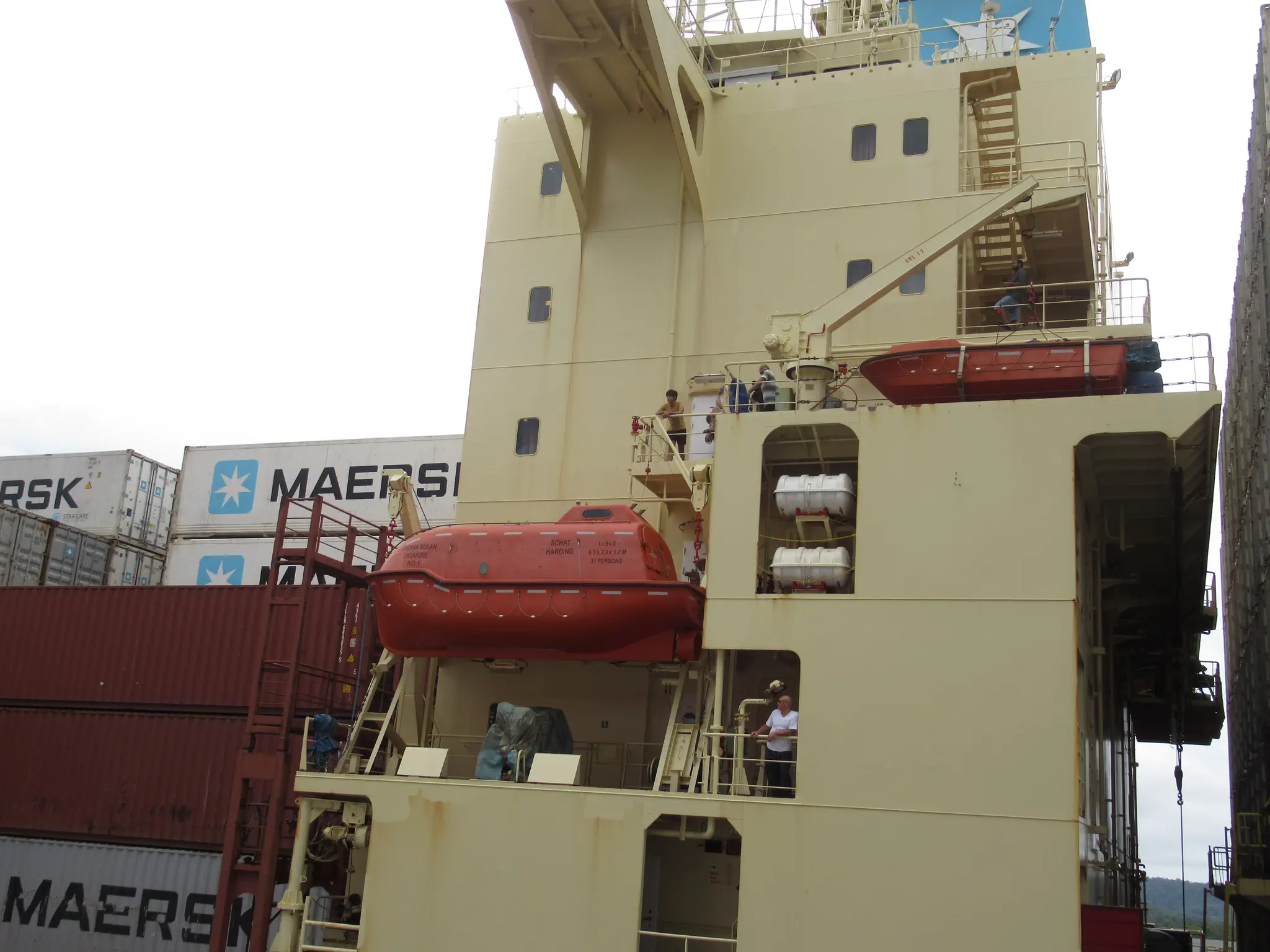
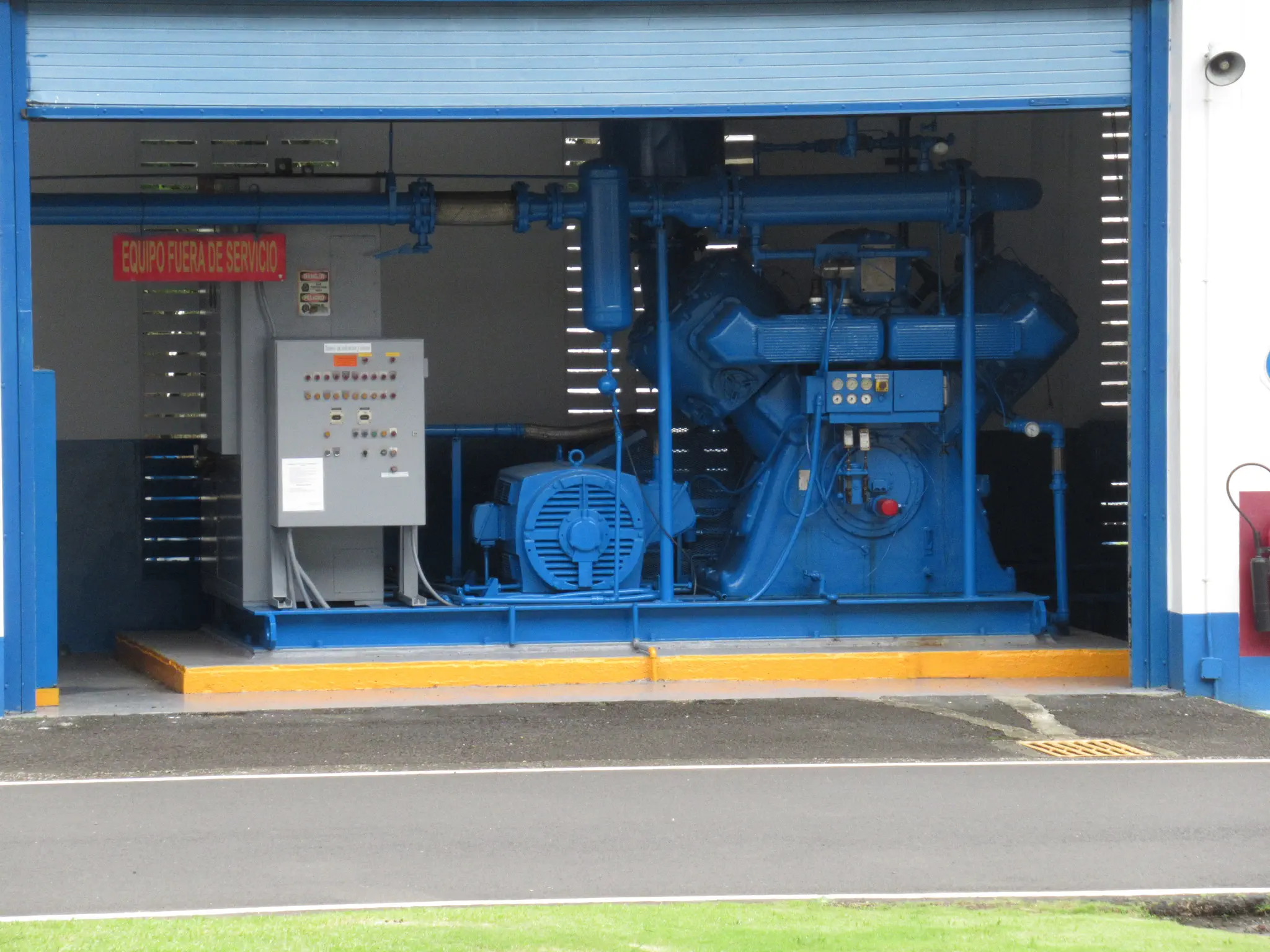
I translated it, and it means equipment out of service. So, I still don't know what it did.
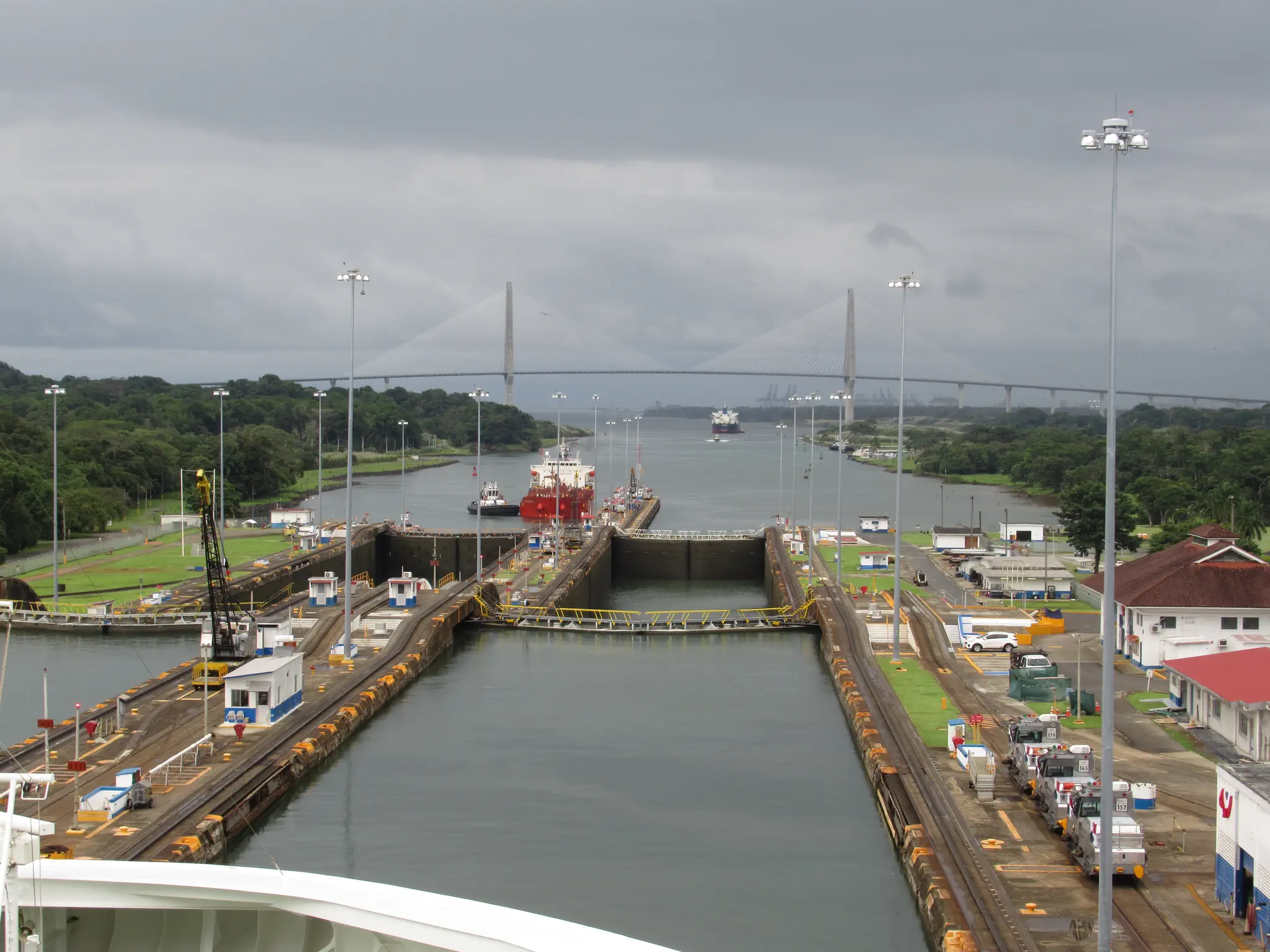
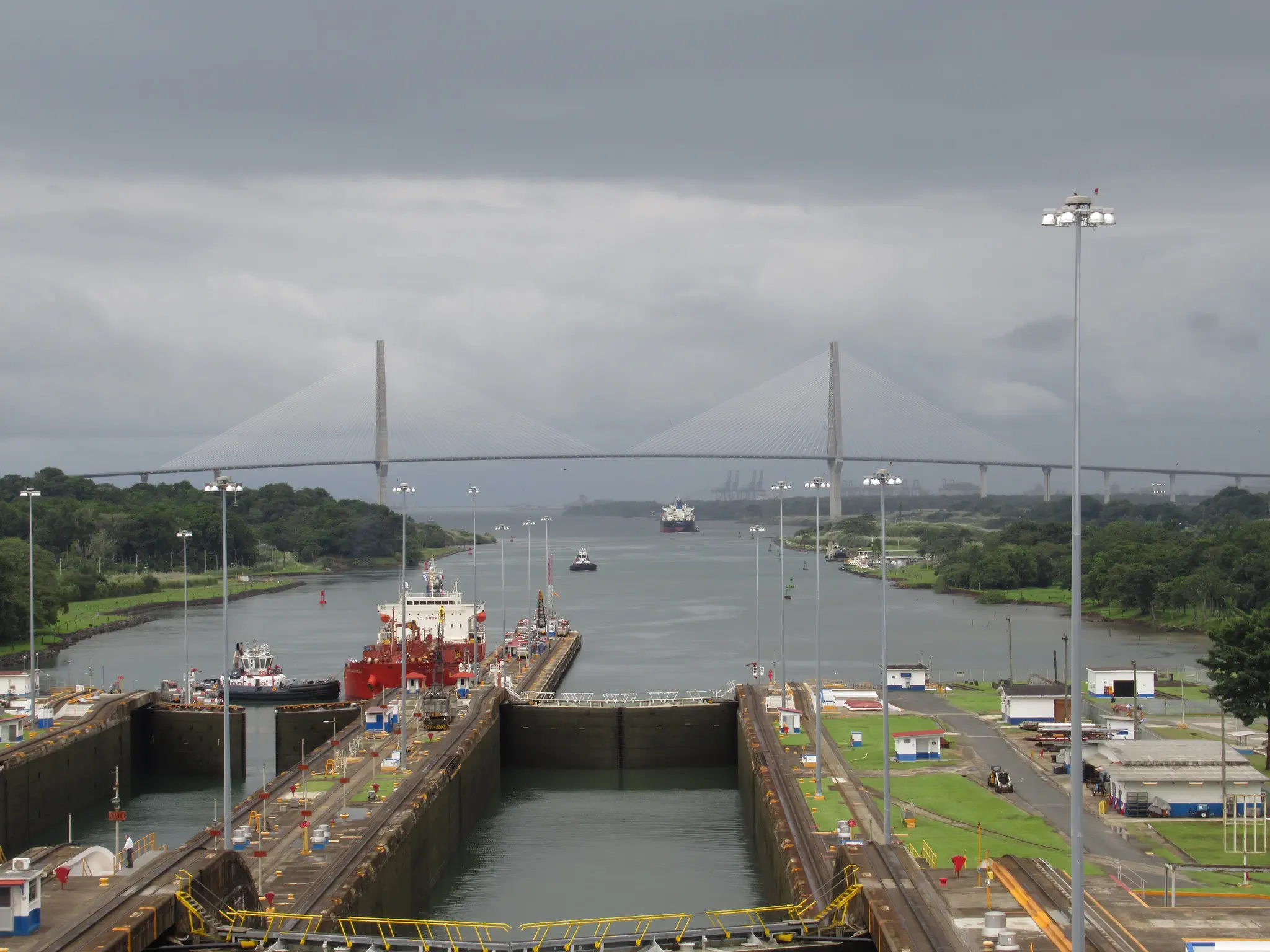
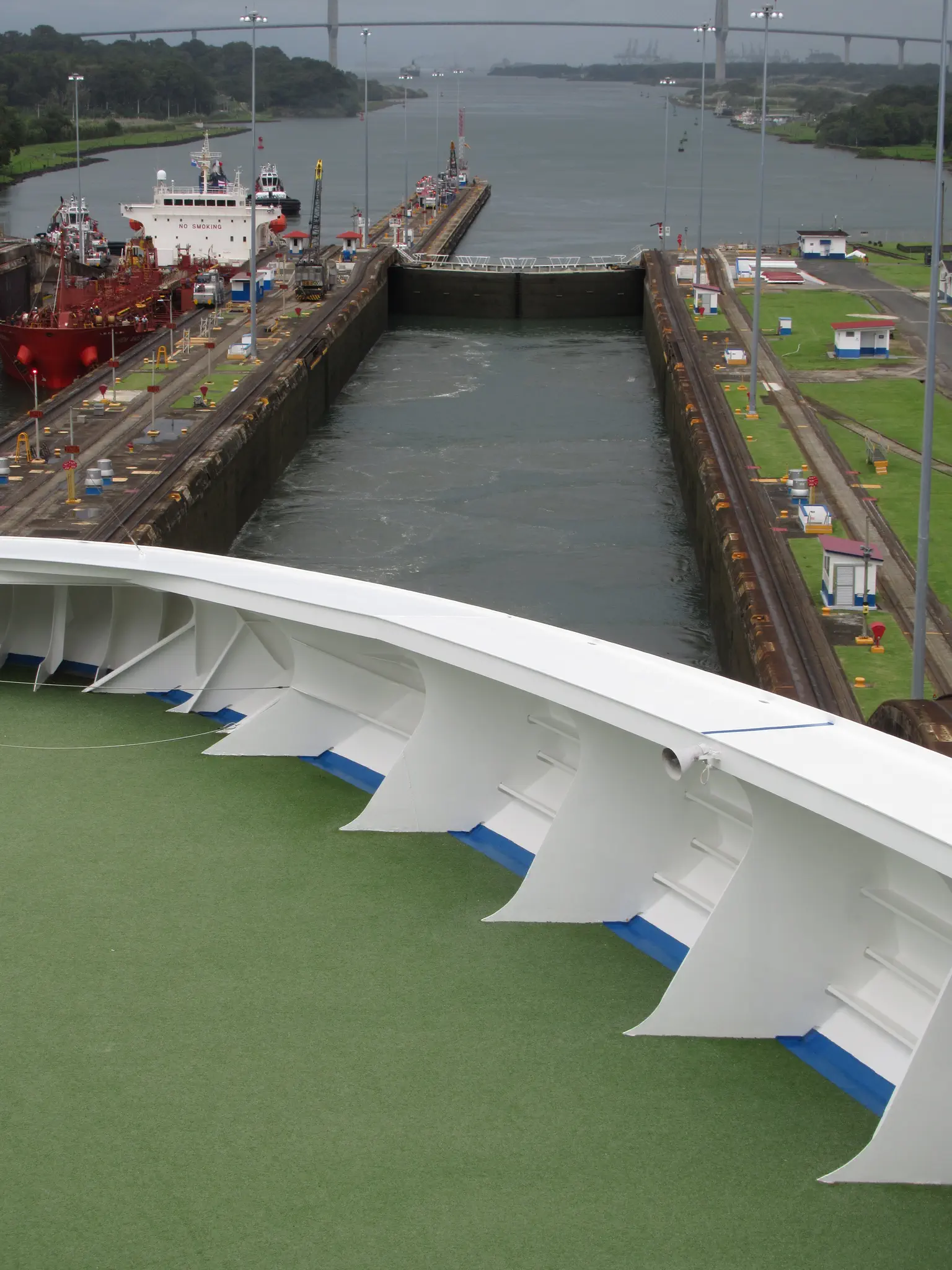
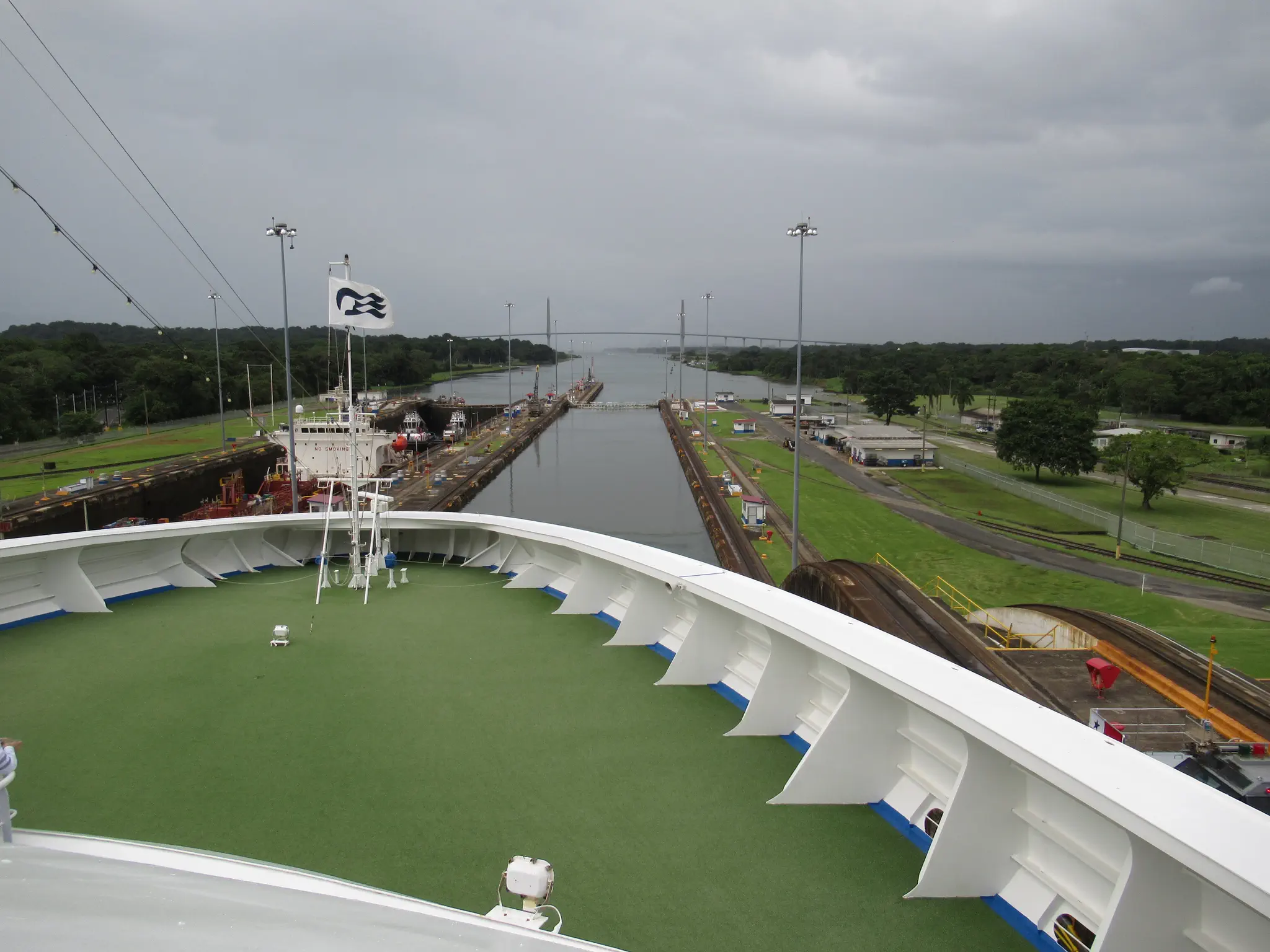
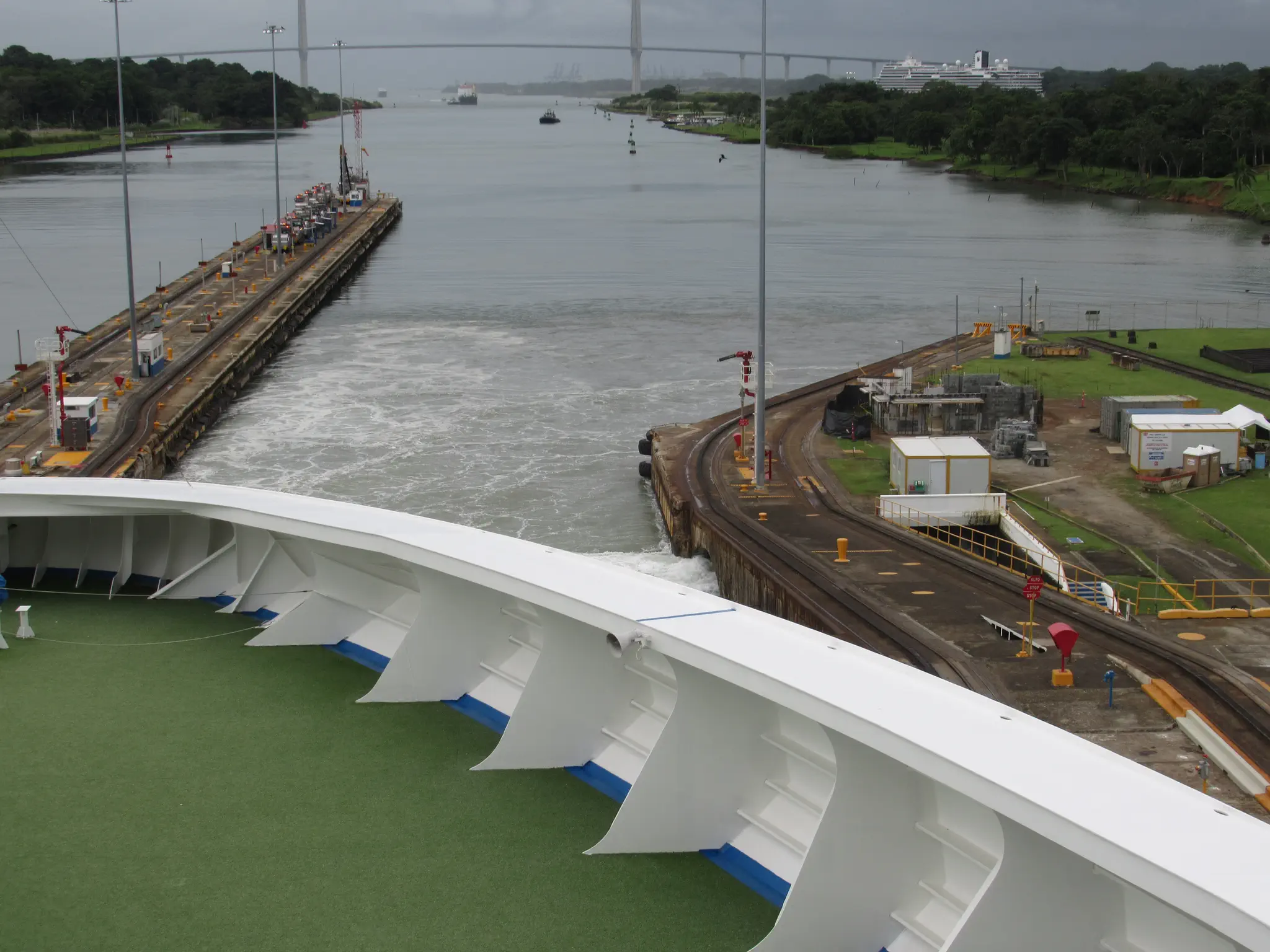
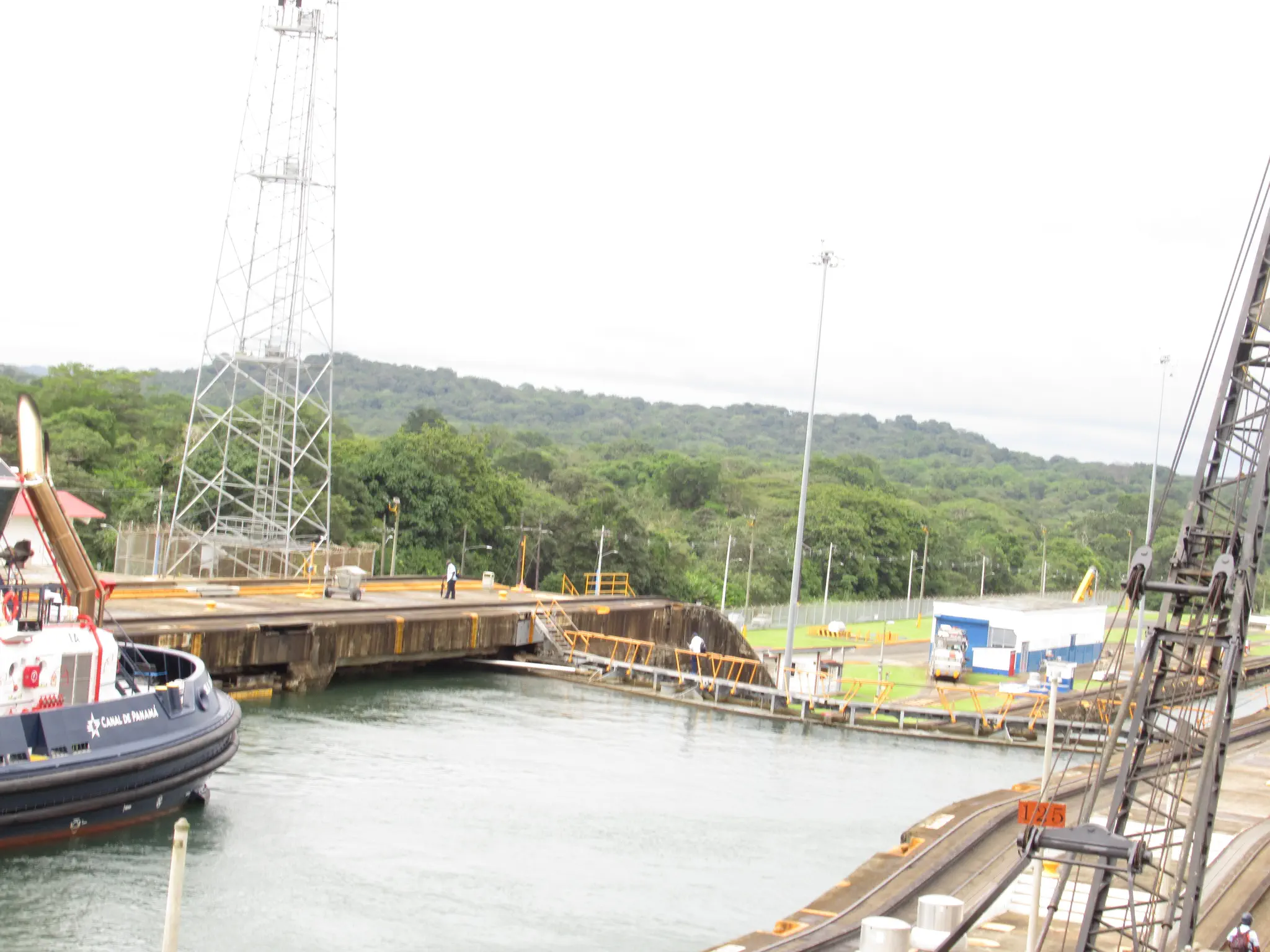
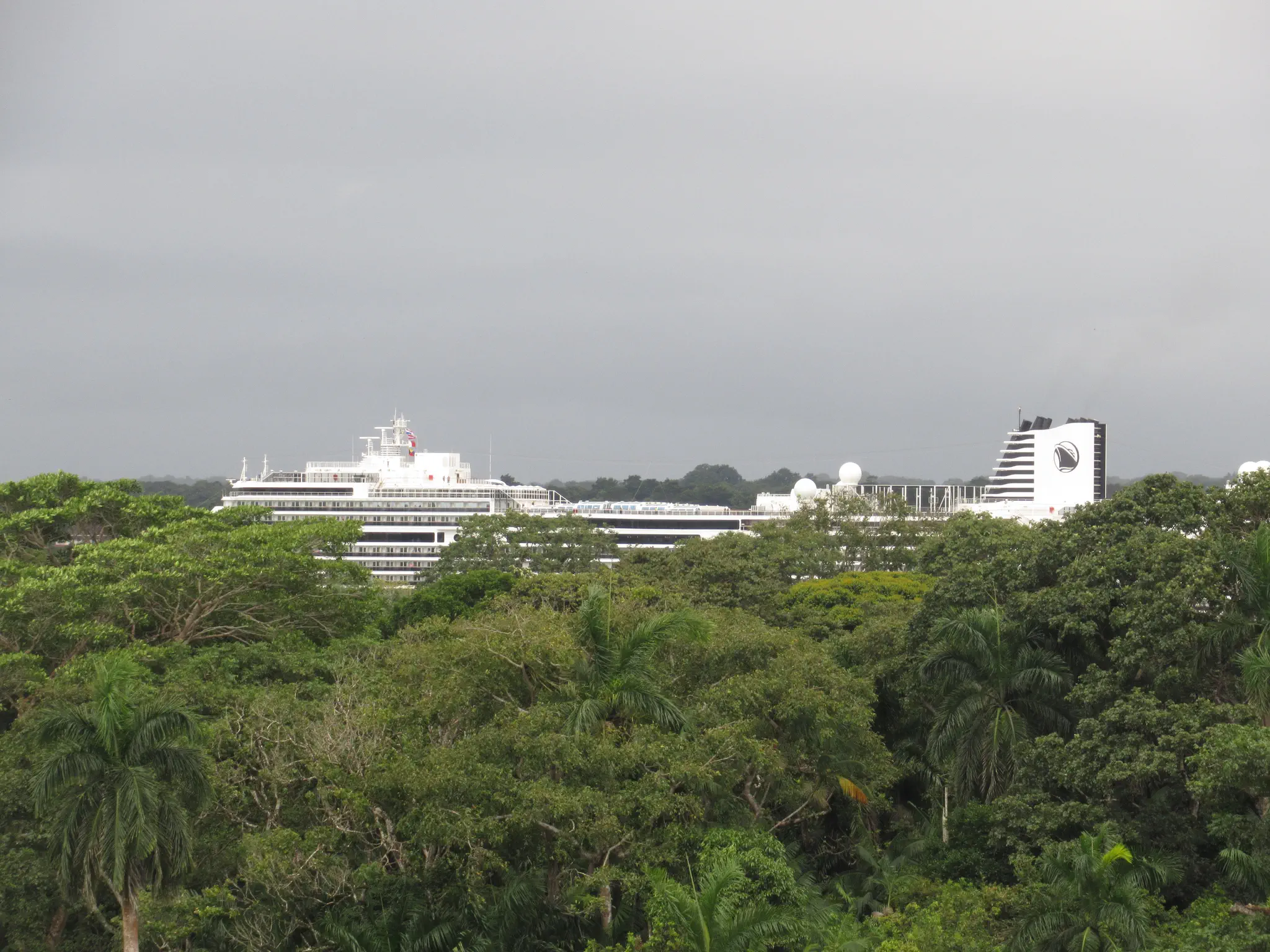
There goes HAL; it looks like they are floating above us.
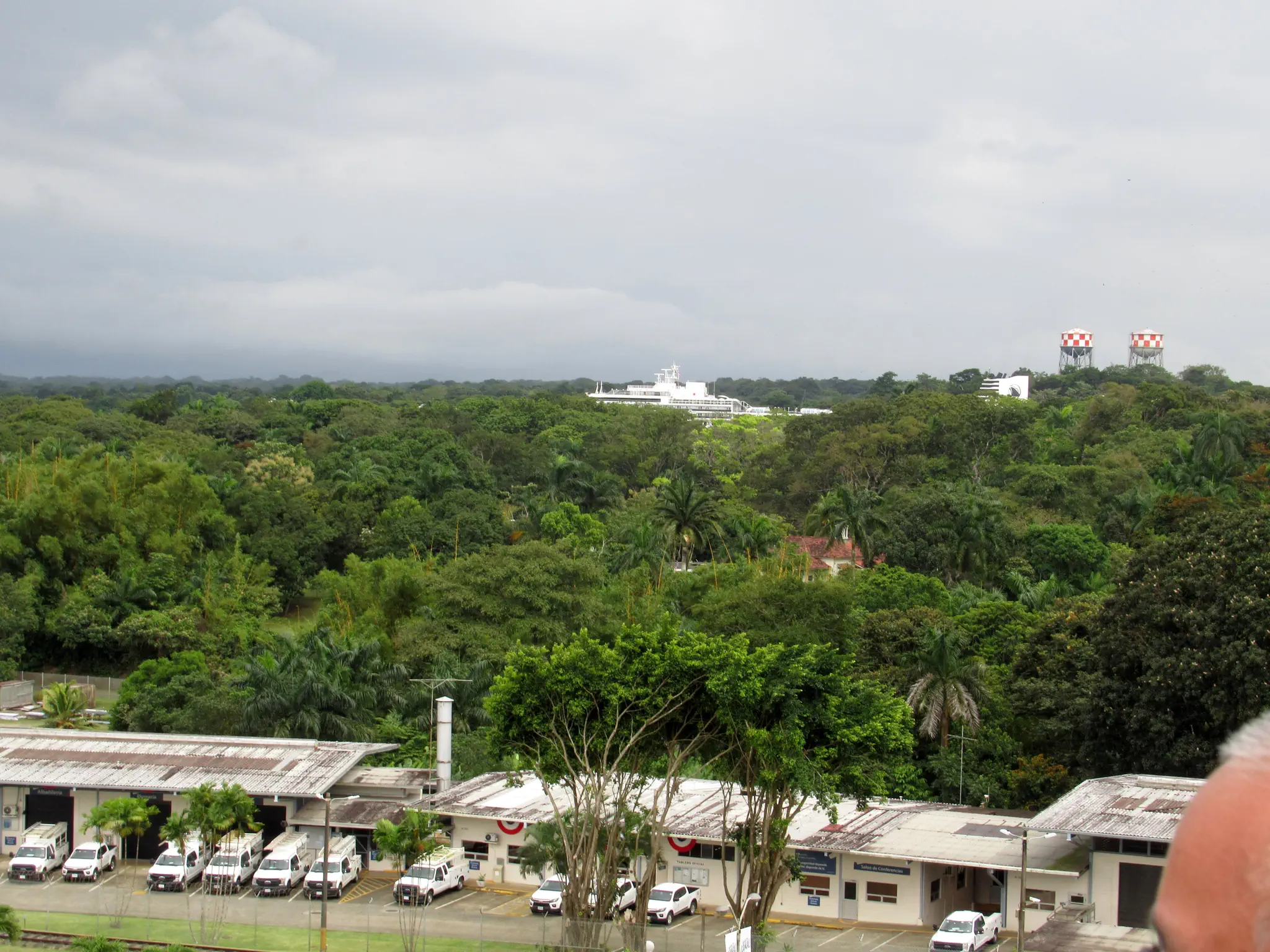
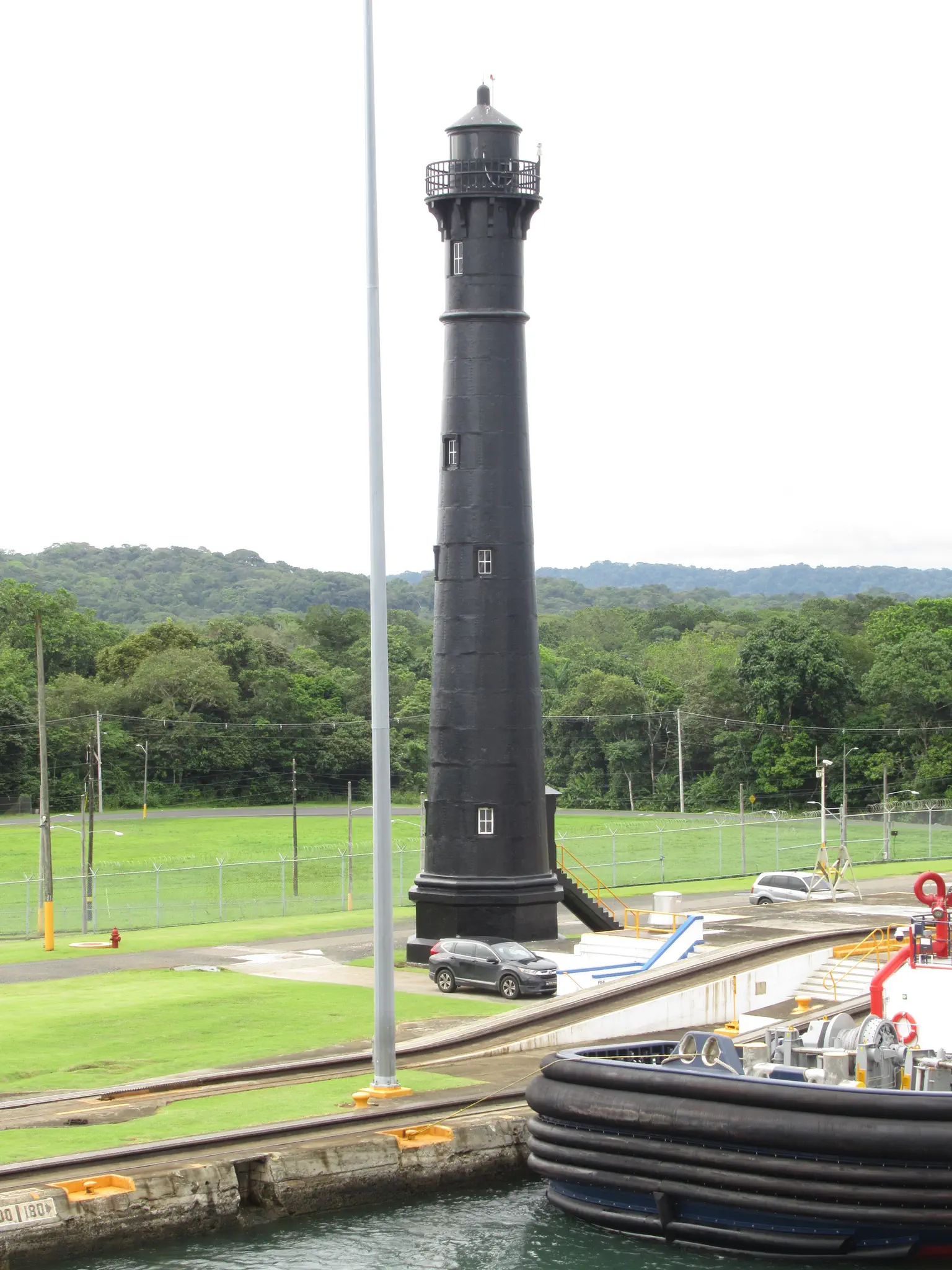
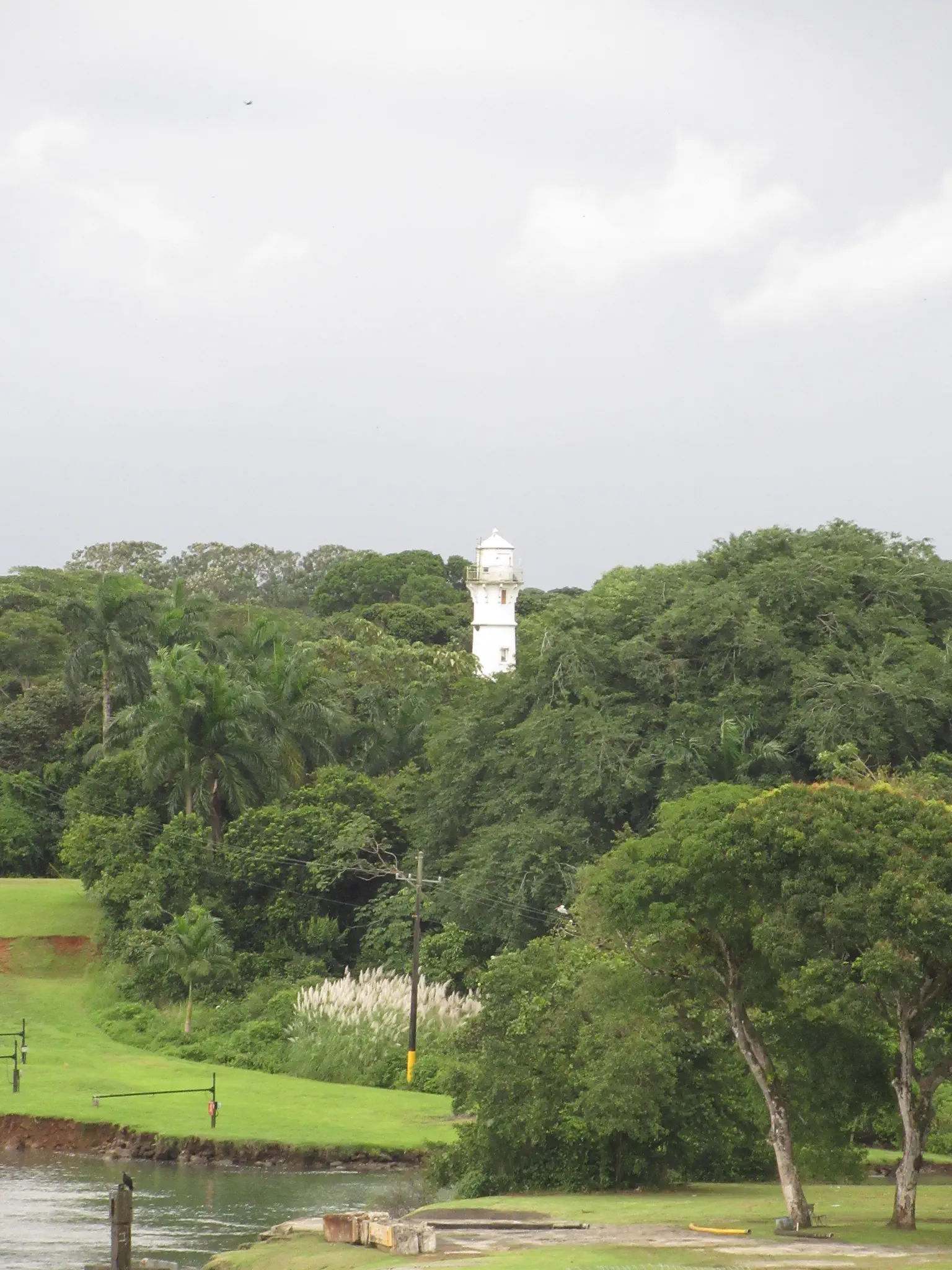
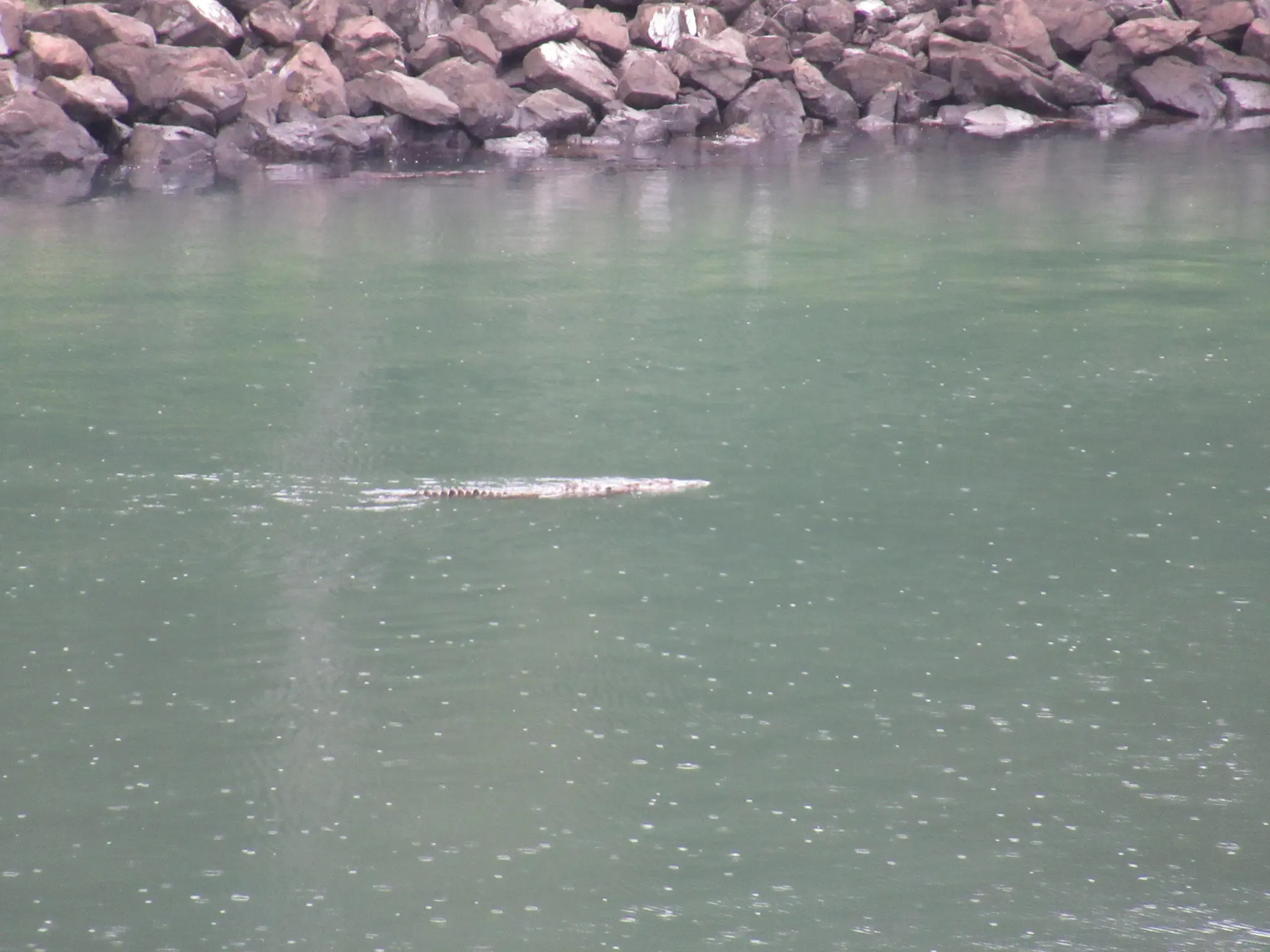
Lighthouse and found some of the crocodiles that our lecturer announced.
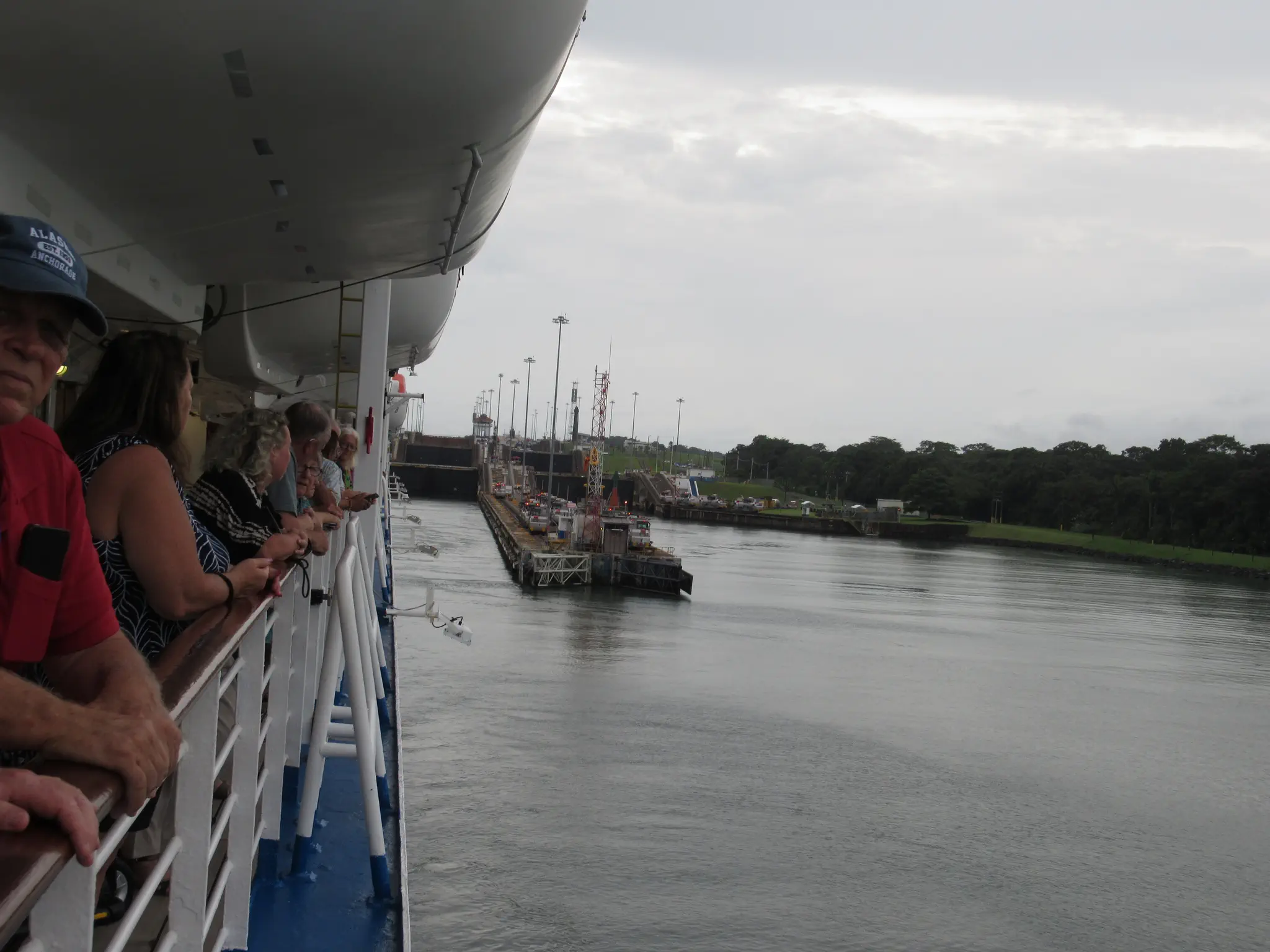
You can see the locks behind us that we just passed through.
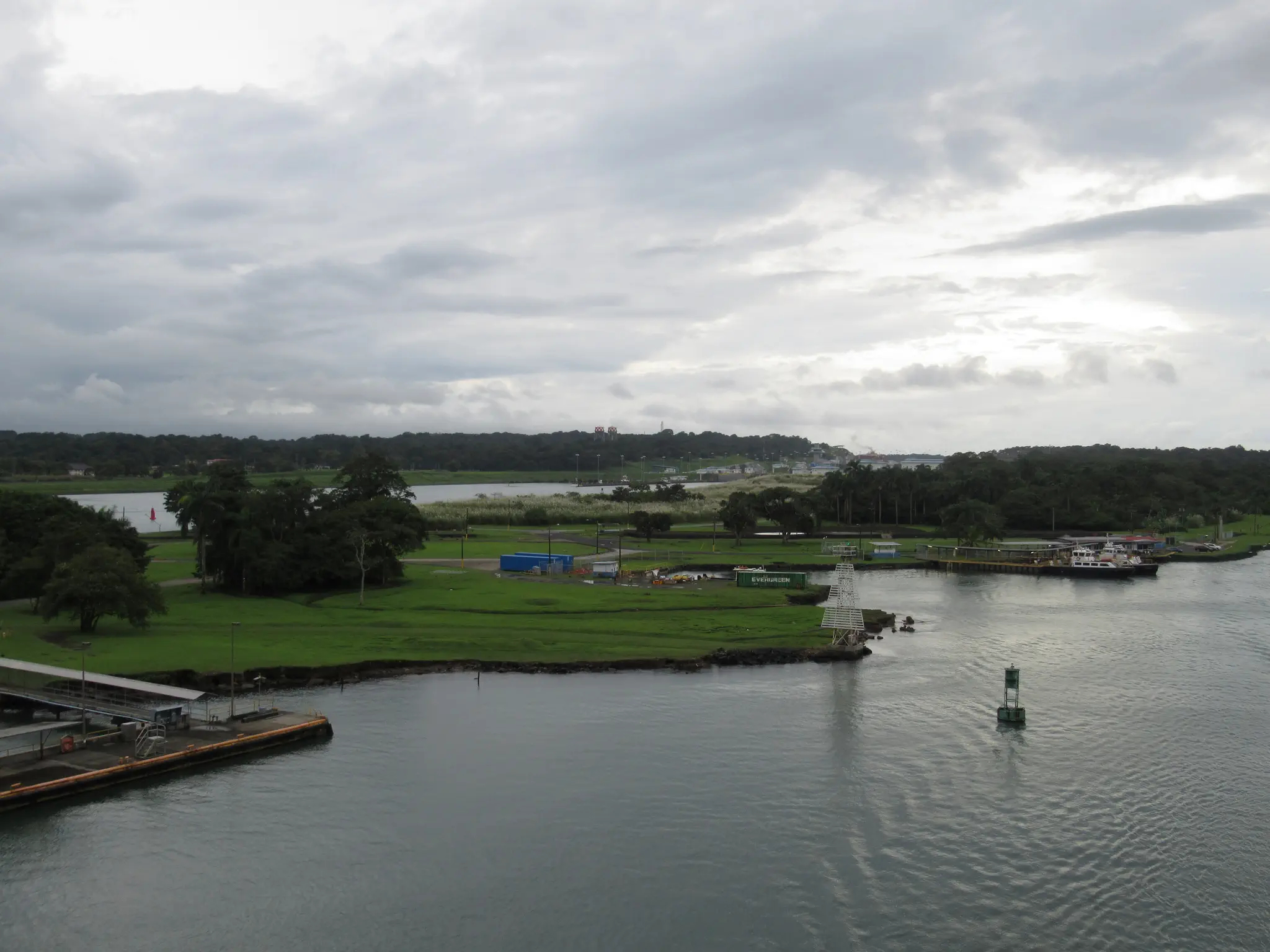
The old and new locks reconnecting.
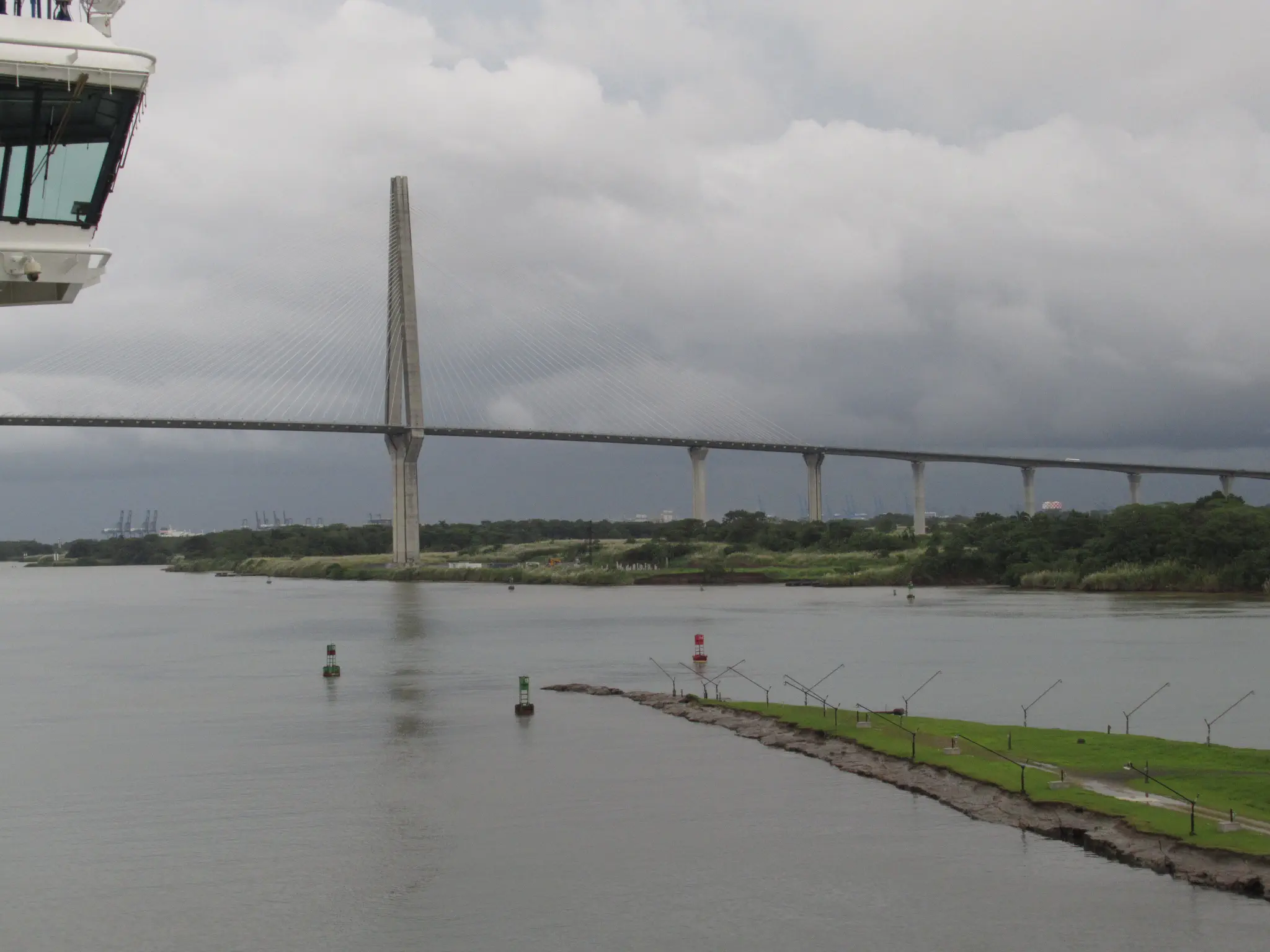
The new locks.
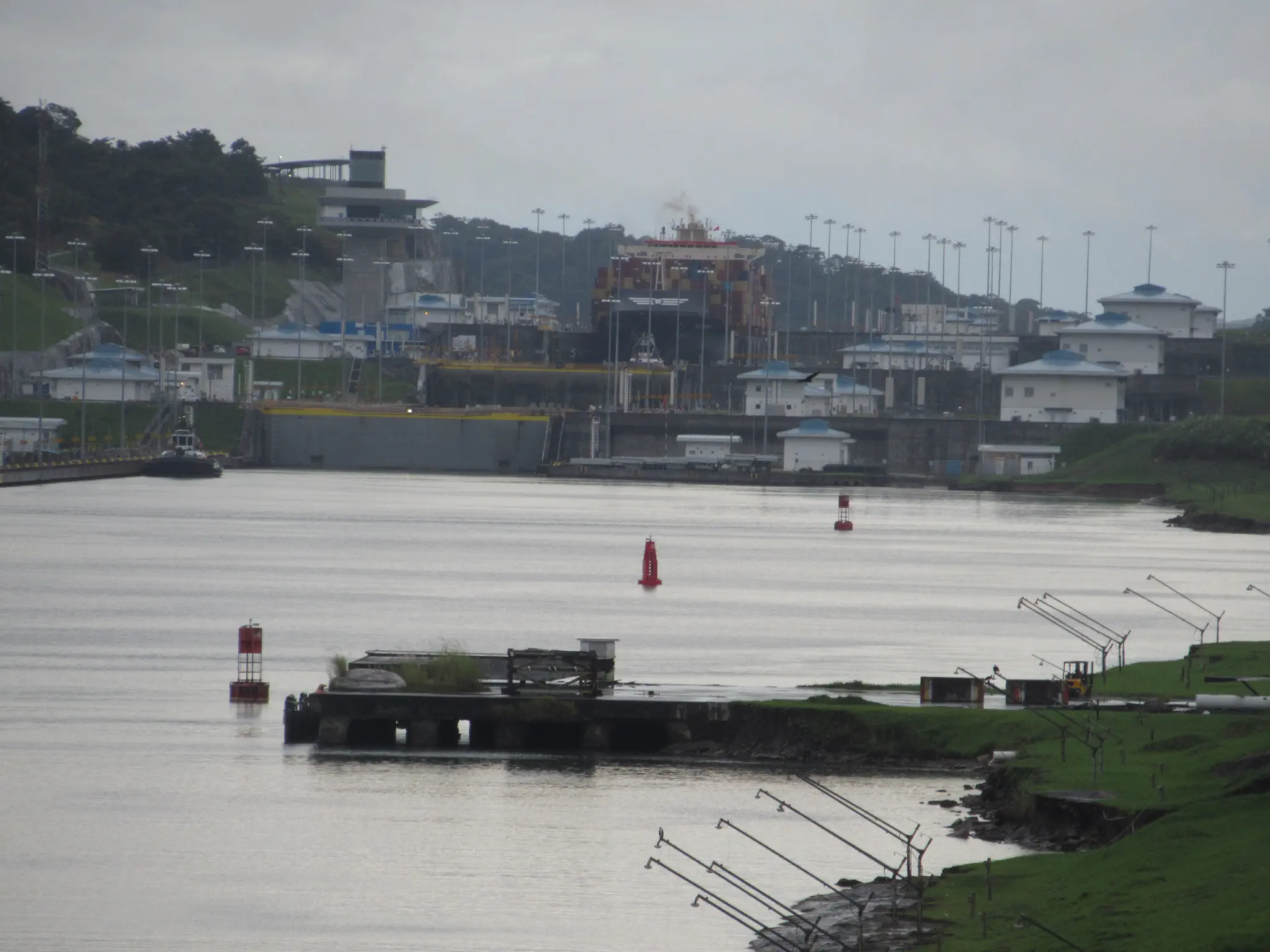
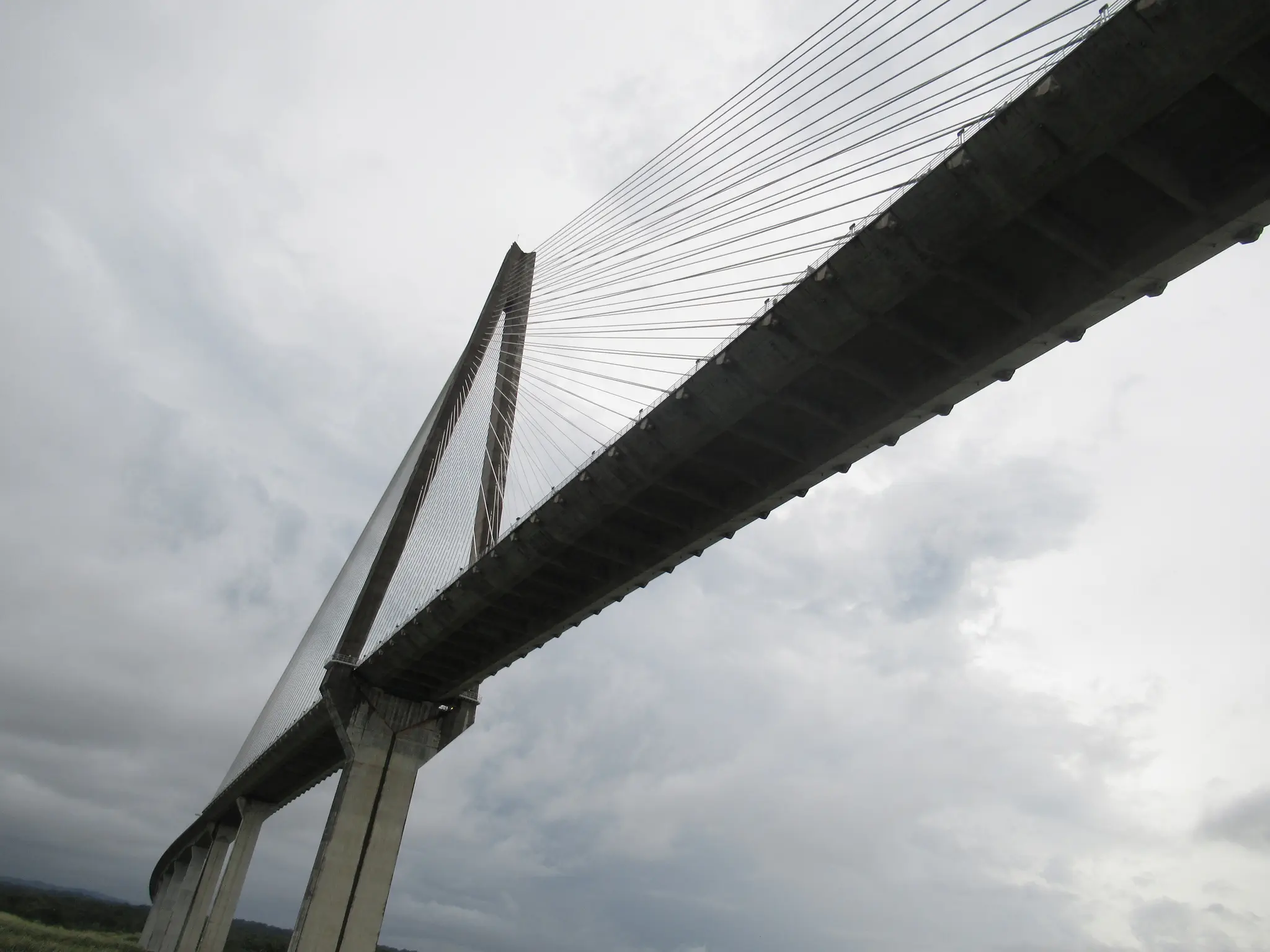
The Atlantic Bridge and container cranes on this side. Spotting big ships.
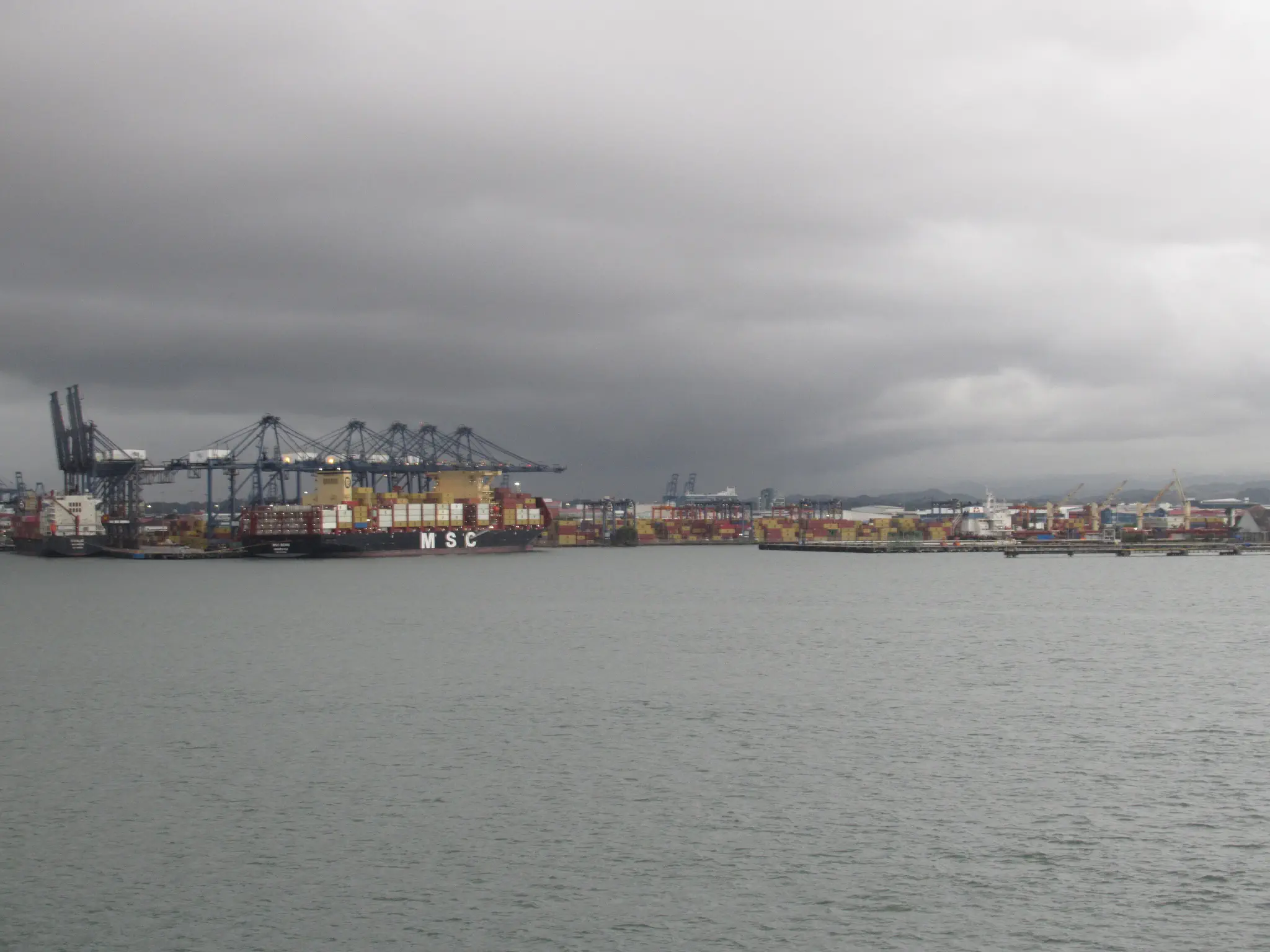
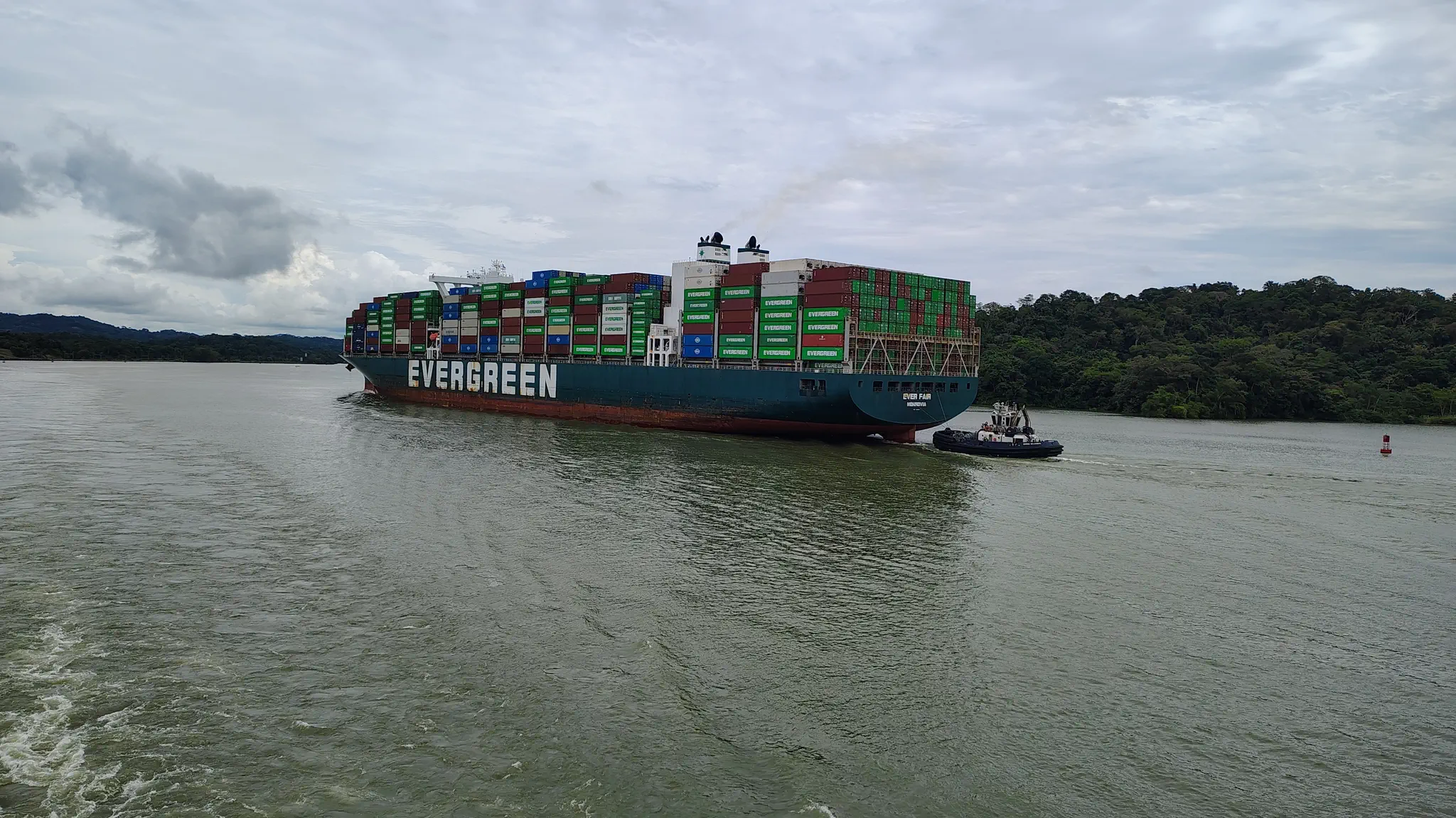
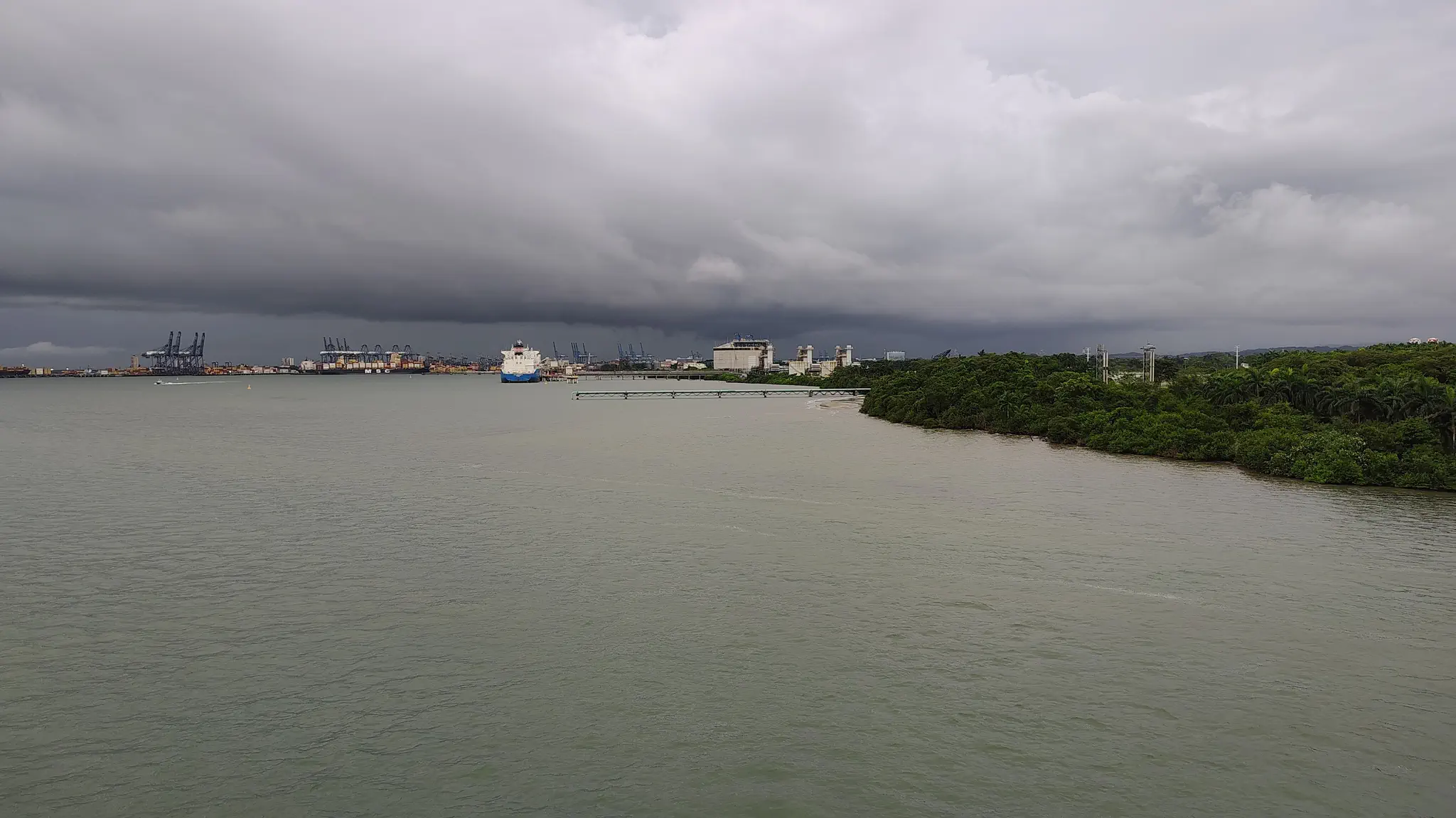
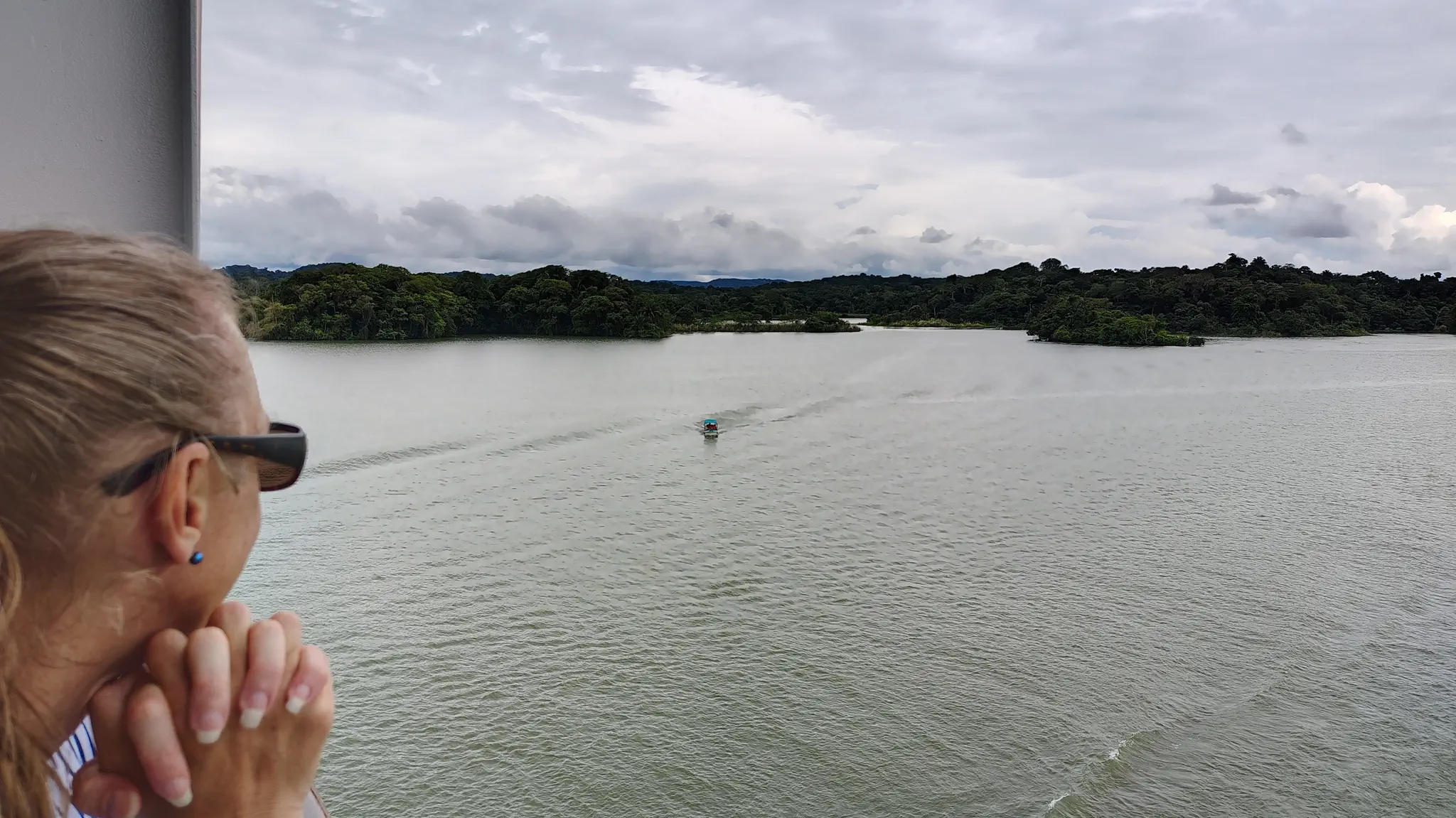
We went all around the ship for first 2 locks. It was hard to see what was happening; we watched ships in the next lane too to experience from that perspective. They opened the front of the ship crew areas on decks 10 and 11. We went to deck 10's; this was close to our room. It was a great viewing area. Travis found aft deck 8 available to see the wake; this was also a good place to watch. We also watched from our balcony and the promenade deck. Some of the front and back of deck 7 were blocked for safety around the mule cables. Deck 7 BE balconies were too. Tugs rode in the same lock with shorter ships. Our tug left and another met us on the other side. After we exited the last lock, maintenance crew members came out on the promenade deck with harnesses on to inspect the sides of the ship and repaint, if needed.
The transit was very interesting and exciting with good history.